Yoga Mat: Which Side Up? How to Tell in Ten Seconds

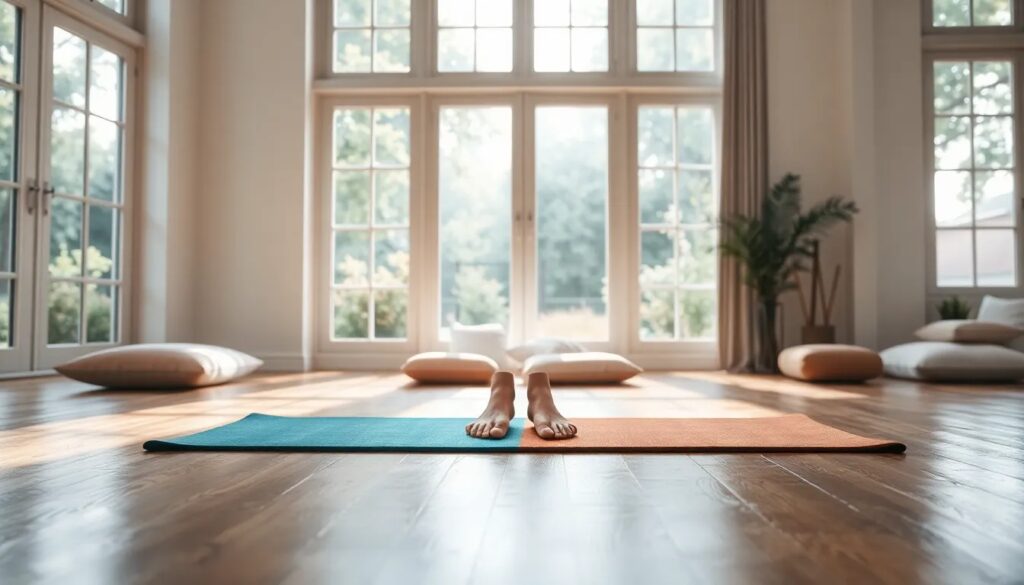
The general rule: the side designed for grip under your hands and feet goes up, and the side designed to hold the floor goes down. On most mats that means the logo or printed design faces up, a soft suede or polyurethane top layer faces up, and a bumpy, dimpled, or wavy texture faces down to anchor the mat. Some mats are genuinely reversible, in which case either side works and personal preference decides. Here is how to identify the right side on any mat in a few seconds.
Quick ways to tell which side is up
- Find the logo or printed design. Manufacturers almost always place branding and alignment markers on the practice side. The Logo Rule is the single most reliable cue on branded mats, including popular lines from Lululemon and Gaiam.
- Compare textures with your palm. A finer, slightly tacky surface is usually the top; pronounced bumps, ridges, or a waffle pattern usually belong against the floor. When in doubt, run your palm across both sides: the tackier one is your top.
- Look for a fabric-like layer. Suede, microfiber, and smooth polyurethane toppers are always the practice side — they are engineered to grip skin, especially damp skin.
- Check the colors. On two-tone mats the brighter or primary color is typically the top and the darker base layer goes down.
- Check the packaging or product page. When in doubt, the manufacturer states it — this beats guessing for unusual designs.
As an Amazon Associate, we earn from qualifying purchases.


Which side up by mat type
| Mat type | Which side up | Why |
|---|---|---|
| Classic PVC sticky mat | Often reversible; if textures differ, finer texture up | Both sides are tacky; pronounced ridges anchor better against the floor |
| Rubber base + polyurethane top | Smooth PU layer up | The PU surface is the sweat-grip layer; the rubber base holds the floor |
| Suede or microfiber top | Fabric side up | The fabric grips skin (and grips better when damp); the rubber back stays down |
| TPE dual-color mat | Primary color with logo up | The underside usually carries a more aggressive anti-slip pattern |
| Cork mat | Cork side up | Cork is the grip surface; the rubber or TPE backing goes down |
| Mat with alignment lines | Lines up | The markers exist to guide your hands and feet |

- CORK YOGA MAT: Crafted with natural cork top and eco-friendly TPE bottom for a premium, sustainable yoga and exercise experience, ensuring stability and comfort in your workouts.
- SWEAT and ODOR-RESISTANT CORK: Moisture-proof and odor-free, our natural cork material ensures a clean, fresh Yoga Workout surface, blocking dirt and unpleasant odors for a hygienic yoga experience.
- HOT YOGA MAT: A must-have for all types of yoga, but especially heated and hot yoga classes, as temperatures rise and the cork begins to loosen it will become softer and easier to grip when slightly damp
- CORK COMFORT: Experience the plush cushioning of our cork yoga mats, offering gentle support and resilience for joints and pressure points, ensuring a comfortable practice that nurtures your body and enhances your yoga journey.
- VERSATILE PERFORMANCE: From dynamic yoga flows to intense workouts, our cork mat adapts to your fitness routines, providing stability and support for yoga, Pilates, stretching, and more, allowing you to explore new movements with confidence.

Does it actually matter?
Yes, for three reasons. Safety and grip: using the floor-side texture under your hands can mean slipping in Downward Dog, especially once you sweat. Mat stability: the anchoring layer is engineered for the floor, so a flipped mat tends to creep on hard surfaces. Hygiene and wear: consistently using one side keeps the surface your face and hands touch off the studio floor, and lets the wear pattern develop where the cushioning expects it. If your mat slides no matter which way you flip it, the problem may be the mat itself — thickness and material play a big role, as we explain in our guide to yoga mat thickness.
What if your mat is reversible?
Genuinely reversible mats — common among classic PVC designs and explicitly named on some Lululemon lines — have the same texture on both faces, and either side up is correct. Two habits still help: pick one side as your permanent top for hygiene, and mark a corner discreetly so you roll it out the same way every time. Rolling the mat with the practice side facing out also helps the corners lie flat when you unroll it.
Keeping the top side grippy
- Wipe the practice side after sweaty sessions with water and a drop of mild soap; residue is the main grip killer.
- Break in a new mat. Many PVC mats arrive with a slippery factory film that fades after several uses or a gentle scrub.
- Dry flat or hung, out of direct sun — UV degrades rubber and TPE.
- Use a towel for hot or very sweaty practice, even on a good mat — grip surfaces have limits. This matters most outdoors too, where dust coats the surface; see our guide to outdoor yoga mats.


For more mat care and handling, our piece on how often to replace a yoga mat covers the signs your surface is past saving, and if you carry your mat to class, here are 8 ways to carry a yoga mat without a strap. If you practice on an alignment-marker mat, our Liforme mat review looks at how those systems work in practice.
Frequently asked questions
It depends on the construction. On mats with a smooth polyurethane or suede top layer, the smooth or fabric side goes up because it is the sweat-grip surface. On classic mats where one side has pronounced bumps or ridges, that rougher side usually goes down to anchor the mat. The logo is the most reliable indicator of the top.
The smooth polyurethane side with the logo faces up on the standard reversible design, as that layer is built to absorb moisture and grip skin. The natural rubber side can also be used up for drier, grippier practices, which is why the brand calls the mat reversible. Check the care card included with your specific model.
Nothing dangerous in a gentle class, but you will likely notice reduced grip under your hands and feet, the mat creeping on hard floors, and the surface your face touches collecting floor dirt. In sweaty or dynamic practice the grip loss becomes a real slipping risk, so it is worth flipping the mat the right way.
Many new mats, especially PVC ones, ship with a thin factory residue that makes the surface slick. It wears off after several sessions, or faster if you wash the mat with water and a small amount of mild soap and let it dry fully. A sprinkle of coarse salt scrubbed gently over the surface is a common break-in trick for stubborn cases.
Have a correction? Contact us.
Last update 2026-09-10. Price and product availability may change.
Recommended: