Inversion Workshop Yoga: What to Expect, Who It's For, and How to Prepare

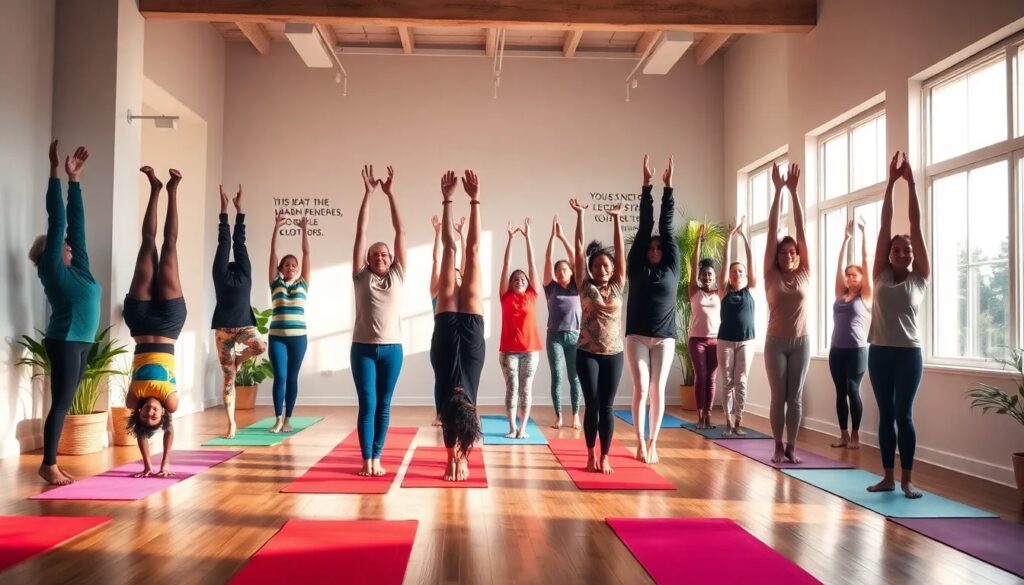
An inversion workshop yoga session is a focused class — usually 90 minutes to three hours — where a teacher breaks down upside-down poses like headstand, forearm stand, and handstand into drills, prep work, and spotted attempts. Unlike a regular drop-in class, where inversions get a few rushed minutes at the end, a workshop dedicates the entire time to one job: helping you build the foundation, practice safe entries and exits, and progress at your own level using the wall and props. The structure is exactly why workshops are the right environment to learn inverting — these are the poses where trial and error on your own carries the most risk, and where hands-on feedback makes the fastest difference. For the foundations of the poses themselves, see our overview of inversions in yoga.
What a typical inversion workshop covers
- Warm-up and joint preparation. Wrists, shoulders, and neck get specific attention, because they carry loads they are not used to in everyday life.
- Strength and alignment drills. Hollow-body work, plank variations, Dolphin Pose holds, and shoulder-stacking exercises teach the body the shape before it leaves the ground.
- Pose breakdowns by progression. Each inversion is taught in stages — entry, balance point, and exit — usually starting at the wall.
- Spotted attempts. The teacher or a partner supports your legs so you can feel the balance point without the fear of toppling.
- Falling practice. Good workshops explicitly teach the cartwheel-out and tuck-and-roll exits — arguably the most valuable skill on the list.
- Cool-down and counterposes. Gentle backbend-neutralizing and neck-releasing work to finish.
How long is an inversion workshop?
Most inversion workshops run 90 minutes to 3 hours; multi-week series and weekend intensives (6–12 hours total) are also common. The shorter format suits beginners who want to see whether inversions are for them; longer formats suit practitioners who already know which pose they want to work on and want time to drill it with feedback. In all cases, count on arriving 10–15 minutes early so the teacher can see your baseline wrist and shoulder mobility before you load them.
The main inversions, by difficulty
| Pose | Level | Main demand | Workshop focus |
|---|---|---|---|
| Legs Up the Wall (Viparita Karani) | Beginner | None — restorative | Often used as a gentle introduction to being inverted |
| Downward Dog / Dolphin | Beginner | Shoulder mobility | Foundation shape for everything that follows |
| Supported Shoulder Stand (Salamba Sarvangasana) | Beginner–intermediate | Neck safety, blanket setup | Correct propping to protect the cervical spine |
| Headstand (Sirsasana) | Intermediate | Core control, straight-line stacking | Weight in forearms, lifting without kicking |
| Forearm Stand (Pincha Mayurasana) | Intermediate–advanced | Shoulder strength and openness | Wall drills, strap above the elbows |
| Handstand (Adho Mukha Vrksasana) | Advanced | Wrist load, balance | Kick-up timing, hollow body, falling skills |
If headstand is your immediate goal, our step-by-step guide to the yoga headstand pairs well with workshop practice, and the yoga handstand guide covers the longer road to balancing on the hands.
How long does it actually take to learn each one?
Time-to-balance depends on starting strength, body proportions, and how often you drill between sessions. As a rough guide, a supported wall headstand is often reachable in a few weeks to a few months of consistent home practice; a freestanding headstand usually takes longer; a freestanding handstand is a year or more for most adult beginners. A workshop accelerates the process but does not replace ongoing practice — the workshop's job is to teach you the right drills, not to deliver the pose in one session.
Who inversion workshops are for — and who should wait
Workshops suit practitioners with a few months of consistent practice who can hold Plank and Downward Dog comfortably. You do not need to already balance upside down — that is the point of attending. Beginners are welcome at workshops labeled "all levels," where Legs Up the Wall and Dolphin variations replace full inversions. The workshop is also a good fit for intermediate students who have been drilling alone and want feedback they cannot get from a video.
Who should skip or get medical clearance first
Inversions raise pressure in the head and eyes and load the neck and shoulders, so they are generally discouraged — or require explicit sign-off from a healthcare provider — for people with any of the following: uncontrolled high blood pressure, glaucoma or other eye conditions, recent or chronic neck or shoulder injuries, hiatal hernia or active acid reflux that worsens when inverted, heart disease, and vertigo. During pregnancy, inversions are usually modified or omitted unless an experienced prenatal teacher specifically clears them.
Menstruation deserves its own paragraph. Different yoga traditions answer this question differently: some advise against full inversions during the heaviest days of menstrual flow, others see no problem. There is no universal medical rule. The practical approach is to ask the workshop teacher in advance, listen to your body, and choose supported inversions such as Legs Up the Wall if you want to keep some inversion in your practice while bleeding. If you have ever felt dizzy changing positions, our article on yoga and vertigo is worth reading before booking, and worth raising with the teacher at the start of the session — good instructors ask anyway.
How to prepare in the weeks before
- Build wrist tolerance. Spend more time in Plank and Downward Dog, and add gentle wrist circles and stretches daily. Wrists carry your full body weight in handstand and most of it in headstand; they need gradual loading.
- Strengthen the shoulders. Dolphin Pose holds and slow Chaturanga lowers are the most workshop-relevant strength work.
- Train the hollow body. Lying on your back, press the lower back into the floor and hover shoulders and legs — the core shape of every straight-line inversion.
- Practice being upside down gently. Legs Up the Wall and supported Bridge accustom your circulation to inverted positions.
- Bring or confirm the right props. Most studios supply them, but a snug-fitting yoga strap (for elbow alignment in forearm stand) and two blocks are the usual kit. Some teachers also use a yoga wheel for backbend and balance drills. Wear snug clothing that will not slide over your head when you are upside down, and skip heavy pressing workouts the day of the workshop so your wrists arrive unloaded.
As an Amazon Associate, we earn from qualifying purchases.

- Home PT Strap for Independence (3 Recovery Stages) – A physical therapy stretching strap designed for gentle knee/hip/leg mobility at home. Use it across recovery: Stage 1 bedside assist (when movement is limited), Stage 2 PT stretching/ROM, Stage 3 daily warm-up to maintain mobility—so you can stay independent
- Non-Elastic, Steady Holds (No Rebound / No Surprise Stretch) – The strap does not stretch, so there’s no bounce and no sudden “give.” You can pull to the angle you need and it stays there, helping you move slowly and safely—especially after knee replacement or hip replacement recovery.
- Loops = Easier Grip + Adjust Depth + Track Progress – Multiple loops provide clear hand/foot holds with less grip strength than towels or ropes. Switch loops anytime to adjust stretch depth, repeat the same position each session, and track ROM progress for hamstrings, calves, hips/hip flexors, and lower back—without forcing.
- Leg Lifter Strap / Mobility Aid for Bed & Car – Can also be used as a leg lifter to help lift your leg into bed or car, supporting daily movement tasks when flexibility is limited (use gently within comfort). gently within comfort).
- PT-Style Daily Stretching for Legs, Back & Feet (Comfort Tip) – Built for slow, controlled home stretching and mobility work for legs, hips, lower back, ankles, and feet (calf/Achilles tightness included)—not an elastic resistance band. For comfort during longer holds, socks or light gloves may help. during longer holds, socks or light gloves can help if you have sensitive hands/skin. gloves can help if you have sensitive hands/skin.
How to judge a workshop before booking
Ask three questions. First, what is the teacher's approach to spotting and falling — if the answer does not mention teaching safe exits, look elsewhere. Second, what is the participant cap — inversion teaching is hands-on, and groups much beyond 15–20 per teacher mean little individual attention. Third, how is the session leveled — a good description states clearly whether full inversions are expected or whether wall and prep variations are offered. Price varies by city and teacher reputation; a small, well-capped workshop is usually better value than a cheap crowded one, but compare what is included (props, video replay, follow-up email) before deciding on cost alone.
Red flags that mean walk away
- The description says "all levels welcome" and "full headstand and handstand by the end" — that combination is unrealistic and unsafe.
- No mention of contraindications, modifications, or medical clearance.
- The teacher has no documented inversion practice of their own, or refuses to be spotted/checked.
- More than 25 students per teacher, or no assistant teachers in larger groups.
- Hard floors without mats, or a venue that does not allow wall use.
For context on how an inversion workshop fits inside the broader universe of yoga workshops, see our guide to yoga workshops in general.
Frequently asked questions
No. Workshops exist precisely to teach you the progressions, and most are structured so beginners work on wall drills and preparatory shapes while experienced students refine balance. Check the level stated in the description and ask the organizer if unsure.
No. Inversions raise pressure in the head and eyes and load the neck and shoulders, so they are generally not advised for people with uncontrolled high blood pressure, glaucoma, recent neck or shoulder injuries, or during pregnancy without specialist guidance. Ask a healthcare professional if any of these apply to you.
It varies with starting strength, body proportions, and practice frequency. Many consistent practitioners reach a supported wall headstand within a few weeks to a few months, while a freestanding handstand commonly takes a year or more of regular drilling. A workshop accelerates the process but does not replace ongoing practice.
A grippy mat, water, and snug clothing that will not slide over your head when upside down. Most studios provide blocks, straps, and blankets, but confirm in advance. Arrive with unloaded wrists, meaning skip heavy pressing workouts that day.
Different traditions answer differently — some advise against full inversions during the heaviest days, others see no problem, and there is no universal medical rule. The practical approach is to ask the workshop teacher in advance and choose supported inversions such as Legs Up the Wall if you want to keep some inversion in your practice while bleeding.
This article is for general information only and is not medical advice. Inversions are not appropriate for everyone — if you have high blood pressure, eye conditions, neck or shoulder injuries, or are pregnant, consult a qualified healthcare professional before practicing them.
Have a correction? Contact us.
Last update 2026-09-10. Price and product availability may change.
Recommended: