Inversion Yoga: Poses by Level, Benefits, and How to Start Safely

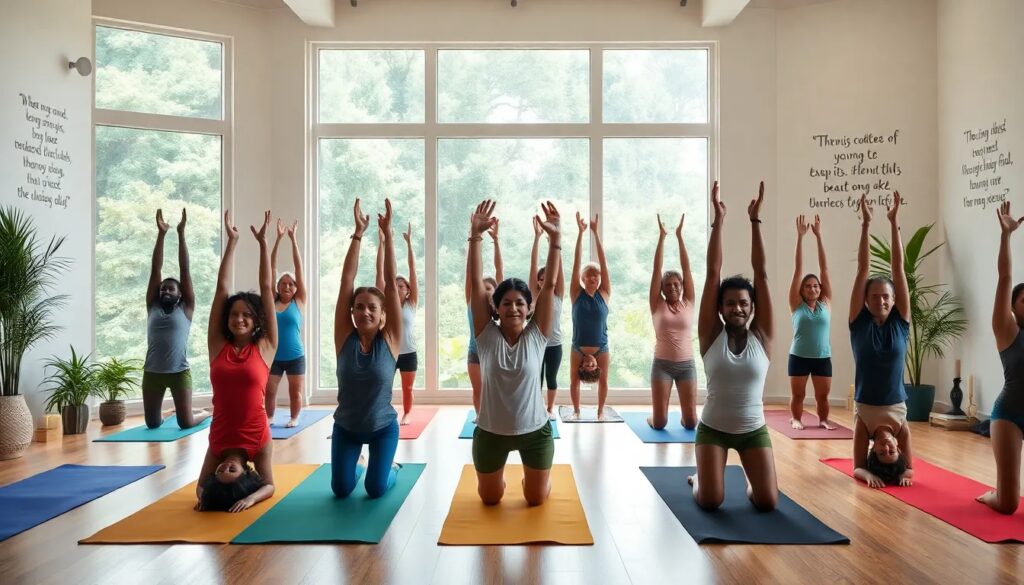
Inversion yoga refers to any pose in which your heart is higher than your head — from gentle shapes like Legs Up the Wall and Downward-Facing Dog to advanced balances like Headstand and Handstand. You do not need to stand on your head to practice inversions: most of the benefits people seek, such as a calmer nervous system and a change of perspective, are available in the beginner-friendly versions.
This guide ranks the main inversions by difficulty, separates proven benefits from myths, and lays out a realistic progression so you can build toward the harder poses without hurting your neck or wrists.
Inversion poses by difficulty
| Pose | Level | Main demand | Good starting point if... |
|---|---|---|---|
| Legs Up the Wall (Viparita Karani) | Beginner | None — fully supported | You want relaxation, not effort — this is the easiest and most accessible inversion |
| Downward-Facing Dog | Beginner | Hamstring and shoulder mobility | You practice any style of yoga already |
| Standing Forward Fold (Uttanasana) | Beginner | Hamstring flexibility | You want a quick head-below-heart reset |
| Dolphin Pose | Intermediate | Shoulder strength and openness | You are building toward Forearm Stand |
| Shoulder Stand (Salamba Sarvangasana) | Intermediate | Neck care, core control, props | You have an experienced teacher |
| Headstand (Sirsasana) | Advanced | Shoulder strength, straight-line control | You can hold Dolphin 60+ seconds |
| Forearm Stand (Pincha Mayurasana) | Advanced | Shoulder stability, balance | You are consistent at wall practice |
| Handstand (Adho Mukha Vrksasana) | Advanced | Wrist strength, full-body tension | You enjoy long-term skill projects |
What inversions actually do (and what they do not)
- Nervous system downshift. Gentle inversions like Legs Up the Wall are widely used for relaxation; slow breathing in a supported position is the active ingredient.
- Strength. Active inversions build real shoulder, arm, and core strength — Handstand work is as much strength training as yoga.
- Balance and body awareness. Being upside down trains proprioception in a way few other practices do.
- Confidence. Progressing from fear of falling to a steady hold carries over to how people approach other challenges.
Honest limits: claims that inversions detoxify the body, reverse aging, or boost immunity by draining lymph are not well supported by evidence. Blood circulation is regulated by the cardiovascular system whether you are upside down or not. Practice inversions because they build strength, balance, and calm — those benefits are real.
Who should avoid or modify inversions
Skip unsupported inversions, or get individual medical and teaching guidance first, if any of these apply:
- Uncontrolled high blood pressure or heart conditions
- Glaucoma, detached retina, or other eye-pressure issues
- Neck or spine injuries, including disc problems
- Pregnancy (gentle options like Legs Up the Wall may be fine — ask your doctor)
- Recent surgery, vertigo, or unmedicated reflux
This is general information, not medical advice. If you have any of the conditions above or are unsure, talk to a healthcare professional before going upside down.
A safe progression plan
- Weeks 1–4: head below heart, feet on the floor. Daily Downward Dog holds and Standing Forward Folds. Finish practice with 5 minutes of Legs Up the Wall.
- Weeks 4–8: build the base. Dolphin Pose holds, forearm plank, and wrist conditioning. Strong shoulders protect the neck later, and a headstand practice later on will lean on exactly this base.
- Weeks 8+: add the wall. Practice half-handstand with feet on the wall, or Dolphin walk-ins. The wall removes the fear of falling while you learn alignment.
- Only then: freestanding work, with a teacher. Headstand, Forearm Stand, and Handstand reward patience and punish shortcuts — especially for the cervical spine in Headstand. In-person feedback matters more here than in any other category of pose.
- Always counter-pose. Rest in Child's Pose after inversions and let your breath and blood pressure settle before standing up.
As an Amazon Associate, we earn from qualifying purchases.
Shoulder and wrist strength for this stage of the progression is easier to build with a yoga wheel — it supports gentle backbends and shoulder-opening work without loading the wrists the way a full inversion does.


How inversions fit into a regular practice
In a typical vinyasa class, Downward Dog appears dozens of times — you are already practicing inversions. Dedicated inversion work is best placed mid-practice, when you are warm but not exhausted. Restorative inversions like Legs Up the Wall belong at the end. If you practice in a heated room, be extra conservative: sweat makes balancing harder and dizziness more likely, which is one more reason to choose grippy gear — see our guide to what to wear for hot yoga.
Common mistakes
- Loading the neck in Headstand. Most of the weight belongs in the forearms and shoulders, not the crown of the head.
- Kicking up with momentum. Controlled entries are safer and build the strength you actually need.
- Skipping wrist and shoulder prep. Most inversion injuries are overuse, not falls. A set of yoga blocks under the hands or forearms is the standard way to build up Dolphin and Headstand prep without extra wrist strain.
- Ego pacing. A 30-second wall hold done well beats a wobbly freestanding attempt done badly.


More inversion guides on this site
If you want to go deeper on a specific inversion or a different family of upside-down practice, these guides cover the ground this article only summarizes:
- Headstand (Sirsasana): a full breakdown of the pose
- Handstand (Adho Mukha Vrksasana): technique and progressions
- Yoga headstand benches: do you need one?
- Aerial yoga: inversions with a hammock instead of the floor
- Aerial yoga poses to try once you're comfortable inverted
- What to expect from a dedicated inversion workshop
Browse more yoga styles and lineages for the wider context these poses fit into.
Any pose where the heart is higher than the head. That includes gentle shapes like Legs Up the Wall, Downward-Facing Dog, and Standing Forward Fold, as well as advanced balances like Headstand, Forearm Stand, and Handstand.
Gentle inversions like Legs Up the Wall and Downward Dog are safe for most healthy beginners. Headstand, Shoulder Stand, and Handstand need gradual strength building and ideally in-person instruction. People with high blood pressure, glaucoma, neck injuries, or who are pregnant should get medical advice first.
With consistent practice 3 or more times a week, many people reach a supported wall headstand in 2 to 4 months and a steady freestanding hold in 6 to 12 months. The timeline depends heavily on starting strength, shoulder mobility, and practice frequency.
No. The liver and kidneys handle waste removal regardless of body position, and there is no good evidence that being upside down detoxifies anything. The real, demonstrable benefits of inversions are strength, balance, body awareness, and relaxation in the supported variations.
Legs Up the Wall (Viparita Karani) is the easiest and most accessible inversion — it's fully supported, requires no strength or balance, and is safe for most healthy beginners.
Have a correction? Contact us.
Last update 2026-09-10. Price and product availability may change.
Recommended: