Yoga Bands: Types, Benefits, and How to Use Them in Your Practice

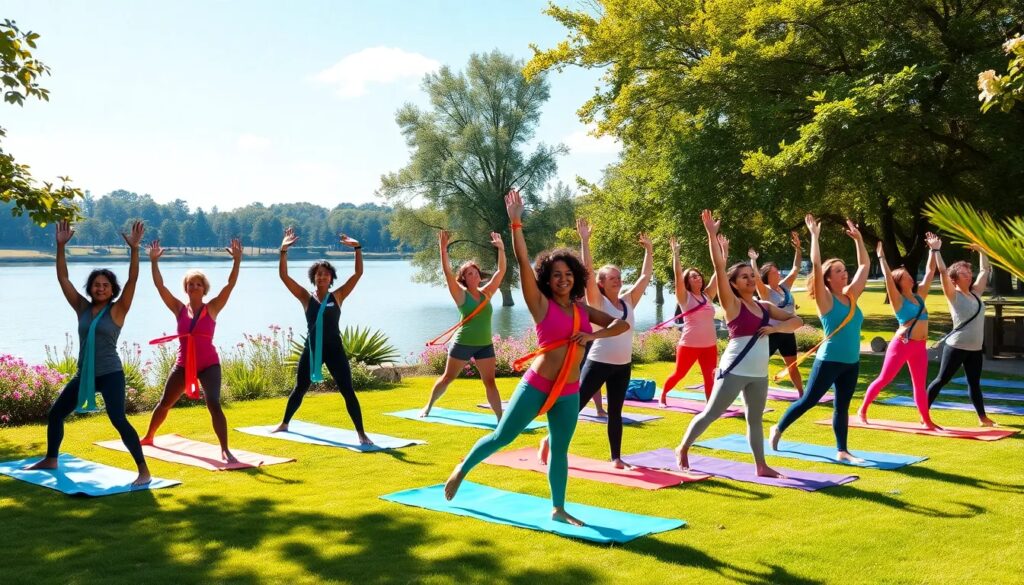
A yoga band is an elastic resistance band used to add strength work to a yoga practice or to deepen stretches safely. The term causes real confusion, because two different tools get called yoga bands: elastic resistance bands, which stretch and create load, and yoga straps, which do not stretch and simply extend your reach. This guide covers both, explains which one you actually need, and shows how to use them in a regular yoga practice.
Yoga band, resistance band or yoga strap: which do you mean?
Start here, because buying the wrong tool is the most common mistake. If your goal is to reach your foot in a hamstring stretch or hold a bind you cannot yet manage, you want a non-elastic yoga strap — elasticity would defeat the purpose, since the strap is meant to hold a fixed length. If your goal is to add resistance — stronger glutes, shoulders or core — you want an elastic band. Many practitioners eventually own both; our guide to yoga straps covers the non-elastic side in detail.
Types of elastic yoga bands compared
| Type | Shape | Best for | Typical resistance |
|---|---|---|---|
| Therapy / flat bands | Flat, open-ended sheet | Rehabilitation, gentle stretching, shoulder work | Very light to medium |
| Loop bands | Large closed loop | Assisted stretching, pull-up assistance, full-body strength | Light to very heavy |
| Mini bands | Small closed loop | Glute activation, hip stability, leg work | Light to heavy |
| Tube bands with handles | Tube with grips | Upper-body strength rows and presses | Medium to heavy |
For yoga-adjacent use, mini bands and flat therapy bands are the most useful: they are light, portable, and integrate easily into floor-based sequences. Tube bands with handles belong more to general strength training than to yoga.
Why add bands to a yoga practice?
- Targeted strength. Yoga builds strength through bodyweight, but it underloads certain patterns — hip abduction, rowing, pulling. Bands fill those gaps without weights.
- Joint-friendly resistance. Band tension increases gradually through the range of motion, which tends to be gentler on joints than free weights — one reason physical therapists use them so widely.
- Better muscle activation in poses. A mini band above the knees in Bridge Pose or Chair Pose forces the glutes and outer hips to engage instead of letting the knees collapse inward.
- Portability. A full set weighs a few hundred grams and fits in any bag — practical for travel alongside a yoga mat.
- Low cost. Decent sets are among the cheapest pieces of fitness equipment available.
5 simple band exercises to add to your routine
- Banded Bridge Pose. Mini band just above the knees, feet hip-width. Press the knees gently outward against the band as you lift the hips. 10–15 slow repetitions.
- Banded Clamshell. Lie on your side, knees bent, band above the knees. Keeping feet together, open the top knee against the band. 12 per side — excellent hip stability work.
- Shoulder pull-apart. Hold a flat band at shoulder height, arms straight, and pull the hands apart until the band touches your chest. 10–12 reps to balance all the pressing in Vinyasa practice.
- Assisted hamstring stretch. On your back, loop a light band (or better, a yoga strap) around one foot and gently straighten the leg upward. Hold 30–60 seconds per side.
- Banded Chair Pose (Utkatasana). Mini band above the knees; hold the pose while keeping outward tension on the band. Builds leg endurance and knee alignment habits.
If you are still learning the underlying postures, get comfortable with the basic shapes first — our guide to yoga poses for beginners is the place to start, and bands can come in later.
How to choose a yoga band
- Resistance level: beginners should start light — a band that allows 12–15 controlled reps. Most sets include three to five levels, which is the simplest way to progress. If you are unsure which band to buy first, the lightest or second-lightest in a standard set is almost always the right starting point.
- Material: natural latex offers the best stretch and durability; fabric-covered mini bands resist rolling on the thighs and suit latex allergies, but come in fewer resistance levels.
- Safety check: inspect bands for small tears before use — a snapping band can hit the face — and anchor them on smooth, secure points only.
- Set vs single: buy a small set rather than one band; you will want lighter resistance for shoulders and heavier for hips and legs.
For a broader view of the props that pair well with bands — blocks, straps, bolsters, wheels — see our yoga equipment guide and the yoga equipment resources hub.
As an Amazon Associate, we earn from qualifying purchases.


Most sets sold for yoga include enough variety in resistance to cover both shoulder work and lower-body work, which is why a set usually beats a single band for a home practice.

- High End Exercise Bands. Our 12"³ By 2"³ Heavy Duty Loop Resistance Bands Come In 5 Varying Resistance Levels. This Makes Them Perfect Whether You Are Just Starting To Workout Or A Seasoned Workout Warrior. Our Extra Light And Light Bands Are Great For Beginners, While Our Medium, Heavy And Extra Heavy Exercise Bands Are Targeted For More Intermediate And Advanced Strength Training.
- Great With Any Workout. This Resistance Band Set Can Be Integrated Seamlessly With Various Popular Workout Program. Or Use Them For General Exercise, Stretching, Strength Training, Power Weight Programs. The Included Carry Bag Makes It Easy To Take Your Bands With You And Do Any Workout Away From Home Or Your Home Gym.
- Multiple Uses. While These Resistance Bands Are Often Used For Sports And Fitness, Physical Therapists Love These Physical Therapy Bands (Rehab Bands) To Help Them Rehabilitate Their Patients. Our Stretch Bands Work For People Suffering From Leg, Knee And Back Injuries. They Are Also Perfect For Use By Women After Pregnancy And Birth To Keep Their Bodies In Shape.
- Superior Quality. All Of Our Exercise Resistance Bands Are Thoroughly Tested Before We Ship Them Out To You. This Ensures Your Bands Are Easy On Skin And Will Provide You With A Worry Free Experience. The Instruction Booklet Includes Dozens Of Different Illustrated Exercises That Demonstrate How To Use Our Resistance Bands For Legs, Arms, Back, Shoulders, Ankles, Hips And Stomach.
- What You Get: Five Exercise Bands With Color-Coded Resistance Levels, Portable Travel Carry Bag And Instruction Guide.
For the upper-body pulling patterns that yoga alone underloads — rows, pull-aparts, face pulls — a set with handles opens up more variety than loop bands alone.

- 10 to 150 lb Stackable Resistance: Five color coded exercise bands provide 10, 20, 30, 40 and 50 lb levels; use one for stretching or mobility, or connect multiple bands to the same handles for progressive resistance up to 150 lb
- Production Lot Cycle Testing: Finished bands are tested at 2 times resting length for 15,000 cycles; passing criteria require completion without rupture or fitting pullout, at least 80% retained force and no more than 5% free length growth
- 【Built to Last: Premium Latex & Secure Design】 Crafted from high-density natural latex for superior elasticity and long-lasting durability, resisting snaps and breaks. Features steel carabiners (not just buckles) for ultimate safety, non-slip cushioned handles for a firm grip, and a reinforced door anchor for stable, versatile exercises
- Full Body Training Anywhere: Use cushioned handles, ankle straps and the door anchor for upper body, lower body and core exercises; the carry pouch keeps the resistance band set organized for home, gym, office, hotel or outdoor workouts
- Complete Kit and Care Guidance: Includes 5 bands, 2 handles, 2 ankle straps, 1 door anchor, 1 carry pouch and 1 exercise guide; inspect monthly and replace a band immediately if it becomes white or chalky, cracks or changes length
Common mistakes and downsides of resistance bands
Resistance bands are forgiving, but they have real limits and common failure modes worth knowing before you build them into a routine:
- Progressively loading is harder than with free weights. The further you stretch a band, the more tension it produces, which is a feature for activation but makes heavy strength work awkward. For maximum strength or significant muscle mass, free weights still have the edge.
- Joint and lower-back issues with bad form. Jerking a band or anchoring it at the wrong height loads the shoulders and lumbar spine unevenly. Move into each rep slowly and anchor bands on smooth, secure points only.
- Snap risk. Latex bands develop small nicks that turn into snaps under load. Check before each session and retire any band that shows tears, especially near the handles or anchor points.
- Limited overload at the top of the movement. A band is hardest at the end of the range of motion, not the start, which is the opposite of how a weight feels. This is helpful for some exercises (pull-aparts, banded squats) and unhelpful for others (heavy hip thrusts). Match the tool to the goal.
- Cheap bands stretch out fast. Very low-cost bands lose elasticity within months of regular use. Sets from established fitness brands tend to hold their resistance longer.
This article is general information, not medical advice. If you are recovering from an injury, get guidance from a physical therapist before starting band exercises.
Frequently asked questions
Mostly yes — yoga band is an informal name for an elastic resistance band used in or around yoga practice. The thing to watch is that some products sold as yoga bands are actually non-elastic yoga straps, which serve a completely different purpose: extending your reach in stretches rather than adding resistance.
Choose a band light enough to complete 12–15 controlled repetitions of an exercise with good form. For most beginners that means the lightest or second-lightest band in a standard set. It is always better to start too light than too heavy — progress by moving up a level, not by straining.
For general fitness, mobility and rehabilitation, bands can cover most needs. For building maximum strength or significant muscle mass, free weights still have the edge because they are easier to load progressively and measure. Many people use both: bands for activation, stretching and travel, weights for heavy strength work.
With regular use, latex bands typically last one to two years before losing elasticity or developing tears; fabric bands often last longer. Extend their life by storing them away from sunlight and heat, keeping them off rough surfaces, and checking for nicks before each session.
Have a correction? Contact us.
Last update 2026-09-10. Price and product availability may change.
Recommended: