What Are Yoga Sandals?

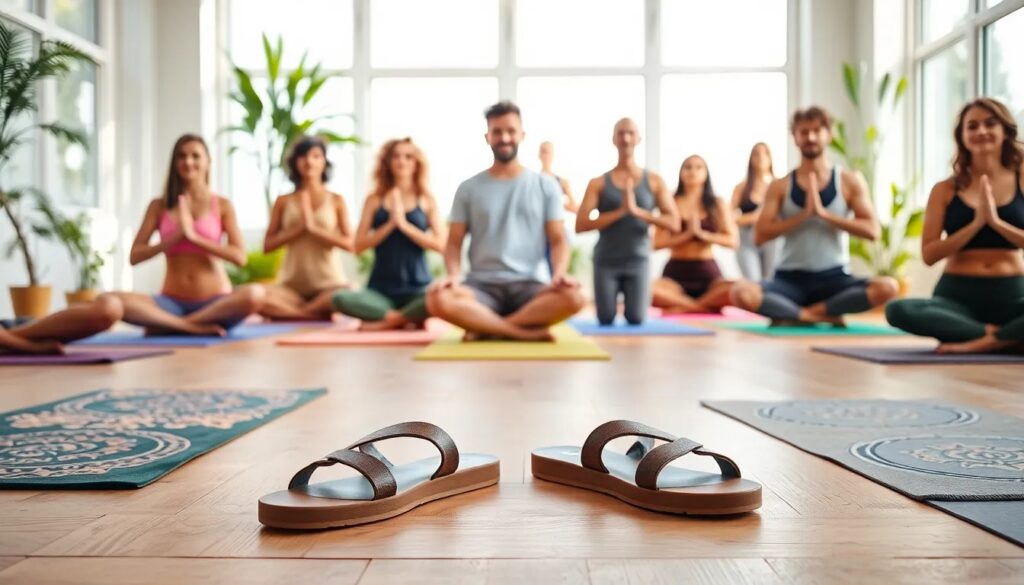
Yoga sandals are open sandals built with individual toe separators — soft posts between each toe, similar to permanent toe spacers — that hold the toes apart and let the foot spread the way it does barefoot. Despite the name, you do not wear them while practicing yoga: yoga is done barefoot or in grip socks. They earned the yoga label because spreading the toes for balance is a constant cue in yoga classes, and these sandals carry that barefoot-style toe splay into the rest of your day. Yoga Sandals is also a specific registered brand, but the term is now used generically for any toe-separating sandal.
How Yoga Sandals Work
A conventional shoe or flip-flop pushes the toes together; a flip-flop additionally makes you grip with the toes to keep it on. Yoga sandals take the opposite approach: a separator sits between each pair of toes, so the forefoot rests in a naturally splayed position and each toe can press into the ground independently. Most designs use a contoured footbed of EVA foam or similar material, with a heel strap or wide upper so the foot does not have to clench to hold the sandal on.
The idea borrows from two adjacent product categories: toe yoga exercises, which train the small muscles that move each toe, and barefoot-style footwear, which prioritizes a wide toe box and natural foot mechanics. Silicone toe spacers — the soft separators sold for bunion comfort and post-pedicure use — are the closest non-walking cousin.
Types of Yoga Sandals
Not every pair called a yoga sandal works the same way. Most fall into one of three families.
Toe-separator alignment sandals
These are the original concept: a sole with five individual dividers, one between each pair of toes, so the forefoot is held in a permanent natural splay. The patented Yoga Sandals® design is the reference for this category. They are the most "active" option for retraining toe position because the foot has to work a little to stabilize on the footbed.
Yoga-mat cushion sandals
A second family, popularized by brands like Sanuk, uses a soft, squishy footbed made from yoga-mat material under a normal thong or sling upper. The cushioning is the main draw; the toe separation is minimal or absent. These feel more like an everyday flip-flop than an alignment tool.
Minimalist barefoot-style sandals
A third family skips the rubber posts and instead relies on a wide toe box and a thin, flexible sole, so the toes can spread on their own. They are the closest cousin to true barefoot practice in sandal form, and they work best for wearers whose toes already splay easily.
What Are the Claimed Benefits — and What Does the Evidence Say?
Manufacturers make broad claims; here is an honest sorting of them:
- Toe splay and comfort — well supported by common experience. If your toes spend the day compressed in narrow shoes, separating them simply feels good, the same way stretching does. Many people with bunions report that spacers relieve pressure between the first and second toes.
- Pedicure protection — trivially true. Separated toes keep fresh polish from smudging, which is why salons hand out disposable versions of the same idea.
- Improved balance and posture — plausible but modest. Toes that can spread provide a wider base of support, a principle yoga teachers use constantly. Whether wearing the sandals translates into measurably better posture has not been rigorously demonstrated.
- Fixing bunions or foot pain — treat with caution. Toe spacers can ease symptoms while worn, but there is no solid evidence that any sandal corrects a bunion or replaces treatment. Persistent foot pain deserves a podiatrist, not a product.
Do You Wear Yoga Sandals During Yoga?
No. Yoga is practiced barefoot so the foot can grip the mat and the teacher can see your foot alignment. Yoga sandals are for before and after class — the walk to the studio, the locker room, the summer months — and for general wear. If your concern on the mat is hygiene or slipping rather than footwear, yoga socks with grip soles are the accessory designed for that job.
Yoga Sandals vs Flip-Flops vs Toe Spacers
| Feature | Yoga sandals | Regular flip-flops | Silicone toe spacers |
|---|---|---|---|
| Toe position | Separated and splayed | Compressed; toes grip the thong | Separated |
| Walkable outdoors | Yes | Yes | Mostly no — worn at rest or inside shoes |
| Foot engagement | Toes work independently | Toes clench to hold the sandal | Passive stretch only |
| Typical use | Casual wear, post-practice, summer | Beach, pool | Recovery, pedicures, bunion comfort |
How to Choose a Pair
- Check the separator material. Soft, rounded posts (EVA or rubber) are comfortable for hours; hard thin posts rub between the toes.
- Size for your toes, not just your length. The separators must line up with your own toe spacing; most brands publish detailed sizing guides — use them.
- Prefer a heel strap or secure upper if you will walk real distances, so your toes do not have to grip.
- Start with short wears. Like any toe spacer, separated toes feel strange at first; an hour or two a day for the first week is plenty.
- Buy from the brand or an authorized retailer — cheap lookalikes often copy the look but not the footbed shape. The vetting checklist in our article on whether Everyday Yoga is legit works for any yoga gear shop.
Who Should (and Shouldn't) Wear Yoga Sandals
Yoga sandals are a casual-wear product, not a medical device. They are a reasonable choice for people who want their feet to spend less of the day compressed, who like the feel of toe separation, or who are moving between the studio and the rest of their day in warm weather.
They are not a substitute for medical care. People with diabetic neuropathy, open foot wounds, recent foot surgery, or a bunion that is actively progressing should not self-treat with a sandal — those situations need a podiatrist's evaluation first. Anyone with persistent heel pain, plantar fasciitis, or forefoot pain that does not improve with rest deserves the same.
If your interest in yoga sandals is really an interest in stronger, more mobile feet, the practice itself does that work too — standing poses train exactly that, starting from the foundational shapes in our beginner yoga poses chart and the slower-paced classes described in our hatha yoga guide.
As an Amazon Associate, we earn from qualifying purchases.

- SIGNATURE SLING STYLE, REIMAGINED: Slip into the original Sling with a sustainable twist. This fan-favorite features our classic two-way stretch jersey straps and yoga mat footbed comfort, now made with ocean-bound recycled plastic for a feel-good fit that supports your steps and the planet.
- KEY FEATURES: Soft, stretchy Sling upper made with 40% recycled REPREVE Our Ocean polyester for a secure, flexible fit that moves with you.
- YOGA MAT COMFORT: The original memory foam Yoga Mat footbed cushions every step with plush, foot-hugging comfort for all-day wear.
- SUSTAINABLE OUTSOLE: Durable Happy U sponge rubber outsole made with 53% recycled content delivers grip and long-lasting wear with an earth-friendly edge.
- ECO-CONSCIOUS DESIGN: Thoughtfully crafted using traceable, verifiable recycled materials to help reduce ocean plastic waste—without sacrificing style or comfort.
If a single, well-reviewed pair is what you are after, this is the most common starting point — a pair of generic toe-separator alignment sandals in standard sizing.


For the cushion-first family (Sanuk-style footbed), the grid above is a quick way to compare the most-bought options side by side.

- BUILT-IN TOE SEPARATORS: The cushioned 4-post design keeps toes comfortably spaced while polish dries, helping reduce contact between freshly painted nails without separate foam spacers or cotton.
- CUSHIONED EVERYDAY COMFORT: A supportive 1-inch foam sole helps absorb impact underfoot, while the padded leather strap rests softly across the foot for easy wear at home, at the salon or after a long day.
- REUSABLE PEDICURE FLIP FLOPS: Slip them on before or after a pedicure for a practical alternative to disposable salon slippers. The open-toe design allows airflow and makes it easier to move around while nails finish drying.
- VERSATILE SPA-STYLE SANDALS: Designed for pedicures, yoga, relaxation, travel and lounging. The slip-on profile combines the ease of house slippers with the familiar look and function of women's flip flops.
- SIZES AND STYLES FOR WOMEN: Offered in multiple colors and women's sizes Small through X-Large. Review the variation size chart before ordering to select the best fit for your foot length and comfortable toe placement.
And for the toe-separator crowd who wants the original alignment concept in a single detailed view, this is the search that surfaces the dedicated toe-separator sandal brands.
Frequently Asked Questions
No. Yoga is practiced barefoot or in grip socks so the feet can grip the mat. Yoga sandals are worn before and after class and as everyday footwear that keeps the toes splayed the way they are on the mat.
They can ease pressure and discomfort between the toes while worn, much like silicone toe spacers, and many wearers find that relieving. There is no good evidence that any sandal corrects a bunion, so persistent pain or a progressing deformity should be assessed by a podiatrist.
Once your toes adapt, most people find them comfortable for casual wear, especially models with soft separators and a heel strap. The separated-toe feeling is unfamiliar for the first few days, so build up wearing time gradually.
Yes. Several brands make unisex or men-specific models, and the toe-separation concept works identically for any foot. Sizing is the main thing to check, since separator spacing must match your toes.
This article is general information, not medical advice. If you have ongoing foot pain, a bunion that is worsening, or a foot condition such as plantar fasciitis, consult a podiatrist or other qualified health professional.
Have a correction? Contact us.
Last update 2026-09-10. Price and product availability may change.
Recommended: