Yoga Certification Programs: RYT Levels, Costs and How to Choose

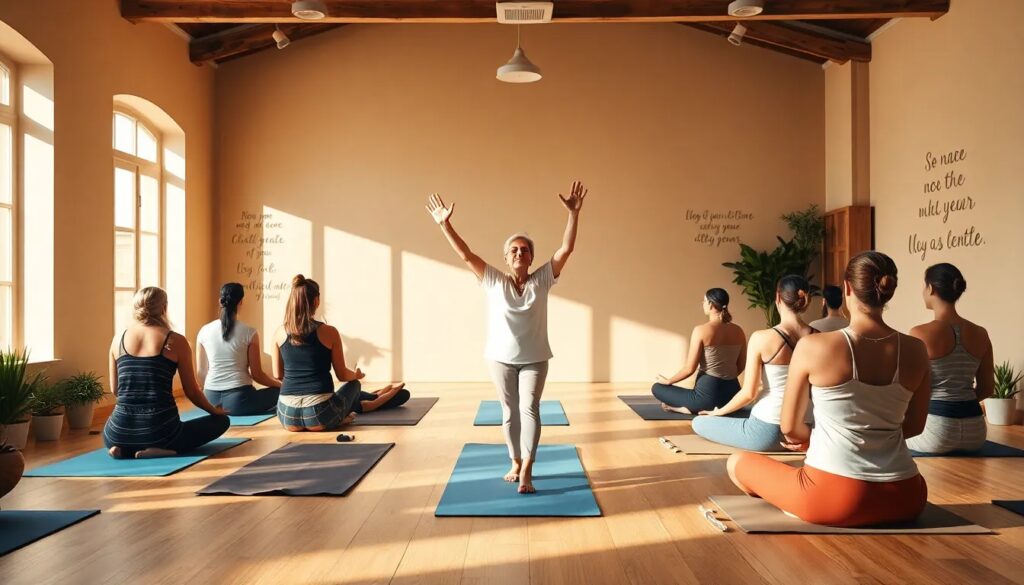
A yoga certification program is a structured training, most commonly built around 200 hours of study, that prepares you to teach yoga and ends with a certificate from the school. If the school is registered with Yoga Alliance, completing the course lets you apply as an RYT (Registered Yoga Teacher), the most widely recognized designation in the industry. Yoga certification programs vary in length from a one-month residential intensive to a year of part-time study, and they are offered in person, online, or as hybrids. Here is what the credentials actually mean and how to choose between them.
- What a yoga certification actually means (and what it does not)
- Certification levels at a glance
- Online, in-person, or hybrid?
- What determines the cost of a yoga certification program?
- How to choose a program: a practical checklist
- Is certification worth it if you never plan to teach?
- Frequently asked questions
What a yoga certification actually means (and what it does not)
It helps to be precise, because the industry language is confusing. No US state or European country licenses yoga teachers the way they license, say, physical therapists. A yoga certificate is issued by the school that trained you. Yoga Alliance, the largest body in the field, does not certify teachers either: it is a registry. Schools register their curricula as RYS (Registered Yoga School), and graduates of those schools can pay to be listed as RYT.
That does not make certification meaningless. Studios and gyms use the 200-hour standard as a hiring baseline, liability insurers commonly require it, and a good program genuinely teaches you to sequence, cue, and keep students safe. It just means the school you pick matters far more than the acronym on the certificate.
Certification levels at a glance
| Credential | Requirement | Who it is for |
|---|---|---|
| RYT 200 | Complete a 200-hour training at a registered school | The standard entry credential; enough to teach group classes |
| RYT 500 | 200-hour plus a 300-hour advanced training | Teachers deepening their skills; sometimes required for senior roles or training staff |
| E-RYT 200 / E-RYT 500 | RYT plus documented teaching hours over several years | Experienced teachers; required to lead trainings that count toward registration |
| Specialty designations (RPYT, RCYT) | Specific prenatal or children's yoga trainings | Teachers serving those populations |
| C-IAYT (yoga therapy) | An 800-hour-plus program accredited by IAYT | A separate, much longer path for therapeutic work |
Online, in-person, or hybrid?
- In-person remains the gold standard for learning to teach: you practice cueing real bodies, receive live feedback, and build teaching confidence. Formats range from month-long intensives, including destination programs like yoga teacher training in Europe, to weekend courses spread over months at a local studio.
- Online programs are typically more affordable and self-paced. They work well for theory, philosophy, and deepening personal practice. Their weakness is the practicum: teaching through a webcam is not the same skill as managing a room. See our guide to online yoga teacher training for the trade-offs in detail.
- Hybrid programs put anatomy and philosophy online and concentrate the in-person hours on teaching practice. For many people this is the best value of the three.
What determines the cost of a yoga certification program?
Rather than a single price tag, the cost of a yoga certification program is shaped by a few factors. The four that move the needle the most:
- Format: online programs tend to sit at the lower end of the range because they avoid room, board, and on-site staffing; in-person intensives, especially residential ones, sit at the higher end because they bundle accommodation and meals.
- Location: programs in high-cost cities or remote retreat destinations cost more to run than community-studio courses, and that gap is passed on to the trainee.
- What's included: tuition only versus tuition plus accommodation, meals, manuals, and weekend modules changes the total significantly. Ask for an itemized breakdown before you commit.
- Registration and ongoing fees: if you go on to register with Yoga Alliance, expect an application fee and annual dues. These are separate from tuition and recur yearly, so they belong in your long-term budget, not just your training budget.
Truly free certification programs are rare; what exists are scholarships, work-study arrangements, and community-funded spots, usually in exchange for volunteer teaching. Treat any free certificate from an unknown website with skepticism, since the value of certification is the training behind it.
How to choose a program: a practical checklist
- Define your goal. Deepening personal practice, teaching part-time, or building a career each point to different formats and budgets.
- Check registration claims. Look the school up in the Yoga Alliance directory yourself rather than trusting a logo on the site. Our primer on Yoga Alliance 200-hour requirements explains what registered status actually covers.
- Study the curriculum split. Ask how many hours go to teaching methodology and supervised practicum; those hours are what make you employable.
- Research the lead trainer. Years of experience, lineage, and whether they actually teach the course.
- Match the style to your practice. A training built on Ashtanga yoga differs sharply from one built on flowing sequences; if you are unclear on the distinctions, our overview of vinyasa yoga is a good starting point.
- Talk to graduates. Ask the school to connect you with two or three alumni, and read independent reviews.
- Read the contract. Deposit terms, refund policy, and what happens if you miss modules.
If you are still building a daily practice, our guide on how to start yoga covers the earlier stage, and our overview of yoga retreats is a good complement if you want immersion without the full commitment of a training. When you are ready to commit, how to prepare for yoga teacher training walks through the practical steps before day one.
Questions to ask the school before you pay
- Who is on the faculty for every module, and do they actually teach the sessions or only design the curriculum?
- How are the practicum hours structured: peer teaching, observed teaching, or both?
- What is the policy if a trainer is replaced mid-program?
- Is the certificate contingent on attendance, on passing an assessment, or both?
- What support is available after graduation (mentoring, job leads, alumni community)?
- Can they share the full refund and deferral policy in writing before you deposit?
Is certification worth it if you never plan to teach?
Many trainees enroll with no intention of teaching, and most schools say these students are a substantial share of every cohort. A 200-hour program is essentially a deep-dive course in anatomy, philosophy, breathwork, and practice mechanics, and it can transform a personal practice. If that is your goal, weigh a training against alternatives first: a course of workshops, a long retreat, or simply more consistent practice.
As a practical add-on to a personal practice, a small set of reliable props earns its keep well before you sign up for a full training. A single cork block and a strap, for example, are the two pieces most trainees reach for during home practice and during in-person modules alike.
As an Amazon Associate, we earn from qualifying purchases.

- Natural Cork: Elevate your yoga practice with our eco-friendly, non-slip Gaiam Cork Yoga Block, perfect for yoga, Pilates, and more
- Modify Your Poses: Ideal for all skill levels; shorten or deepen your stretches effortlessly. Dimensions: 4"W x 6"H x 9"D, lightweight at 1.5 lbs.
- Rounded Edges & Superior Grip: Designed for your comfort, the rounded edges and textured surface provide excellent grip and control during challenging poses.
- Perfect Dimensions: Measuring at 4"W x 6"H x 9"D, this yoga block provides ample support for optimal alignment and posture.
- Versatile & Portable: Compact and lightweight, this cork yoga block is your go-to fitness accessory for home or gym workouts.

A strap is the other piece that shows up in nearly every recommended home practice: it extends your reach in seated folds, supports shoulder openers, and lets you hold alignment in standing poses without straining. It is also the kind of prop a school may or may not provide in person, so having your own removes one variable on day one.

- Home PT Strap for Independence (3 Recovery Stages) – A physical therapy stretching strap designed for gentle knee/hip/leg mobility at home. Use it across recovery: Stage 1 bedside assist (when movement is limited), Stage 2 PT stretching/ROM, Stage 3 daily warm-up to maintain mobility—so you can stay independent
- Non-Elastic, Steady Holds (No Rebound / No Surprise Stretch) – The strap does not stretch, so there’s no bounce and no sudden “give.” You can pull to the angle you need and it stays there, helping you move slowly and safely—especially after knee replacement or hip replacement recovery.
- Loops = Easier Grip + Adjust Depth + Track Progress – Multiple loops provide clear hand/foot holds with less grip strength than towels or ropes. Switch loops anytime to adjust stretch depth, repeat the same position each session, and track ROM progress for hamstrings, calves, hips/hip flexors, and lower back—without forcing.
- Leg Lifter Strap / Mobility Aid for Bed & Car – Can also be used as a leg lifter to help lift your leg into bed or car, supporting daily movement tasks when flexibility is limited (use gently within comfort). gently within comfort).
- PT-Style Daily Stretching for Legs, Back & Feet (Comfort Tip) – Built for slow, controlled home stretching and mobility work for legs, hips, lower back, ankles, and feet (calf/Achilles tightness included)—not an elastic resistance band. For comfort during longer holds, socks or light gloves may help. during longer holds, socks or light gloves can help if you have sensitive hands/skin. gloves can help if you have sensitive hands/skin.
Frequently asked questions
RYT 200 means you completed a 200-hour foundation training at a Yoga Alliance registered school. RYT 500 means you completed an additional 300-hour advanced training on top of that. The 200-hour level is the standard hiring baseline; the 500-hour level signals deeper study and is sometimes required for senior or trainer roles.
A 200-hour program takes about one month as a full-time residential intensive, or four to twelve months in part-time weekend or online formats. Advanced 300-hour programs add a similar or longer commitment.
Many are run by established schools and teach solid theory at a lower price. The limitation is practical teaching skill, which is hard to build over video. If you plan to teach in studios, check whether local employers accept online certificates and favor hybrid programs with in-person teaching hours.
No. Yoga teaching is not government-licensed in the US or Europe. In practice, studios, gyms, and liability insurers usually require at least a 200-hour certificate, so certification functions as an industry standard rather than a legal one.
Free certification from a credible school is rare, but scholarships, work-study arrangements, and community-funded spots do exist, usually in exchange for volunteer teaching. Treat any free certificate from an unknown website with skepticism: the value of certification is the training behind it, not the document itself.
Have a correction? Contact us.
Last update 2026-09-10. Price and product availability may change.
Recommended: