Can You Wash a Yoga Mat in the Washing Machine? A Practical Guide

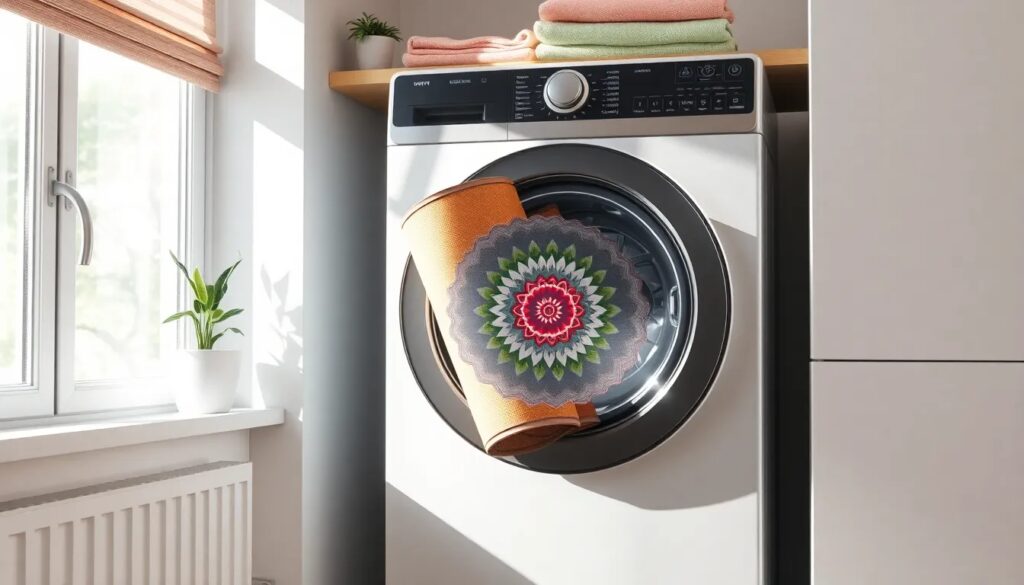
Most yoga mats should not go in the washing machine. The agitation, detergent, and water exposure break down PVC foam, natural rubber, cork, and polyurethane surfaces, leaving mats warped, crumbly, or slippery. A small number of mats — mainly thin, open-cell mats whose manufacturers explicitly say so on the care label — can handle an occasional cold, gentle cycle. The deciding factor is not how dirty the mat is; it is what the mat is made of and what the manufacturer states.
This guide covers how to identify whether your mat is machine-safe, the exact settings to use if it is, and a reliable hand-cleaning routine for the majority of mats that are not.
Which Yoga Mats Are Machine Washable?
Check the care label or the manufacturer's website before anything else. If there is no explicit statement that the mat is machine washable, assume it is not. As a general guide by material:
| Mat material | Machine washable? | Recommended cleaning |
|---|---|---|
| PVC (most budget mats) | Rarely — only if the label says so | Wipe down or hand wash |
| TPE (thermoplastic elastomer) | No — heat and agitation deform it | Wipe down with mild soap solution |
| Natural rubber | No — water soaking degrades rubber | Quick wipe, minimal water, dry fast |
| Polyurethane top layer | No — surface is easily damaged | Damp cloth only, no oils or vinegar |
| Cork surface | No | Damp cloth; cork is naturally antimicrobial |
| Cotton or jute travel mats | Often yes — check label | Cold gentle cycle, air dry flat |
The exceptions tend to be thin, fabric-like or open-cell mats. Some manufacturers of open-cell PVC mats state their mats can be machine washed occasionally on a cold, delicate cycle. If your mat came without packaging and you cannot identify the brand, treat it as hand-wash only — the downside of guessing wrong is a ruined mat.
What the Major Brands Say
The brands practitioners ask about most all land on the same side of this question.
Lululemon
Lululemon's own care guidance is to spot-clean the mat with a damp cloth, let it dry before rolling, and store it out of direct sunlight. The brand's wash-and-care help center does not list yoga mats among machine-washable items, and community guidance is consistent with the official line: do not put a standard Lululemon mat in the washing machine. A limited subset of thin, reversible cotton-blend travel mats is the only category where machine washing is sometimes tolerated, and only on a cold delicate cycle — still air dry, never machine dry.
Manduka
Manduka's official care guide is unambiguous: the only mat they say you can put in the washing machine is their Shala yoga rug, which is a cotton rug, not a foam mat. For every other Manduka mat, their published answer is "No — a washing machine will damage your mat and cause rapid aging." They also explicitly warn against running the mat under a garden hose, soaking it in a bathtub, or using a vacuum cleaner on it. Source: Manduka's mat care guide.
Gaiam
Gaiam's printed care instructions for their standard PVC and TPE mats recommend a damp cloth with mild soap and air drying, not machine washing. The brand's thicker premium mats (cork, rubber, jute-topped) follow the same rule. Some thin Gaiam travel or printed cotton mats are labeled as machine-washable on a cold, gentle cycle — always check the tag on the specific mat before assuming.
How to Machine Wash a Yoga Mat (Only If the Label Allows It)
- Use cold water and the gentlest cycle your machine offers (delicate or hand-wash setting).
- Use a small amount of mild detergent — about a teaspoon. Never use bleach or fabric softener; both degrade mat surfaces and leave slippery residue.
- Wash the mat alone, not with clothing or towels that can tangle and stretch it.
- Skip the spin cycle if possible, or use the lowest spin speed. High-speed spinning can crease and warp foam.
- Never put a yoga mat in the dryer. Heat is the fastest way to destroy any mat material. Air dry it instead.
Even for machine-safe mats, treat this as an occasional deep clean — a few times a year — rather than routine maintenance. Frequent machine washing shortens the life of any mat. If your mat is visibly flaking or shedding, washing will accelerate the damage; it may be time to check how often to replace a yoga mat.
How to Hand Wash a Yoga Mat (Works for Every Mat)
For the large majority of mats, this routine is safer and nearly as effective:
- Mix a cleaning solution: a few drops of mild dish soap in roughly a quart of warm water. For closed-cell PVC mats you can substitute a 50/50 water and white vinegar mix; avoid vinegar on natural rubber and polyurethane surfaces.
- Dampen a soft cloth in the solution — do not pour liquid directly onto the mat.
- Wipe both sides, paying attention to the areas where your hands and feet land. If you are unsure which surface takes the most contact, see which side of a yoga mat to use.
- Wipe again with a clean, water-only cloth to remove soap residue, which otherwise makes the surface slippery.
- Air dry completely — hang it over a chair or drying rack, out of direct sunlight. Sun exposure dries and cracks rubber and fades colors.
Can You Wash a Yoga Mat in the Bathtub?
Yes for closed-cell PVC mats, with caveats. Fill the tub with lukewarm water and a small amount of mild soap, lay the mat flat, wipe both sides with a soft cloth, rinse, then press (do not wring) the water out with a towel and hang to dry. Open-cell mats, natural rubber, and polyurethane mats absorb water and can take days to dry, so the bathtub is best avoided for those — wipe them down instead. If a mat is too large to fit comfortably in your tub, a standard yoga mat size is the right reference: a typical 68-inch mat fits lengthwise with the sides folded up.
For a deeper clean on closed-cell PVC mats only, you can soak the mat briefly in a bathtub with mild soapy water, scrub gently, rinse, press (do not wring) the water out with a towel, and air dry. Open-cell and rubber mats absorb water and can take days to dry, so soaking is best avoided for those.
How Often Should You Clean Your Yoga Mat?
- After every session: a quick wipe with a damp cloth or mat spray, especially after hot yoga or any sweaty practice.
- Weekly to monthly: a more thorough hand wash with soap solution, depending on how often you practice.
- A few times a year: a deep clean (soak or machine wash, material permitting).
Mats used in shared studio spaces or outdoors pick up more grime — an outdoor yoga mat generally needs a wipe-down after every use. Darker mats hide discoloration longer, which is one reason many practitioners choose a black yoga mat, but hidden dirt still needs the same cleaning schedule. If you find that even after a careful hand-wash the surface is still slick, the issue may be the mat itself rather than the cleaning — a non-slip mat built for grip is often a better answer than more soap.
Signs You Should Replace Instead of Wash
Cleaning cannot fix structural wear. Replace the mat if you notice flaking or shedding foam, permanent thin spots where you stand, a slippery surface that no cleaning restores, or persistent odor after a deep clean. Thinner mats wear out faster; if cushioning is a recurring problem, reviewing yoga mat thickness options before your next purchase can help. For more on mat care broadly, the yoga equipment resources hub covers related questions.
As an Amazon Associate, we earn from qualifying purchases.

- Effective Cleaning Power: Removes sweat, dirt, and everyday buildup from yoga mats, exercise mats, and fitness accessories
- Essential Oil Infusion: Infused with essential oils for a light, refreshing citrus scent after cleaning
- No Residue Formula: Leaves no sticky or slippery residue that can interfere with your practice
- Versatile Application: Suitable for yoga mats, blocks, straps, exercise mats, and workout accessories
- USDA Certified Biobased Formula: Made with renewable plant-based ingredients that are certified by the USDA
- Made in the USA: Manufactured in the USA with a focus on quality and reliable performance
No. Both brands use polyurethane or closed-cell surfaces and explicitly recommend wiping with a damp cloth and mild soap instead. Machine washing voids care guidance and can ruin the top layer.
Never. Heat warps foam, melts TPE, and cracks rubber. Always air dry a yoga mat flat or draped over a rack, away from direct sunlight and radiators.
A teaspoon of mild, dye-free liquid detergent on a cold gentle cycle. Avoid bleach, fabric softener, and heavily scented detergents, which leave residue that makes the surface slippery.
Wipe both sides with a 50/50 water and white vinegar solution (skip vinegar on rubber or polyurethane mats and use mild soap instead), rinse with a water-dampened cloth, and air dry fully. Persistent odor after a deep clean usually means the mat needs replacing.
Yes, for closed-cell PVC mats. Lay the mat in a tub of lukewarm water with a small amount of mild soap, wipe both sides with a soft cloth, rinse, press out water with a towel, and air dry. Avoid soaking open-cell, rubber, or polyurethane mats.
Have a correction? Contact us.
Last update 2026-09-10. Price and product availability may change.
Recommended: