Yoga Teacher Training in Italy: Costs, Regions, and How to Choose

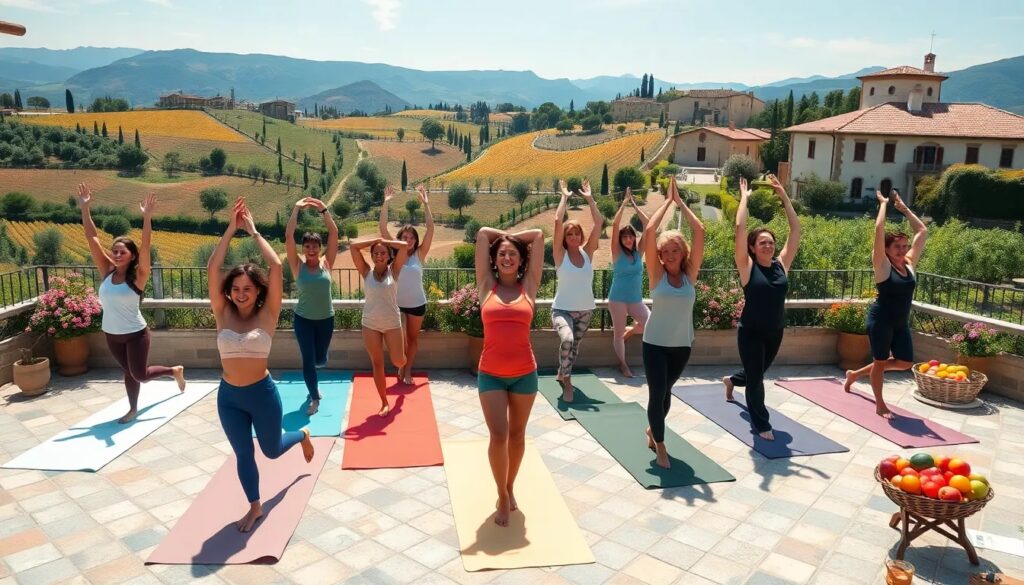
A yoga teacher training in Italy typically takes the shape of a residential 200-hour intensive lasting around two to three weeks, where tuition, shared lodging, and two or three vegetarian meals a day are bundled into a single fee. Compared with India or Southeast Asia, Italy sits at the premium end of the European training market: short flights from most of the continent, reliable infrastructure, and venues — restored farmhouses in Tuscany, coastal retreats in Sardinia and Sicily, villas near the northern lakes — that double as a holiday setting.
This guide covers how the main regions compare, what a typical training day looks like, two schools you can verify on their own websites, and the questions that separate solid programs from marketing.
What a 200-hour training in Italy includes
Most Italian programs follow the Yoga Alliance 200-hour framework: asana technique and practice, teaching methodology, anatomy and physiology, yoga philosophy and ethics, and supervised practicum where you teach real classes. If you are not yet sure what that framework involves, our explainer on what a 200-hour yoga teacher training is breaks it down module by module.
The dominant styles on offer are vinyasa and hatha, with a growing number of yin, restorative, and multi-style programs. Residential trainings usually bundle tuition, lodging, and meals; urban non-residential options exist in Rome, Milan, and Florence, usually spread over several months of weekends.
How the regions compare
| Region | Typical setting | Best season | Price tendency | Good for |
|---|---|---|---|---|
| Tuscany / Umbria | Restored farmhouses (agriturismi), rolling countryside | April–June, September–October | Mid to high | Quiet immersion, food culture |
| Sardinia | Coastal retreat centers | May–June, September | High in summer | Sea, swimming between sessions |
| Sicily | Country estates, seaside villas | April–June, September–October | Mid | Lower prices, long warm season |
| Lakes (Como, Garda) and Alps | Villas, mountain lodges | May–September | High | Dramatic scenery, cooler summers |
| Puglia | Masserie (fortified farmhouses) | April–June, September–October | Mid | Emerging scene, good value |
| Cities (Rome, Milan, Florence) | Studio-based, non-residential | Year-round | Tuition only, no lodging | Locals, weekend formats |
July and August are hot, crowded, and expensive in most of the country; the shoulder seasons are when the residential calendar is busiest, and for good reason.
What it costs, realistically
Italy sits in the upper tier of the European YTT market. Most residential programs fall into a band that locals describe as mid-range, with a smaller number of budget-friendly programs in Sicily, Puglia, or off-season dates, and a premium tier for private rooms, boutique venues, or well-known lead teachers. What is almost never included in the headline number: flights, travel insurance, single-room supplements, and any fees to register as a teacher with Yoga Alliance after graduation.
For comparison, similar trainings generally cost less in Asia: see our guides to yoga teacher training in Bali and yoga teacher training in Thailand. Italy's premium buys proximity, comfort, and the food.
A typical training day
- Morning, first block — meditation and pranayama.
- Morning, second block — asana practice.
- Mid-morning — breakfast.
- Late morning block — anatomy, alignment labs, or philosophy.
- Early afternoon — lunch and rest.
- Afternoon block — teaching methodology and practicum.
- Evening block — second practice, often yin or restorative.
- Evening — dinner, study, occasional lectures; usually one full day off per week.
Expect six training days a week and genuine fatigue. Arriving with a consistent practice makes an enormous difference — our guide on how to prepare for yoga teacher training covers what to do in the months before departure.
Two schools you can verify on their own websites
Aggregators list dozens of Italian programs, but the school websites themselves are the most reliable source for current formats, lead teachers, and dates. Two that we opened and confirmed directly during the writing of this guide:
- Hari-Om Yoga School — located at Cascina Bellaria in Sezzadio, Piedmont. Their own site lists a two-week intensive 200-hour and a 300-hour program, both described as residential and Yoga Alliance-aligned. The site publishes a faculty list and contact information for direct enquiries.
- Yogamea School — based in Misano Adriatico, on the Romagna coast near Rimini. Their website describes residential 200-, 300-, and 500-hour programs in Hatha and Ashtanga Vinyasa, and identifies the school as a registered Yoga Alliance school (RYS) for those levels. The site also lists a separate India location in Rishikesh for students who want to compare formats.
If you are weighing a hybrid or split program — for example, a 100-hour online module plus a 100-hour residential week in Italy — Yogamea's site explicitly offers that structure. The point of mentioning these two is not to endorse them over others, but to show the kind of detail you should expect to read on any school's own website before paying a deposit.
Italy vs. other YTT destinations
Italy is one of several popular routes, and the right choice depends on what you value most.
- Italy vs. India. India offers a longer immersion in yoga's source cultures and is the reference for traditional ashram-style training. See our yoga teacher training in India guide for the main hubs (Rishikesh, Goa) and the formats on offer.
- Italy vs. Bali. Bali is the heavyweight of the tropical-residential scene, with strong vinyasa and yin schools. Read our Bali guide to see how the weeks, food culture, and group size compare.
- Italy vs. Thailand. Thailand combines beach-resort venues with a dense calendar of intensive trainings. Our Thailand guide covers the main islands and what to expect from a residential month there.
- Italy vs. the rest of Europe. Spain, Portugal, Greece, and France run similar residential programs with shorter flights inside the Schengen area. For a broader continental view, see yoga teacher training in Europe.
If budget is the priority and you have flexibility on travel, Asia generally costs less than Italy. If you want short flights, a continental food culture, and a venue that doubles as a holiday, Italy is the easier sell. For a 300-hour follow-up to a 200-hour, several of these destinations also run advanced intensives — see our guide to the 500-hour teacher training for the longer route.
How to vet a school before you pay
- Check the registration. If Yoga Alliance certification matters to you, verify the school (RYS) and the lead trainer (E-RYT) directly in the Yoga Alliance directory — not just a logo on the website.
- Ask who actually teaches. Some programs market a famous name who appears for two days. Ask for the day-by-day faculty schedule.
- Language of instruction. Many Italian programs teach in English, some in Italian, some bilingually. Confirm before booking.
- Group size. Small groups under about twenty students mean real feedback on your teaching; much larger cohorts mostly observe.
- Practicum hours. The single best predictor of whether you can teach afterwards. Ask how many times you will teach in front of the group.
- Read the refund policy and book with a payment method that offers protection. Modest deposits are normal; full prepayment to a personal account is not.
- Talk to graduates. Any established school can connect you with two or three alumni. Reluctance here is a red flag.
Is Italy the right choice for your training?
Choose Italy if you value short travel from Europe, comfortable venues, mild shoulder-season weather, and are willing to pay a premium for them. Choose Asia if budget is the priority or you want a longer immersion in yoga's source cultures — our Nepal training guide shows how far the same money goes there. Either way, the certificate is the same 200 hours; the teacher and curriculum matter far more than the postcard.
Most residential 200-hour programs in Italy fall into a mid-range band, with budget-friendly options in Sicily or Puglia and a premium tier for private rooms, boutique venues, or well-known lead teachers. The exact figure depends on the school, the season, and the room type. Flights, travel insurance, single-room supplements, and any fee to register as a teacher with Yoga Alliance after graduation are usually extra.
Residential intensives typically run two to three weeks of full-time study with six training days per week. City-based programs in Rome, Milan, or Florence spread the same hours over several months of weekends, which suits people who cannot take three weeks off work.
The shoulder seasons — April to June and September to October — offer the best combination of mild weather, availability, and price. July and August are hot and expensive in most regions, though lake and alpine venues stay comfortable through summer.
Many residential programs aimed at international students are taught entirely in English, while city-based courses often run in Italian or bilingually. Always confirm the language of instruction with the school before paying a deposit.
A 200-hour certificate is a record of training hours, not a government license. If the school is a registered Yoga Alliance school (RYS) and the lead teacher is a registered E-RYT, the certificate is recognized through Yoga Alliance's international directory. Outside that framework, recognition depends on the studio or employer where you want to teach.
Have a correction? Contact us.
Recommended: