NASM Yoga Certification: What It Covers, Who It Suits, and How to Get It

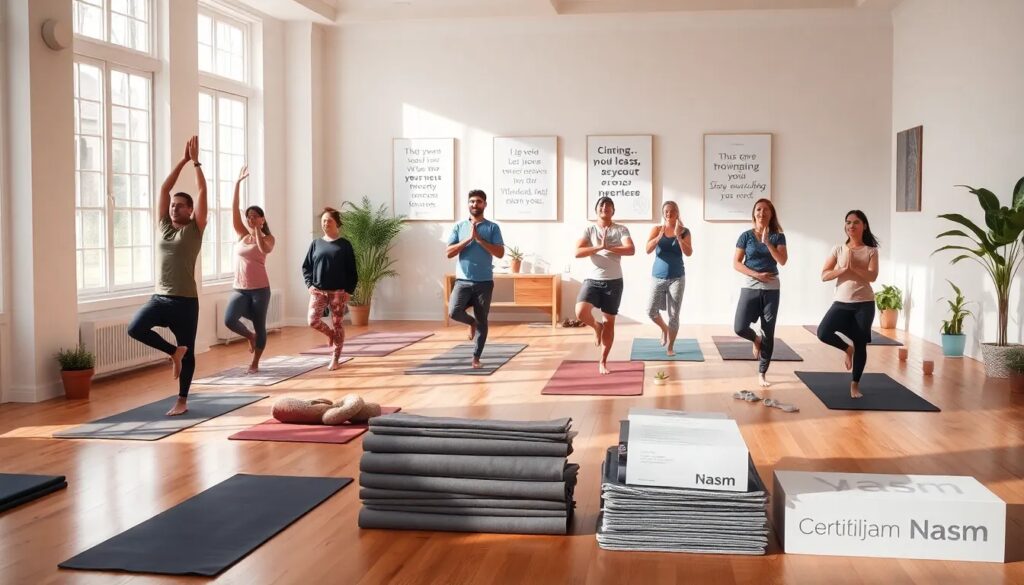
The NASM yoga certification is a fitness-industry credential issued by the National Academy of Sports Medicine (NASM), the same body best known for its Certified Personal Trainer program and trusted in the fitness space since 1987, according to nasm.org. It is delivered as a self-paced online course aimed at personal trainers and group fitness instructors who want to add yoga-informed mobility, recovery, and mind-body work to their existing client programming. It is not the same thing as a Yoga Alliance RYT-200 registration, and understanding that difference is the single most useful thing to confirm before paying for either.
What the NASM Yoga Certification Is
NASM-branded yoga training is a continuing-education specialization, not a stand-alone teaching diploma. The program is delivered online and self-paced, and the content typically covers:
- Foundational yoga postures, alignment, and sequencing for group or one-on-one sessions
- Anatomy and movement science, approached from NASM's evidence-based fitness background
- Breathing techniques and basic meditation tools
- Cueing, class management, and adapting poses for different fitness levels
- Integrating yoga into broader fitness programming for personal training clients
The fitness-science angle is the real differentiator: NASM approaches yoga through the lens of movement quality and injury-risk reduction rather than through lineage or spiritual tradition. For details and the current course listing, the official source is nasm.org.
NASM vs AFAA vs Yoga Alliance RYT-200
These three names come up together constantly, and they are not interchangeable. NASM and AFAA (Athletics and Fitness Association of America) are fitness-industry credentials commonly referenced together in the gym world. Yoga Alliance is not a certifying body at all; it is a registry that recognizes schools meeting its 200-hour training standards.
| NASM yoga certification | AFAA yoga certification | Yoga Alliance RYT-200 | |
|---|---|---|---|
| What it is | Online fitness-industry credential | Online fitness-industry credential | Registration after completing a 200-hour training at a registered school |
| Typical audience | Personal trainers adding yoga | Group fitness instructors adding yoga | Aspiring dedicated yoga teachers |
| Time commitment | Self-paced, usually weeks | Self-paced, usually weeks | 200 hours, typically 1 to 6 months |
| Depth of yoga philosophy | Light | Light | Substantial (philosophy, ethics, history) |
| Recognition in yoga studios | Limited | Limited | The de facto studio standard |
| Recognition in gyms | Strong | Strong | Accepted, sometimes required alongside fitness certs |
For a full explanation of how the registry system works, see our guide to Yoga Alliance certification. For a broader view of the options available today, our yoga certification hub maps the main paths.
Who the NASM Yoga Certification Actually Suits
It is a good fit if:
- You are already a certified personal trainer or group fitness instructor and want to lead yoga-informed mobility or recovery sessions in a gym setting.
- You want yoga knowledge to enrich client programming rather than a teaching career in studios.
- You value a movement-science framing over traditional yoga pedagogy.
Look elsewhere if:
- You want to teach in yoga studios, which overwhelmingly expect a 200-hour yoga teacher training from a Yoga Alliance registered school.
- You want depth in philosophy, pranayama, and meditation. A fitness credential will not provide it.
- You plan to specialize later (yin, prenatal, trauma-informed); most advanced trainings assume a 200-hour foundation. See, for example, yin yoga teacher training prerequisites.
How the Program Works
The course is self-paced and delivered entirely online, mirroring NASM's broader online-delivery model described on nasm.org. Once enrolled, you work through video lessons, reading, and practice materials, then complete a final assessment to earn the credential. Pricing and current availability are listed on the official NASM site; NASM runs frequent promotions and adjusts pricing dynamically, so the figure you see today is the right one to trust over any third-party blog post. As a rule of thumb, fitness-industry yoga credentials cost noticeably less than a full 200-hour teacher training, which is part of their appeal to trainers; the trade-off is depth and studio recognition.
Factor in recertification: NASM credentials sit within its continuing-education ecosystem, so confirm the renewal requirements on the official site before enrolling. If you decide later that you want a full teaching path, online yoga teacher training programs have made the upgrade easier than it used to be.
Steps to Get Certified
- Confirm the credential matches your goal: gym and client work (NASM fits) versus studio teaching (200-hour YTT fits).
- Enroll through the official NASM site and check what is included: video lessons, eBooks, practice materials, and the final assessment.
- Work through the modules at your own pace and practice teaching segments on willing friends or clients before the exam.
- Pass the final assessment to earn the credential.
- Keep learning: pair the credential with regular personal practice and consider a full training later if teaching becomes central to your work.
Is the NASM Yoga Certification Worth It?
It depends on what you want it to do. If your day job is personal training or group fitness and you want a yoga-informed add-on for mobility, recovery, and mind-body work in a gym setting, the NASM yoga specialization is a reasonable, lower-time-commitment choice than a 200-hour teacher training. If your goal is to teach yoga as a primary discipline in dedicated studios, the credential is not designed for that and a 200-hour YTT remains the path studios recognize. NASM itself, on its official site, frames its credentials as continuing-education tools for fitness professionals, not as replacements for studio-grade teacher training.
Frequently asked questions
No. NASM issues a fitness-industry credential through a self-paced online course; RYT-200 is a Yoga Alliance registration earned after completing a 200-hour training at a registered school. Dedicated yoga studios generally expect the 200-hour foundation.
In gyms and fitness facilities, often yes, especially if you already hold a NASM personal trainer credential. Dedicated yoga studios usually require a 200-hour Yoga Alliance registered training instead.
It is self-paced and online. Most students finish in a few weeks of part-time study, which is considerably faster than a 200-hour teacher training but also less deep in yoga philosophy and pranayama.
Both sit in the fitness-certification space and are often referenced together. NASM tends to align with personal training and a movement-science framing; AFAA has historically focused on group fitness instructors. In practice the two credentials cover similar ground and neither substitutes for a 200-hour yoga teacher training in a studio context.
Yes. NASM offers a yoga specialization delivered online as a continuing-education offering for fitness professionals. It is designed to complement, not replace, a traditional yoga teacher training.
Have a correction? Contact us.
Recommended: