Yoga Symbols and Their Meanings

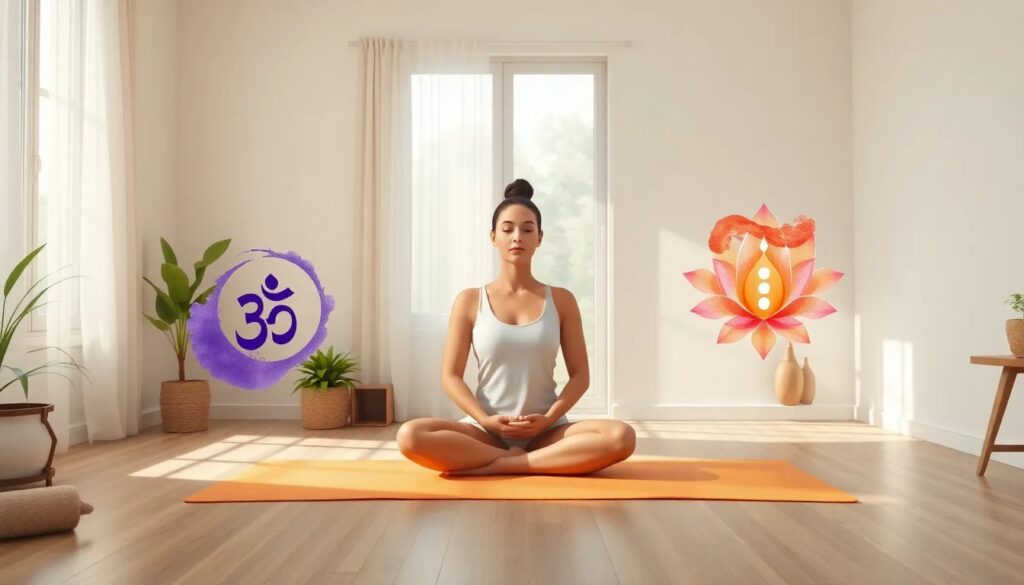
The most common yoga symbols are Om (the sacred syllable of Hindu tradition), the lotus flower (growth and purity), the mandala (a circular map of the cosmos), the hamsa hand (protection), the seven chakras (energy centers described in tantric texts), and hand gestures called mudras. Each comes from Hindu, Buddhist, or Jain tradition and carries a specific meaning that predates modern studio yoga by centuries.
This guide covers the yoga symbols and meanings you are most likely to see in a studio or on yoga merchandise, named and explained below: what each one actually represents, where it comes from, how it is used in practice, and what to consider before wearing one or getting it tattooed. For the wider tradition these symbols come from, see our overview of yoga philosophy and history.
- Quick Reference: Common Yoga Symbols at a Glance
- Om: The Sound Behind the Symbol
- The Lotus Flower: Growth from the Mud
- Mandalas: Maps for Meditation
- The Hamsa and the Evil Eye
- Ganesha: The Remover of Obstacles
- Chakras: The Seven Energy Centers
- Mudras, Namaste, and the Number 108
- What Symbol Represents Yoga? (Om vs. Other Marks)
- Using Yoga Symbols Respectfully (Tattoos, Jewelry, Decor)
Quick Reference: Common Yoga Symbols at a Glance
| Symbol | Origin | Core meaning | Typical use in yoga |
|---|---|---|---|
| Om (Aum) | Hindu scriptures (Upanishads) | The primordial sound; the whole of reality | Chanted at the start and end of class |
| Lotus flower | Hindu and Buddhist iconography | Purity and awakening rising from muddy water | Art, jewelry, the seated lotus posture |
| Mandala | Hindu and Buddhist ritual art | The universe in symbolic, circular form | Meditation focus, studio decoration |
| Hamsa | Middle Eastern and North African; adopted widely | Protection from harm and the evil eye | Jewelry and wall art |
| Ganesha | Hindu tradition (son of Shiva and Parvati) | Remover of obstacles | Statues and imagery in studios and homes |
| Chakras | Tantric Hindu texts | Seven energy centers along the spine | Meditation maps, class themes |
| Mudras | Hindu and Buddhist practice | Symbolic hand gestures that direct attention | Seated meditation and breath work |
| 108 | Vedic tradition | A sacred number of completeness | Mala beads, sun salutation rounds |
| Ananta (infinity knot) | Hindu decorative motif | Eternity and endlessness | Jewelry and decor with yoga themes |
Om: The Sound Behind the Symbol
Om (also written Aum) appears in the Upanishads, where it is described as the syllable that contains all of existence. The written character is Devanagari script — the same script used to write Sanskrit terms throughout yoga — and its parts are traditionally read as the waking, dreaming, and deep-sleep states of consciousness, with the dot representing a fourth, transcendent state (turiya).
In modern classes, Om is usually chanted once or three times to mark the beginning and end of practice. You do not have to chant it; many teachers treat it as optional precisely because it carries religious meaning for Hindus, Buddhists, and Jains.
The Lotus Flower: Growth from the Mud
The lotus grows out of muddy water and blooms clean above the surface, which made it a natural image of spiritual development: difficult conditions feeding eventual awakening. In yoga, the symbolism is mirrored in padmasana, the seated lotus posture, and in the imagery of the chakras, several of which are drawn as lotus flowers with different numbers of petals.
Mandalas: Maps for Meditation
A mandala (Sanskrit for circle) is a geometric design organized around a center, used in Hindu and Buddhist ritual as a symbolic map of the cosmos. In meditation, the eye is drawn from the outer edge toward the center, which gives the mind a structured path to settle on. Tibetan Buddhist monks famously create intricate sand mandalas and then destroy them, a deliberate lesson in impermanence.
The Hamsa and the Evil Eye
The hamsa, an open palm often drawn with an eye in the center, predates yoga culture: it is an ancient protective amulet from the Middle East and North Africa, present in Jewish, Muslim, and Christian folk traditions before being adopted into modern spiritual imagery. In yoga contexts it generally stands for protection and warding off negativity. It is a good example of how the symbol set in studios mixes sources well beyond India.
Ganesha: The Remover of Obstacles
Ganesha, the Hindu deity shown with an elephant's head, is another symbol that predates yoga as it is practiced in studios today. In Hindu tradition he is the son of Shiva and Parvati, worshipped at the start of new undertakings as the remover of obstacles — part of the wider story of yoga's roots in Hinduism. Like the hamsa, he is not originally a yoga-specific symbol: his image has since been adopted into Western studios, home altars, and jewelry as a general emblem of clearing the way for new beginnings. Small Ganesha statues near a studio entrance or on a teacher's altar carry that same intention, marking the space, or the effort about to begin, as worth taking seriously.
Chakras: The Seven Energy Centers
Chakra means wheel. The familiar seven-chakra system, from the root chakra at the base of the spine to the crown of the head, comes from medieval tantric texts and was popularized in the West in the twentieth century. Each chakra has an associated location, color, element, and lotus symbol. Whether you treat chakras as literal energy anatomy or as a psychological map for meditation, they remain one of the most widely used symbolic frameworks in yoga teaching — see our full guide to the seven chakras for a closer look at each center.
Mudras, Namaste, and the Number 108
- Anjali mudra: palms pressed together at the heart, the gesture that accompanies the greeting namaste, commonly translated as the divine in me honors the divine in you (a loose modern rendering; see our full breakdown of what namaste means for the more literal reading, a respectful salutation).
- Gyan (chin) mudra: index finger and thumb touching, the classic meditation gesture associated with knowledge.
- 108: a sacred number in Vedic tradition; mala necklaces carry 108 beads for counting mantra repetitions, and yoga events often feature 108 sun salutations.
These small symbols show up constantly in practice settings, from hatha yoga classes to the closing chant of an ashtanga session, and even in quiet styles such as yin and restorative yoga, where mudras and mandala imagery often frame meditation.
What Symbol Represents Yoga? (Om vs. Other Marks)
There is no single official symbol for yoga the way a company has one logo. What exists instead is a set of symbols — Om, the lotus, the mandala, the chakras — that different traditions and studios use to represent different aspects of practice, with Om the answer most people reach for first. That is largely because Om is the sound most widely chanted in class and the character most often printed on mats, signage, and merchandise, so it functions as an informal shorthand for yoga in Western branding. In its original context, though, Om is a much broader statement about the nature of reality, not a symbol of physical postures at all. If you are choosing a single image to represent a personal practice, Om is the most recognized starting point, but a lotus, a chakra, or a mandala are equally valid depending on which part of the practice you want to emphasize.
Using Yoga Symbols Respectfully (Tattoos, Jewelry, Decor)
Because most of these symbols are religious, not merely decorative, a few guidelines help avoid missteps:
- Learn the meaning first. Om is a sacred syllable for roughly a billion people; treating it as a generic boho design can cause real offense.
- Mind the placement. In Indian custom, sacred imagery on the feet, on shoes, or near the floor is considered disrespectful. Several travelers have been refused entry or detained in countries such as Sri Lanka over religious tattoos displayed casually, so research before you travel.
- Check the orientation. The Om character is frequently printed mirrored or upside down on mass-produced merchandise.
- Buy thoughtfully. Where possible, choose items made by artisans from the cultures the symbols come from.
- For tattoos, pick an artist who knows the script. Devanagari and Sanskrit spelling errors are permanent.
These practices sit within a much longer story. For a broader timeline of how these traditions developed and reached modern studios, see the history of yoga.
Om is generally considered the central symbol. In Hindu scripture it represents the primordial sound of the universe, and it is the symbol most often chanted and displayed in yoga settings.
The lotus grows from mud into a clean bloom, so it symbolizes purity, spiritual growth, and awakening emerging from difficulty. It also appears in the seated lotus posture and in chakra imagery.
It depends on context. Om is a sacred religious symbol, so placement matters: tattoos on the feet or lower body are widely considered disrespectful in Indian custom. Learning the meaning, checking the orientation of the character, and choosing placement thoughtfully shows respect.
Not originally. The hamsa is an ancient protective amulet from the Middle East and North Africa that was later adopted into modern yoga and wellness imagery, where it stands for protection from negativity.
The number 108 appears throughout Vedic tradition as a number of completeness. Mala beads used for mantra repetition carry 108 beads, and group events often practice 108 sun salutations at solstices and other occasions.
There is no single official symbol for yoga. Om is the one most commonly used and chanted, but the lotus flower, mandala, and chakras are also widely recognized.
Not originally. Ganesha is a Hindu deity, not a yoga-specific symbol, but images of him are common in yoga studios as a symbol of removing obstacles to practice.
Have a correction? Contact us.
Recommended: