Yoga Retreat in San Diego: Formats, What to Expect, and How to Choose

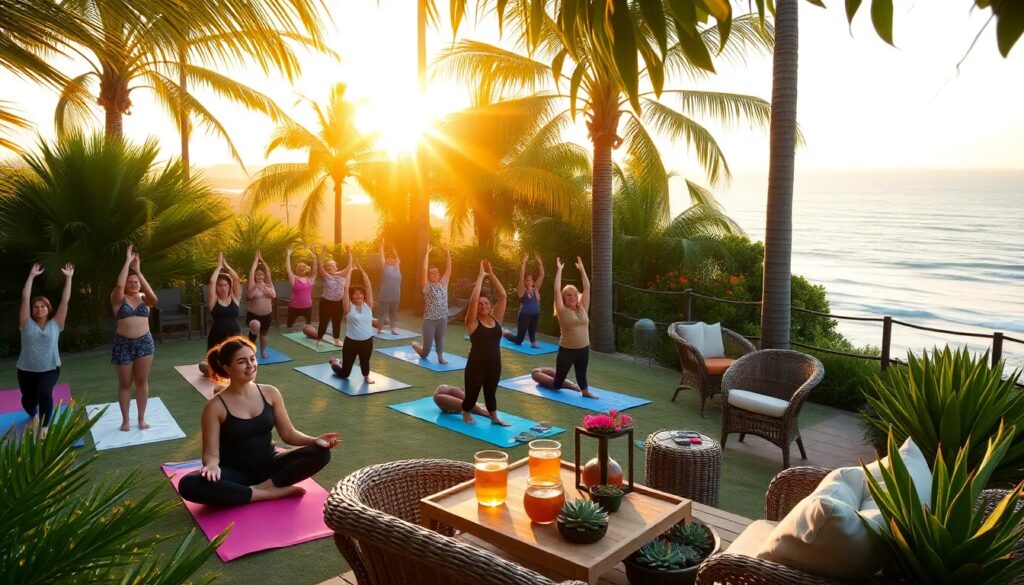
A yoga retreat in San Diego is a way to step out of the everyday for a few days, with morning and evening practices, healthy meals, and free time to walk the coast, hike a canyon, or simply sit with a book. The region makes that easy. San Diego has 70 miles of coastline, a temperate climate most of the year, and mountain and high-desert towns within a 60 to 90 minute drive, so a retreat here can look like a clifftop yoga deck in La Jolla, a courtyard hotel in Encinitas, or a quieter lodge set above a lake in the backcountry near Julian.
Local programs are open to beginners, day-trippers, and travelers flying in for a longer stay. What changes from one retreat to the next is length, setting, and focus. This guide walks through the main formats, what is actually included, the most common types of retreat by interest, and how to choose one that suits your goal.
- What a San Diego yoga retreat usually includes
- Retreat formats compared
- San Diego yoga retreat styles to choose by focus
- Why Southern California works so well for retreats
- How to choose a retreat: a vetting checklist
- How to prepare and what to pack
- When is the best time of year for a San Diego yoga retreat?
- Stay local or travel further?
What a San Diego yoga retreat usually includes
Most multi-day retreats follow a similar rhythm. A morning practice, often more vigorous, is followed by free time or a guided activity in the middle of the day, and a slower evening session such as restorative yoga, breathwork, or meditation. Beyond the yoga itself, typical inclusions are:
- Lodging — anywhere from shared rooms or glamping tents to private suites at coastal resorts.
- Meals — usually two or three per day, frequently vegetarian or plant-forward.
- Workshops — breathwork, journaling, anatomy, or philosophy sessions.
- Outdoor time — beach walks, surf lessons, or trail hikes; some programs are built entirely around movement outdoors, like the formats covered in our guide to yoga and hiking retreats.
Always read the inclusions list line by line. Airport transfers, spa treatments, and surf or paddleboard rentals are frequently billed separately, even at higher price points. If you are weighing two retreats that look similar on paper, the inclusions list is usually where the real difference shows up.
Retreat formats compared
San Diego supports every common retreat length. The table below is a quick comparison; the exact offering at each price tier depends on the organizer, the season, and the room type, and rates vary accordingly.
| Format | Length | Best for |
|---|---|---|
| Day retreat | 4 to 8 hours | First-timers; locals who want a reset without travel |
| Weekend retreat | 2 to 3 nights | Working schedules; testing whether retreat life suits you |
| Week-long retreat | 5 to 7 nights | Deeper immersion; combining yoga with a real vacation |
| Luxury resort retreat | 2 to 7 nights | Spa access, private rooms, smaller groups, chef-prepared meals |
Confirm what is and is not included with the organizer before paying a deposit. Day retreats are a low-commitment way to test the format, while week-long programs are where most travelers feel the deeper reset that a single weekend does not deliver.
San Diego yoga retreat styles to choose by focus
Most local programs are built around a theme. Picking a focus first, then matching it to a venue, tends to be a more reliable way to choose than scanning every available date.
Surf and yoga retreat in San Diego
San Diego's south-facing coast is one of the most reliable places in California to learn to surf, and several local operators pair morning yoga with on-the-water afternoons. The typical week alternates a vinyasa or hatha class, a surf lesson or free surf time, and a slow evening practice. Some programs include boards and wetsuits; others rent gear on-site. If you are new to surfing, look for a class size that gives you time on a board in small waves rather than a crowded lineup.
Wellness retreat in San Diego (detox, spa, plant-forward)
Wellness-focused retreats tend to be the most amenity-heavy. Expect spa access, plant-based meals, infrared sauna or plunge options, and a slower schedule of yoga and breathwork. A handful of coastal venues double as wellness hotels, which means you get a comfortable room and a full program without giving up daily housekeeping or a proper desk if you need to work an hour or two between sessions.
Meditation and silent retreat in San Diego
If your goal is quiet rather than activity, look for a meditation or silent program. These are usually held at inland venues away from the coast, with a daily schedule of seated practice, walking meditation, and a short yoga session, plus silence from after dinner until the next morning. The structure varies more than the marketing suggests, so ask about the ratio of practice to free time before you book. Our guide to silent yoga retreats covers what to expect from a multi-day silent program in more detail.
Hiking and yoga retreat in San Diego
Within an hour of the city you can trade the coast for mountain towns and high desert. Hiking-based retreats pair morning yoga with day hikes in places like Torrey Pines, Mount Laguna, or the backcountry east of Julian. Programs built around movement outdoors, like the formats covered in our yoga and hiking retreats guide, suit travelers who want more steps on the trail than hours on a mat.
Where the local retreats are actually based
San Diego's retreats cluster in a few recognizable settings. Vita Pura Yoga is based in La Jolla and runs multi-day coastal programs that pair outdoor yoga with breathwork and meditation. Twelve Senses Retreat is a boutique bed and breakfast in Encinitas, set up around grounding, sound healing, and nature-based wellness stays. Trilogy Sanctuary runs rooftop yoga and aerial yoga programs in La Jolla alongside periodic local and destination getaways. Quiet Mind Mountain Lodge, Retreat & Spa sits east of the city near Lake Cuyamaca in Julian and combines yoga, meditation, and thermal-style spa therapies in a quieter countryside setting. A fifth format, a major destination resort just across the county line, is best known for its fitness and yoga programming and is the kind of place most people find through an aggregator rather than by searching locally.
Why Southern California works so well for retreats
San Diego sits in one of the few US regions where outdoor practice is realistic nearly year-round. Coastal mornings can be cool and damp even in summer — a local pattern known as June gloom, when the marine layer hangs over the beaches through late morning — so inland venues tend to be sunnier in May and June. Within 60 to 90 minutes of the city you can trade the coast for mountain towns or high desert, which is why many retreats based in San Diego County actually take place inland: quieter settings, darker skies, and lower lodging costs than beachfront venues. The area also draws on a deep pool of experienced teachers across styles, from vinyasa to yin and restorative work.
How to choose a retreat: a vetting checklist
- Confirm the focus first. Surf, silent, hiking, or wellness? Pick the goal and let the venue follow.
- Look up the lead teacher. Check their training, how long they have taught, and ideally take an online class with them first.
- Ask for a sample daily schedule. Two practices a day is standard; if the itinerary is vague, the programming may be too.
- Confirm the level. Some retreats are gentle and beginner-friendly; others assume a steady practice. If you are new, our yoga for beginners guide covers what baseline to build first, though plenty of retreats welcome complete beginners.
- Check group size. Under 15 participants usually means individual attention; 30+ feels more like a festival.
- Read the cancellation and refund policy before paying a deposit. Retreat deposits are often non-refundable.
- Total the real cost: add transport, single-room supplements, and any excluded meals or activities.
- Match the vibe to your goal. A social surf-and-yoga weekend and a contemplative program like a silent yoga retreat are completely different experiences — decide whether you want connection or quiet before booking.
One note on mental-health framing: a wellness retreat is a structured break, not a substitute for licensed care. If you are working through something clinical, a retreat can complement therapy but should not replace it.
How to prepare and what to pack
- Arrive rested rather than treating the retreat itself as recovery from an exhausting week; you will get far more from the practices.
- Pack layers: coastal San Diego mornings are cool and damp even in summer (the local June gloom is real), while inland venues swing hot by day and cold at night.
- Bring your own mat if you have one you like; most venues provide props but mats vary in quality.
- Add sun protection, a refillable water bottle, swimwear, and walking shoes for trails or beach.
- Decide your phone policy in advance; many retreats encourage or require limited screen time.
When is the best time of year for a San Diego yoga retreat?
San Diego is workable year-round, but late spring (April to May) and early fall (September to October) offer the most reliable sunshine. June mornings on the coast are often overcast, a local pattern known as June gloom, so inland venues can be a better bet in those months. Winter is mild but can bring rain; summer is the busiest season and books out first.
Stay local or travel further?
A San Diego retreat makes sense if you want minimal travel friction and a coastal setting. If you are ready for a longer, more immersive trip, comparing destinations is worthwhile. International programs can deliver more days of practice for similar total spend once flights are included, and the cultural frame is part of the experience. For a few of the most common alternatives, see our guides to yoga retreats in India, Bali yoga retreats, Costa Rica yoga retreats, Nepal yoga retreats, Hawaii yoga retreats, Thailand yoga retreats, and Rishikesh yoga retreats. If your interest is a surf-and-yoga format in another tropical setting, our surf and yoga retreat guide walks through that hybrid in more detail.
The trade-off is simple: a local weekend retreat saves flight and logistics time; a longer international program usually means more days on the mat, more immersion in a different landscape, and a different kind of reset.
Usually not. Most retreats welcome beginners and offer modifications, but always confirm the stated level. Programs labeled intensive or advanced assume an established practice, while day retreats and weekend programs are typically open to all levels.
Costs vary by season, room type, and what is included. Shared rooms and inland venues tend to be the most accessible; private rooms at coastal resorts sit higher. Confirm current rates directly with the organizer.
San Diego is workable year-round, but late spring and early fall offer the most reliable sunshine. May and June mornings on the coast are often overcast, a local pattern known as June gloom, so inland venues can be a better bet in those months.
For small retreats with limited rooms, one to three months ahead is sensible, and longer for popular spring and fall dates. Booking early also tends to secure earlier pricing and better room choices.
Layers (cool coastal mornings, hot inland afternoons), sun protection, a refillable water bottle, swimwear, walking shoes, and your own mat if you have one you like. Inland venues can be much cooler at night than the coast.
Have a correction? Contact us.
Recommended: