Nepal Yoga Retreat: Where, When, and How to Choose

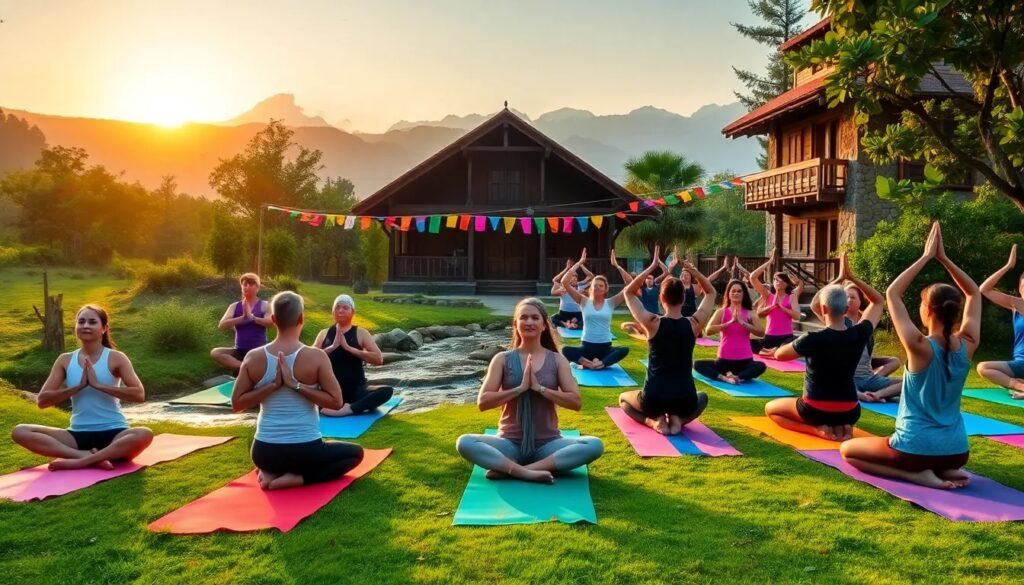
A Nepal yoga retreat blends daily asana with meditation, philosophy, and Himalayan scenery at a price point that tends to be lower than comparable retreats in Europe or North America. Most retreats cluster in three places — the Kathmandu Valley, lakeside Pokhara, and the Annapurna and Everest foothills — and the most popular seasons are spring (March–May) and autumn (September–November), when skies are clear and temperatures are mild. The piece below walks through the regions, the seasons, what a typical day looks like, how to vet a retreat before paying, and how Nepal compares to other retreat destinations.
Nepal sits next to the Indian yogic tradition and has long been a center of Himalayan Buddhist and Hindu practice, so retreats here often mix asana with meditation, philosophy, and sometimes Buddhist teachings. That lineage is part of what makes Nepal a strong fit for a retreat rather than just a scenic yoga holiday.
- Where to do a yoga retreat in Nepal
- When to go: Nepal retreat seasons
- What a Nepal yoga retreat typically costs
- A typical day at a Nepal yoga retreat
- How to vet a Nepal retreat before booking
- Practical notes for first-time visitors
- How Nepal compares to other retreat destinations
- Frequently asked questions
Where to do a yoga retreat in Nepal
| Region | Setting | Best for | Getting there |
|---|---|---|---|
| Kathmandu Valley | Hillside ashrams and retreat centers near temples and stupas | First-timers, short retreats, culture plus practice | Close to the international airport |
| Pokhara | Lakeside town beneath the Annapurna range | Relaxed pace, mountain views, longer stays | 25-min flight or 6–8 h drive from Kathmandu |
| Annapurna / Everest foothills | Yoga-trekking combinations with teahouse or lodge stays | Active travelers combining hiking and practice | Trek access from Pokhara or Lukla |
| Lumbini | Birthplace of the Buddha, monastery setting | Meditation-focused retreats | Domestic flight or long drive |
Kathmandu Valley is the easiest starting point for a short retreat: arrival by international flight, dense cluster of ashrams and centers, day trips to Pashupatinath, Boudhanath and Bhaktapur when the program allows free time. It suits first-timers who want culture alongside practice.
Pokhara is the slower, more scenic counterpoint. The town sits on Phewa Lake with the Annapurna range as a backdrop, and centers here tend toward relaxed multi-day stays and a wider wellness menu (massage, sound healing, optional excursions).
Annapurna and Everest foothills are where yoga-trekking packages live. Mornings hold practice at the lodge or teahouse, days are spent hiking, and evenings return to restorative work and meditation. These suit active travelers and require permits.
Lumbini, in the Terai plains, is the birthplace of the Buddha and a UNESCO World Heritage Site. Retreats here tend to be meditation-focused and quieter than Kathmandu or Pokhara, with a monastery setting rather than a resort one.
When to go: Nepal retreat seasons
- March–May (spring): warm days, rhododendron bloom in the hills, good mountain visibility early in the season. High season — book ahead.
- September–November (autumn): the clearest Himalayan views of the year and the most popular window for yoga-trekking retreats.
- June–August (monsoon): heavy rain, leeches on trails, limited views — but indoor ashram retreats run year-round and prices drop.
- December–February (winter): cold but clear; fine for Kathmandu and Pokhara retreats with heated or well-built accommodation, less suitable for high-altitude treks.
What a Nepal yoga retreat typically costs
Nepal is one of the more affordable retreat destinations in Asia. Pricing generally falls into three bands:
- Budget ashram-style retreats with shared accommodation, vegetarian meals, and two daily classes are the entry tier.
- Mid-range retreat centers with private rooms, massage, and excursions sit in the middle of the spread.
- Yoga-trekking packages and boutique retreats are the most expensive because they add guides, trekking permits, lodge logistics, and longer stays.
The biggest variables are room type (shared vs private), group size, location (Kathmandu and Pokhara are pricier than rural ashrams), and whether trekking permits are bundled. Always confirm what is included: airport pickup, TIMS and national-park permits for trekking regions, excursions, and single-room supplements are common extras. If you are comparing destinations, see how Nepal stacks up against a Rishikesh yoga retreat across the border in India, or warmer-weather options like a Bali yoga retreat and a Costa Rica yoga retreat.
A typical day at a Nepal yoga retreat
Schedules vary by center, but most residential retreats in Nepal follow a similar rhythm:
- Early-morning pranayama and meditation, often before sunrise
- Morning asana class — commonly Hatha-based at traditional centers (see what Hatha yoga is)
- Vegetarian breakfast and free time or a philosophy talk
- Afternoon workshop, walk, or optional excursion to temples and viewpoints
- Evening restorative practice, chanting, or guided meditation
Trekking retreats swap the midday block for hiking and hold practice in the morning and at the lodge in the evening.
How to vet a Nepal retreat before booking
- Read recent reviews on independent platforms, not only the retreat website, and look for comments about food hygiene, room warmth, and teacher quality.
- Check teacher credentials and class style — ask what styles are taught and at what level, especially if you are a beginner.
- Confirm group size. Small groups mean more attention; some budget centers run large mixed-level classes.
- Ask about drinking water, dietary accommodations, and altitude if your retreat involves trekking above roughly 2,500 m.
- Verify the cancellation policy and payment method. Reputable centers take deposits through traceable channels and clearly state what is refundable.
Practical notes for first-time visitors
Most nationalities can get a tourist visa on arrival at Kathmandu airport. Pack layers — mornings and evenings are cold outside summer even at low altitude — plus any personal practice props you rely on, since equipment at budget centers can be basic. A light travel mat makes life easier if you are joining a yoga-trekking or moving between multiple centers.
As an Amazon Associate, we earn from qualifying purchases.

- EKO SUPERLITE TRAVEL MAT: The eKO SuperLite is perfect for yogis on the go. Its foldable, travel-ready design offers portability without sacrificing support or stability, making it ideal for your practice anywhere
- ON-THE-GO FITNESS: Ideal for eco-conscious travel yogis, the 1.5mm thickness, textured grip, and foldable design make it easy to pack and carry—while still offering reliable traction wherever you practice
- PREMIUM MATERIALS: Made from sustainably harvested, all- natural tree rubber, this mat features a closed-cell surface that locks out moisture. It’s 99% latex-free and has a textured orange peel surface for optimal grip
- PRODUCT DETAILS: The eKO SuperLite mat is thin, lightweight, and travel-ready, measuring 71 x 24 inches, 1.5mm and weighing just 2 lbs. Its foldable design makes it easy to pack and travel with you anywhere
- CARE INSTRUCTIONS: Spray Manduka’s Natural Rubber Yoga Mat Restore, let sit 5 minutes, then wipe dry. Avoid soaking, sun exposure, and soap, which can damage the mat. Do not use a garden hose, vacuum, or washing machine for cleaning

Internet is generally available in Kathmandu and Pokhara but unreliable on treks. If a retreat is your first extended practice experience, our yoga for beginners guide covers what to expect from multi-class days.
How Nepal compares to other retreat destinations
Nepal vs Rishikesh, India. Rishikesh is the better-known ashram capital of the subcontinent, set on the Ganges in the Himalayan foothills. It runs hotter, leans more heavily into traditional ashram structure, and is a Hindu pilgrimage town rather than a Buddhist one. Costs are comparable; Rishikesh tends to be busier, Nepal more spread out. If your interest is meditation in a quieter Himalayan-Buddhist setting, Nepal is the closer match.
Nepal vs Bali. Bali sits in a different category — tropical, surf-and-wellness, resort-style centers with a strong yoga-pilates-aerial mix. The climate is warm year-round, the social scene is more pronounced, and the price band runs higher than Nepal. Bali wins for beach and variety; Nepal wins for altitude, trekking, and traditional ashram practice.
Nepal vs Costa Rica. Costa Rica is the Western-hemisphere counterpart: jungle, beach, and yoga in a single trip, with a pura vida vibe and an English-speaking infrastructure. The trade-off is the long-haul flight from the US and Europe, and the cost of combining a beach week with a retreat. Nepal is the right answer for travelers who want a Himalayan setting at a more accessible price.
Frequently asked questions
Yes. Nepal combines a Himalayan setting with a long Buddhist and Hindu practice tradition, so retreats typically blend asana, meditation, and philosophy. It also tends to be more affordable than comparable retreats in Europe or North America, especially for budget ashram-style programs.
Pricing generally falls into three bands: budget ashram-style retreats with shared rooms and vegetarian meals at the entry level, mid-range centers with private rooms and excursions in the middle, and yoga-trekking packages or boutique retreats at the top because of guides, permits, and longer stays. The biggest variables are room type, group size, location, and whether trekking permits are included.
Spring from March to May and autumn from September to November offer mild weather and the clearest mountain views, with autumn being the most popular window. Monsoon season from June to August brings heavy rain but lower prices for indoor retreats, and winter works for low-altitude centers in Kathmandu and Pokhara.
No. Most retreats welcome beginners and teach Hatha-based classes at a moderate pace. Check the daily schedule before booking, since traditional ashram programs can involve early mornings and several hours of practice per day, which is demanding for complete newcomers.
Common formats run from 3 to 14 days. A 3 to 5 day retreat suits a first taste or a stopover, a week allows a real reset, and 10 to 14 days fits travelers combining a retreat with trekking or deeper meditation programs.
Yes. Yoga-trekking packages run in the Annapurna and Everest foothills, with morning practice at the lodge, hiking during the day, and restorative or meditation sessions in the evening. These programs require trekking permits and a reasonable fitness level, and they suit travelers who want a more active retreat format.
Trekking retreats can reach significant altitude. This article is general information, not medical advice — consult a healthcare professional about altitude, vaccinations, and fitness before combining yoga with high-elevation trekking, especially if you are pregnant or have cardiovascular or respiratory conditions.
Have a correction? Contact us.
Last update 2026-09-10. Price and product availability may change.
Recommended: