Yoga Jackets: How to Pick the Right Layer for Practice


A yoga jacket is a lightweight, stretchy layer worn over your practice clothes — on the way to class, during warm-up, and in cool-down or savasana when body temperature drops. Unlike a running shell or a gym hoodie, a good one prioritizes four-way stretch, breathability, and a trim fit that does not bunch when you fold forward. The fabric and cut matter far more than the brand name. This guide explains what to look for, compares the main jacket styles, and flags the features that are worth paying for.
What makes a jacket a yoga jacket?
Three things separate a purpose-built yoga layer from a generic sweatshirt:
- Stretch in every direction. Yoga involves overhead reaches, twists, and folds. Fabrics with elastane (spandex) blended into nylon, polyester, or cotton move with you instead of riding up.
- Breathability over insulation. You warm up fast in practice. Most yoga jackets are midweight layers meant to come off after warm-up, not winter outerwear.
- A quiet, low-bulk construction. Flat seams that do not press into the skin during floor work, no stiff zippers or drawcord toggles digging in when you lie down, and a hem that stays put in Downward Dog.
Yoga jacket styles compared
| Style | Best for | Pros | Watch out for |
|---|---|---|---|
| Fitted full-zip | Studio commutes, layering | Easy on/off mid-class, trim silhouette | Zipper can dig in during floor poses |
| Loose / relaxed fit | Pre- and post-class comfort, layering over base tops | Airflow, room for layers, casual wear | Bunches if worn during inversions or folds |
| Hooded | Outdoor classes, cold commutes | Neck and head warmth, adjustable coverage | Hood pools behind the neck when lying down |
| Long / tunic length | Cool studios, extra coverage | Warmth over hips, flattering line, often has thumbholes | Extra fabric to manage in seated poses |
| Cropped / waist length | Wearing during gentle practice | No fabric at the hips during folds | Less warmth; limited coverage |
Hooded vs. zipperless — which works when
Hooded jackets pull double duty for outdoor classes and cold commutes, but the hood usually has to come off (or be folded flat) the moment you lie down for savasana, otherwise it bunches behind the neck. Zipperless pullovers and tunics sit cleaner on the mat and tend to be the default pick for studio-only use. If you want one jacket that handles both, a soft hooded pullover that packs small in the collar is the most forgiving compromise.
Fabric guide: what the labels actually mean
Nylon-elastane blends (roughly 70–90% nylon) are the standard for fitted yoga jackets: soft, durable, very stretchy, quick to dry. Polyester-elastane performs similarly and usually costs less, though it can hold odor longer. Cotton blends feel natural and breathe well for gentle practice and lounging, but stay damp once you sweat. Merino blends regulate temperature well and resist odor — useful for travel — at a clearly higher price. If you practice hot styles, the jacket is only for before and after class, so prioritize quick-drying synthetics; our guide on what to wear to hot yoga covers the rest of that outfit.
What to wear for hot yoga
In a hot room, the jacket comes off the moment you step on the mat and goes back on only when you leave. That means hot-yoga-friendly choices lean toward very thin, fast-drying synthetics (or merino) that don't sit in a damp pile in your bag for the next session. Skip heavy cotton in this setting — it holds moisture and stays cold against the skin in air-conditioned lobbies.
As an Amazon Associate, we earn from qualifying purchases.

Features worth paying for (and ones that are marketing)
- Worth it — thumbholes: keep sleeves anchored during warm-up flows and add hand warmth.
- Worth it — zippered pockets: the only safe place for keys and a phone in a studio cubby situation.
- Worth it — flat or bonded seams: you notice the difference the first time you do a supine twist.
- Worth it — a two-way zipper on longer jackets, so you can sit cross-legged without the hem buckling.
- Usually marketing — "yoga-specific" insulation, compression claims on a loose layer, and most "anti-toxin" or detox fabric language. A jacket warms you; it does not change your practice.


Fit notes for women and men
Women's yoga jackets range from body-skimming to relaxed; the practical test is to reach both arms overhead and fold forward in the fitting room — the hem should not climb past your waistband, and the shoulders should not pull. Men's options tend to be cut straighter with longer sleeves; the same overhead-reach test applies. Sizing up for layering works for loose styles but defeats the purpose of a fitted full-zip. If you are building a practice wardrobe from scratch, start with our overview of what people wear to yoga and the honest checklist of what you actually need for yoga — a jacket is useful, but it comes after a decent mat and bottoms you trust. For bottoms specifically, our guide to opaque, supportive yoga pants covers the fabric tests that matter.

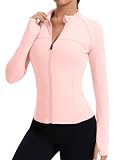
- Lightweight, Breathable & High-Stretch Fabric: Made from 75% polyamide+25% spandex, this lightweight jacket is skin friendly, breathable, and offers four-way stretch for unrestricted movement. The fabric wicks moisture and dries quickly, perfect for fall, winter, and spring, also works for early morning walks and evening activities in summer.
- Slim-Fit with Functional Details: Features a slim fit, long sleeves with thumbholes, full-zip front, and two front pockets for essentials. Thumbholes keep sleeves in place during movement, while stretch allows full motion. Perfect for fitness lovers, runners, hikers, cyclists, travelers, and busy professionals.
- Versatile for Gym, Outdoors & Daily Life: Whether at the gym, running trails, cycling, running errands, or traveling, this jacket fits every setting. Sporty-chic style transitions seamlessly from workout to weekend — a reliable go-to for active lifestyles.
- Wear as Outerwear or Solo: Wear over a tank, sports bra, or tee for a sporty look. Style solo with leggings, joggers, or biker shorts for a sleek outfit. Layer under a heavier coat when cold — slim fit adds warmth without bulk.
- Easy Care Instructions: Machine wash cold with like colors, gentle cycle. Do not bleach. Tumble dry low or hang to dry. Avoid fabric softeners to preserve stretch and moisture-wicking properties. Holds shape and softness wash after wash.
Do you need a different jacket for different yoga styles?
Mostly no — one breathable, stretchy layer covers studio commutes for every style. The exceptions: outdoor yoga benefits from a hooded, slightly wind-resistant layer; aerial yoga has strict clothing rules where jackets and zippers come off before you touch the hammock (see our aerial yoga clothing guide); and restorative or yin classes in cool rooms are the one setting where you might keep a soft, zipper-free layer on for the whole session.
For restorative, yin, and outdoor classes
Restorative and yin move slowly, stay cool, and spend a lot of time in seated or lying positions — that is the one setting where a soft, zipperless pullover can realistically stay on for the full session. Outdoor classes sit at the other extreme: you want a wind-resistant shell with a hood and thumbholes, and the rest of the jacket matters less than the outer fabric. Most practitioners keep one midweight studio jacket and a separate wind shell for outdoor days, rather than hunting for a single piece that does both.
Choosing by color and style
Color and silhouette are not a performance question, but they affect whether you actually grab the jacket on the way out the door. Black is the default because it hides sweat marks from commutes and post-class errands; heathered grays and earth tones come in second. A loose, drapey cut reads more as everyday wear and is what most people reach for when the jacket doubles as a coffee-run layer, while a fitted full-zip stays reserved for studio-to-mat transitions.

Usually only during warm-up and final relaxation. Most practitioners remove the jacket once the body heats up, because layers restrict movement in folds and twists. The exception is slow, cool-room styles like yin or restorative yoga, where a soft zipper-free layer can stay on comfortably.
Nylon-elastane blends are the most common choice because they stretch in four directions, dry quickly, and hold their shape. Polyester blends cost less and perform similarly, cotton blends feel softer but stay damp once you sweat, and merino blends resist odor well for travel at a higher price.
A yoga jacket uses stretch fabrics, flat seams, and a trim cut so it moves with overhead reaches and forward folds without bunching. A regular cotton hoodie is bulkier, absorbs sweat, and rides up in movement. For sitting around after class either works, but for moving in, the difference is immediate.
Sometimes. Higher prices often buy better stretch recovery, bonded seams, and longer fabric life, which matter if you wear the jacket several times a week. But fit is the single biggest factor in how a jacket performs, and a well-fitting midrange jacket beats an expensive one that pulls at the shoulders.
Have a correction? Contact us.
Last update 2026-09-10. Price and product availability may change.
Recommended: