How to Clean a Rubber Yoga Mat (Without Ruining It)

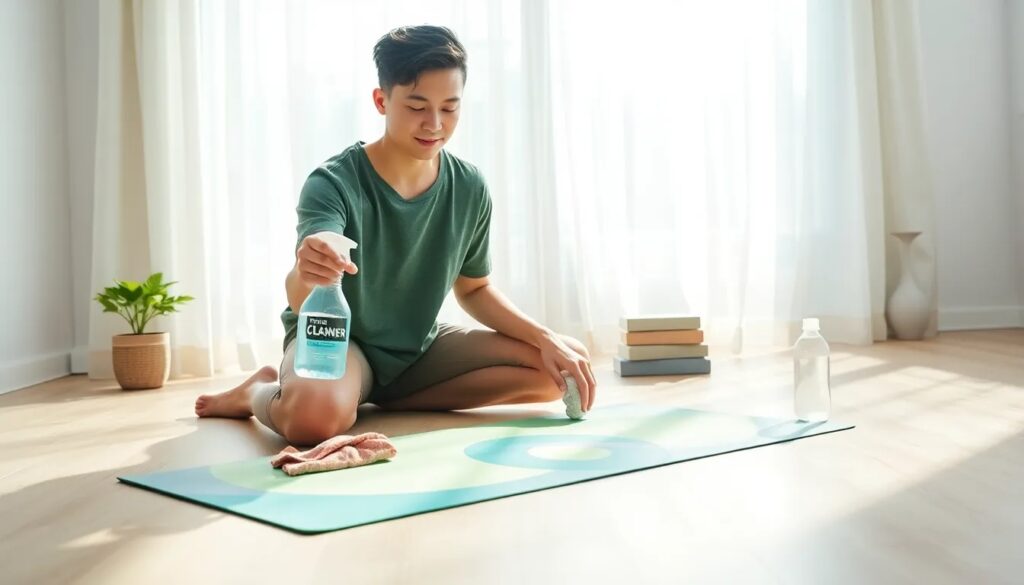
To clean a rubber yoga mat, wipe it down with a soft cloth dampened in warm water and a drop of mild dish soap, then let it air-dry completely away from direct sunlight. That is the whole routine for most sessions. What matters just as much is what you avoid: alcohol-based cleaners, harsh solvents, long soaks, and sun exposure all break down natural rubber and can leave an expensive mat sticky, crumbly, or faded within months.
Below: the quick after-class routine, a proper deep clean for when the mat starts to smell, how rubber differs from PVC, TPE, and cork, and the mistakes that quietly destroy rubber mats.
- Why rubber mats need different care
- The quick clean after each practice
- How to deep-clean a rubber yoga mat
- What to avoid on rubber (and why)
- How to clean a rubber mat vs PVC, TPE, or cork
- How often should you clean it?
- Drying and storing your rubber mat
- When the mat is past saving
- Frequently asked questions
Why rubber mats need different care
Natural rubber — the material in mats like the Jade Harmony or the Manduka eKO — is an organic material that oxidizes over time. Ultraviolet light, alcohol, and strong detergents accelerate that breakdown, which is why the care routine for rubber mats is stricter than for PVC. When in doubt, the care label on your specific mat wins over any general advice, including ours.
The quick clean after each practice
- Mix warm water with one or two drops of mild dish soap in a spray bottle or bowl. Less soap is better — residue makes mats slippery.
- Lightly spray the surface or wipe it with a damp (not dripping) soft cloth.
- Wipe again with a clean cloth dampened in plain water to lift any soap.
- Towel off the excess moisture and hang the mat over a chair or rail to air-dry fully before rolling it up.
After a sweaty session, do this on both sides. Rolling up a damp rubber mat is the fastest route to mildew and that sour mat smell.
How to deep-clean a rubber yoga mat
Once a month for regular practitioners — or whenever odor builds up — give the mat a more thorough wash:
- Lay the mat flat in a bathtub or on a clean floor.
- Wash it with warm water, a small amount of mild soap, and a soft cloth or sponge, working in circles. Do not submerge or soak the mat — rubber absorbs water and takes days to dry through.
- Rinse by wiping repeatedly with clean damp cloths until no suds remain.
- Roll the mat loosely in a dry towel and press to squeeze out moisture.
- Hang it to dry completely — ideally 24 hours, flipping once — in a ventilated room, never in the sun.
What to avoid on rubber (and why)
| Avoid | What it does to rubber | Use instead |
|---|---|---|
| Alcohol or solvent-based cleaners | Dries and degrades the rubber, causing flaking | Mild soap and water |
| Undiluted vinegar or strong acids | Can deteriorate the surface over time | Mild soap and water; check the care label |
| Soaking or machine washing | Waterlogs the mat; can warp and delaminate it | Damp-cloth cleaning only |
| Drying in direct sunlight | UV oxidizes rubber — fading, brittleness, crumbling | Air-dry indoors or in shade |
| Abrasive sponges or brushes | Tears the textured surface and ruins grip | Soft cloth or soft sponge |
| Essential oils applied undiluted | Oils break down rubber and leave a slick film | If you want scent, a very dilute spray, sparingly |
| Scented body sprays or perfumes on the mat | Leave a film that traps dirt and degrades grip | Apply to skin before stepping on the mat, not to the mat itself |
Note that plenty of generic advice online — vinegar sprays, alcohol-based disinfectants, sunshine to kill bacteria — is fine for PVC mats but actively harmful for natural rubber.
How to clean a rubber mat vs PVC, TPE, or cork
Most "how to clean a yoga mat" guides blur the materials. The right method actually depends on what your mat is made of.
| Material | Daily wipe | Diluted vinegar OK? | Soak or machine wash? |
|---|---|---|---|
| Natural rubber | Mild soap + damp cloth | Not recommended | No — waterlogs the mat |
| PVC | Mild soap + damp cloth | Yes, well diluted | Occasional hand soak is fine; skip the machine |
| TPE | Mild soap + damp cloth | Yes, well diluted | No — delaminates |
| Cork | Mild soap + damp cloth, dry upright | Yes, well diluted | No — water damages the cork layer |
If you are not sure what your mat is, check the underside or the original packaging — manufacturers print the material. For our general cleaning guide across all materials, see how to clean a yoga mat, and for cork specifically the dedicated cork yoga mat guide.
How often should you clean it?
- After every practice: a quick wipe-down, especially after hot or sweaty classes.
- Weekly: a more careful two-sided clean if you practice most days.
- Monthly: the full deep clean above.
- New mat note: many natural rubber mats ship with a harmless rubbery smell and a thin film from manufacturing. A gentle wash and a few days unrolled in a ventilated room (not sunlit) solves both.
Drying and storing your rubber mat
Storage does as much for longevity as cleaning. Keep the mat away from radiators, car trunks in summer, and windows with direct sun. Roll it loosely with the practice surface facing out once fully dry, and store it standing or flat in a cool, dry spot. If you use a mat bag, make sure the mat goes in bone-dry — a closed bag around a damp mat is a mildew incubator. Treated this way, a quality rubber mat routinely lasts years of daily practice.
When the mat is past saving
Three signs the mat has reached end of life: the surface is flaking or shedding crumbs, the grip has gone slick and a wipe-down no longer restores it, or the mat has visible cracks along the folds. At that point, no cleaner will fix it. If yours is already there, our best yoga mats guide covers worthy replacements, and our guide to how thick a yoga mat should be helps you pick the right feel for your practice. For a sense of typical lifespan across materials, see how often to replace a yoga mat.
As an Amazon Associate, we earn from qualifying purchases.


Frequently asked questions
It is safer not to. Diluted vinegar is a standard cleaner for PVC, but acids can shorten the life of natural rubber over time. Stick to mild dish soap and warm water, and check the care label for your specific mat.
No. Soaking a rubber mat all the way through can warp it, separate its layers, and leave it waterlogged for days. The agitation also tears the textured surface. Use damp-cloth cleaning and the occasional hand deep clean without submerging the mat.
A rubbery scent is normal in new natural rubber mats and fades on its own. Unroll the mat in a well-ventilated room for a few days and give it a gentle wash with mild soapy water. Do not place it in the sun to air out, because UV light degrades rubber.
Regular cleaning with mild soap and water removes the sweat and oils that bacteria feed on, which is enough for a personal mat. Dry the mat fully before rolling it, because trapped moisture is what allows microbes and mildew to grow. For shared mats, use a cleaner that explicitly states it is alcohol-free.
A monthly deep clean — warm water plus a few drops of mild dish soap, a soft cloth in gentle circles, a clean-water rinse, a towel roll to lift moisture, and a full air-dry away from sun — usually fixes it. The smell comes from moisture trapped inside the mat, so the most important step is making sure the mat is bone-dry before you roll it up again.
Have a correction? Contact us.
Last update 2026-09-10. Price and product availability may change.
Recommended: