Aerial Yoga Teacher Training: How Certification Works and What to Look For

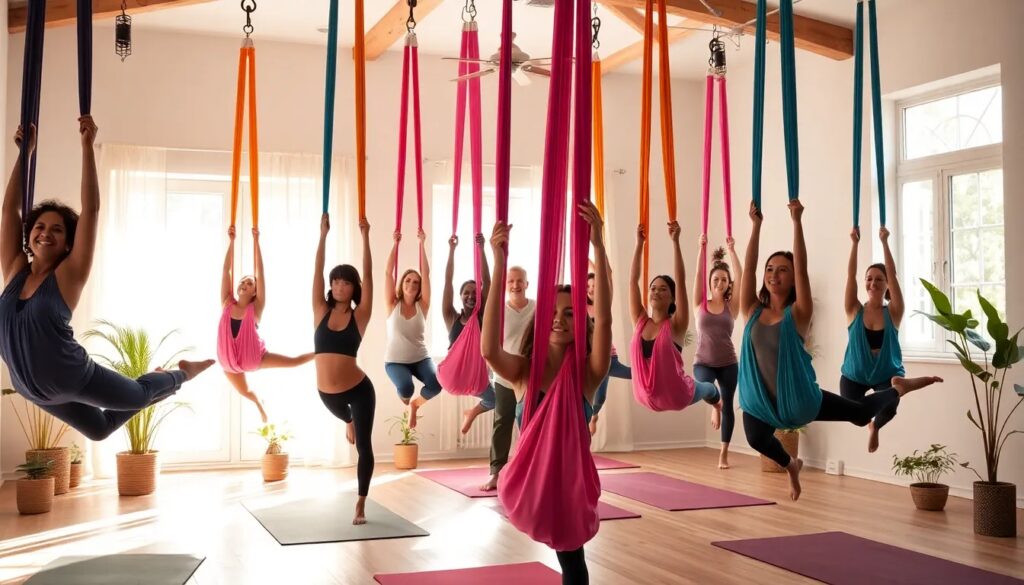
Aerial yoga teacher training is a specialty certification that prepares you to lead classes using a suspended fabric hammock. It covers rigging and equipment safety, hammock-specific technique, spotting, contraindications, and how to sequence a balanced class. Unlike a 200-hour yoga teacher training, there is no single governing standard for the aerial specialty, so the quality of the curriculum varies widely from one provider to another.
This guide explains what a legitimate aerial training should include, the main program formats, the safety topics any program must teach, the prerequisites worth having, and the questions to ask before paying a deposit.
- What aerial yoga teacher training covers
- Program formats compared
- Do you need a regular yoga certification first?
- How to choose a program: a practical checklist
- How long does it take, and how is the time structured?
- Who should not do aerial yoga?
- How physically demanding is the training?
- Frequently asked questions
What aerial yoga teacher training covers
A serious aerial program goes well beyond learning poses in the hammock. The core components you should expect are:
- Rigging and equipment safety. Load ratings, mounting points, daily inspection routines, and when to retire fabric and hardware. This is the single most important module, because instructors are responsible for equipment their students hang from.
- Hammock technique and progressions. Foundational wraps, inversions, and how to scale each shape for different bodies and experience levels.
- Spotting and assists. How to support students safely in and out of inversions.
- Contraindications. Conditions that make inversions inappropriate, such as uncontrolled high blood pressure, glaucoma, recent surgery, or pregnancy, and how to offer alternatives.
- Sequencing and teaching practice. Building balanced classes and getting feedback while teaching real students or fellow trainees.
If a program brochure does not mention rigging or contraindications, treat that as a red flag. The hammock you teach with and the way it is rigged is the foundation of the whole discipline.
Program formats compared
| Format | Typical length | Cost band | Best for |
|---|---|---|---|
| Weekend intensive | 16 to 25 hours over 2-3 days | Lowest-cost option | Certified yoga teachers adding a specialty |
| Multi-week in-person course | 40 to 50+ hours | Mid-to-higher range | Deeper technique work and supervised teaching practice |
| Online or hybrid | Self-paced theory plus optional practicum | Mid-range, varies by provider | Theory and sequencing; weaker for hands-on spotting and rigging |
Fully online aerial certifications are the most debatable option. Theory, anatomy, and sequencing translate well to video, but spotting and rigging are hands-on skills. If you choose an online program, plan to supplement it with in-person mentoring before teaching inversions to the public. The basics of aerial yoga practice are easier to learn online than the teaching skills; assume you'll need in-person hours for the latter.
Do you need a regular yoga certification first?
Many aerial programs accept students without a prior teaching credential, but most studios that hire aerial instructors prefer or require a standard 200-hour foundation. The aerial certificate teaches you the hammock; the 200-hour training teaches you anatomy, cueing, and class management that the short aerial course assumes you already have.
Aerial vs. a standard 200-hour
A 200-hour program is a general teaching credential; an aerial training is a specialty add-on. The two are not interchangeable. If you are starting from zero, read our overview of what a 200-hour yoga teacher training covers and consider doing it first, then adding aerial as a specialty.
Aerial certifications themselves are not a Yoga Alliance designation. Some aerial trainings are registered as Yoga Alliance continuing education, which counts toward an existing credential; see our guide to RYT 200 registration for how that system works.
How to choose a program: a practical checklist
- Ask for the full curriculum in writing and check that rigging, contraindications, and supervised teaching practice are included.
- Ask who leads the training and how long they have taught aerial classes (not just practiced).
- Confirm the student-to-hammock ratio. You want your own hammock for the duration of the course.
- Ask whether the certificate is accepted by liability insurers in your country. Insurers are a useful independent quality filter.
- Check what post-training support exists: mentoring, refreshers, or a teaching community.
- Budget for a basic home rig if you plan to practice between sessions; practicing only on course days slows skill development.
Visiting a class taught by the program leaders, where possible, tells you more than any sales page. General advice on getting ready for an intensive also applies here; see how to prepare for yoga teacher training.
How long does it take, and how is the time structured?
Most aerial certifications run between 25 and 50 hours of total training. That number is the headline, but the structure matters as much as the total.
- Contact hours are the time you spend in the room with an instructor — the in-person or live-online sessions.
- Supervised teaching practice is the time you spend teaching real or simulated students with feedback. This is where most skill development happens, and short programs compress it the most.
- Self-paced theory covers anatomy, contraindications, and sequencing. It is necessary, but on its own it does not prepare you to teach inversions.
A two- or three-day intensive covers the contact hours quickly and usually adds homework and observed teaching later. A multi-week course spreads the same content with more practice between sessions. A self-paced online program can be finished on your own schedule but tends to offer the least supervised practice. The right format depends on whether your priority is speed, depth, or geographic flexibility.
Who should not do aerial yoga?
Inversions are the heart of aerial yoga, and they are not appropriate for everyone. The standard contraindications include:
- Uncontrolled high blood pressure or recent cardiovascular events.
- Glaucoma or other eye-pressure conditions that can worsen when inverted.
- Recent surgery, herniated discs, or active spinal injuries.
- Pregnancy, especially in the second and third trimesters — see our piece on aerial yoga during pregnancy for the full picture.
- Recent concussion, inner-ear disorders, or severe vertigo.
Age is not a disqualifier. The prerequisites are body awareness, the ability to bear weight on the hands, and a clean bill of health for inversions — not a birth year. If any of the above apply to you, get medical clearance before enrolling, and tell your instructor in advance so they can offer alternatives.
How physically demanding is the training?
You do not need acrobatic ability, but you should be comfortable bearing weight on your hands, holding plank-type positions, and going upside down for short periods. A few months of consistent mat practice, including foundational poses like downward facing dog, is reasonable preparation. Most programs also ask about injuries and conditions in advance because inversion work is contraindicated for some people.
Frequently asked questions
Most certifications run between 25 and 50 hours of total training. They are delivered either as a 2-3 day intensive, spread over several weeks, or as a self-paced online program. Longer formats include more supervised teaching practice, which is where most skill development happens.
Not always; many programs accept dedicated practitioners. However, most studios hiring aerial instructors expect a standard 200-hour credential as a foundation, so completing one first usually improves your job prospects.
There is no law requiring certification, but teaching aerial classes uninsured and untrained is a serious liability risk because students hang from equipment you are responsible for. Most studios and insurers require proof of specific aerial training.
Inversions are not appropriate for everyone. The standard contraindications include uncontrolled high blood pressure, glaucoma, recent surgery or spinal injury, pregnancy (especially in the second and third trimesters), and recent concussion or severe vertigo. If any of these apply, get medical clearance before practicing or teaching.
Aerial certification is not a Yoga Alliance designation on its own, but many aerial trainings are registered as Yoga Alliance continuing education, so the hours can count toward maintaining an existing RYT credential. Ask the provider before enrolling.
This article is general information, not medical advice. Inversions are not appropriate for everyone; if you have high blood pressure, glaucoma, a recent injury or surgery, or you are pregnant, consult a qualified health professional before practicing aerial yoga.
Have a correction? Contact us.
Recommended: