Why Is Yoga So Expensive? Studio Economics and 7 Ways to Pay Less

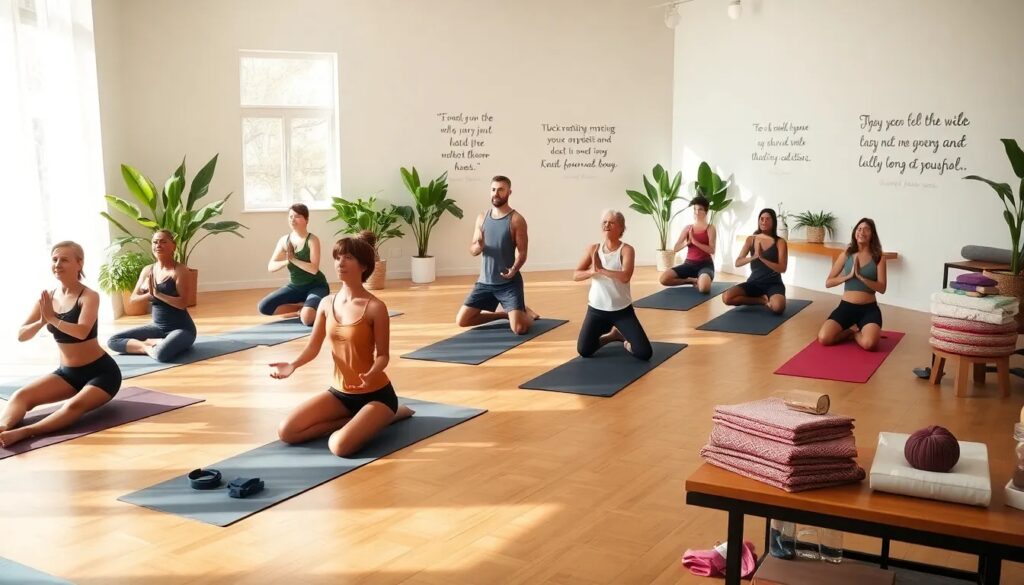
Yoga looks expensive because the price tag is attached to a specific delivery format: small, live classes in rented urban space, taught by a paid instructor, in a capped room. The practice itself needs almost no equipment, but the studio that delivers it has the cost structure of a small service business — and that cost structure is what you are paying for. Once you see where the money actually goes, the price stops looking arbitrary and you can pick a format that fits your budget without giving up the practice.
The short version: the high prices are about how yoga is delivered, not about yoga itself. The rest of this article walks through the studio economics, the formats that exist beyond the drop-in class, when an expensive studio is genuinely worth it, and seven realistic ways to practice for less.
Where the money actually goes
Yoga studios are not margin-rich businesses. Most of the per-class revenue is spoken for before a student rolls out a mat.
- Rent. Usually the single biggest line item. Studios need ground-floor or easily accessible space in neighborhoods where people will show up at 6 p.m., and that space is expensive in any major city.
- Instructor pay. Teachers are typically paid per class. Behind each teacher is also a significant personal investment in training (a 200-hour teacher training is the industry baseline, and many teachers add advanced 300-hour trainings on top).
- Capped capacity. A yoga room physically holds a limited number of mats. Unlike a gym floor, a studio cannot serve a hundred people an hour, so every fixed cost is spread across a small number of students per class.
- Insurance, utilities, and front desk. Liability coverage, heating (a serious cost for hot yoga rooms), cleaning, software, scheduling, and the staff that keep the place running add up before a single class is taught.
- Boutique positioning. Many studios deliberately price as a premium wellness experience — amenities, branded retail, workshops, teacher trainings — because competing on price against gyms and free online content is a losing game.
Why yoga studios are structured this way
The other half of "why is yoga so expensive" is the menu of formats a studio has to offer and the trade-offs each one carries.
- Drop-in classes. The most expensive per visit. You pay for flexibility — walk in, no commitment, no contract. Convenient for travelers and people who practice occasionally.
- Unlimited monthly memberships. The standard option for regulars. The per-class cost drops sharply the more often you attend; the trade-off is that unused months are pure loss.
- Class packs. A middle path: pre-paid bundles of classes that expire after a few months. Better than memberships for irregular schedules.
- Hot and heated formats. Specialized heating and humidity systems push operating costs up, and studios pass that on. Hot classes also tend to be smaller (heat limits room capacity) and require more cleaning.
- Community or donation-based classes. Many studios and parks programs run reduced-price or pay-what-you-can classes, often taught by newer teachers who are still excellent. This is where live instruction is cheapest.
- Gym and community center classes. A general membership at a gym, YMCA, or community center usually includes yoga as part of a much larger facility. Larger classes, less specialized teaching, but the per-class value is the best in live instruction.
- Online subscription apps. Unlimited on-demand classes, no commute, no live correction. Useful as a complement to occasional studio classes or as a primary practice on its own.
- Free online content. YouTube covers everything from beginner courses to advanced flows. Quality varies, but the price floor is zero.
- Private one-on-one sessions. The premium end of the menu. Useful for specific situations — injury recovery, a short ramp-up in the first weeks, working toward a particular goal.
What you'll pay locally depends on your city. Coastal and dense urban markets sit at the high end of every category; smaller cities and college towns tend to sit lower. Treat the qualitative ordering above as a map, not a quote.
Is an expensive studio ever worth it?
Sometimes, yes. You are paying for things that genuinely matter in specific situations: live correction of your alignment (most valuable in your first months and after injuries), accountability, community, and access to experienced teachers. If a class keeps you practicing consistently when a free video would not, it is doing its job. The honest test is whether the cost per attended class is the cheapest live option that actually gets you on the mat — for some people that is a boutique studio, for others it is a community class or a gym.
7 ways to practice yoga for less
- Community classes. Many studios run reduced-price or donation-based classes, often taught by newer teachers who are still excellent. Parks-and-rec programs and nonprofit studios are worth a search in your area.
- Intro offers. New-student deals — several weeks of unlimited classes at a steep discount — are nearly universal. You can sample every studio in town this way before committing to a membership anywhere.
- Gyms, YMCAs, and community centers. Yoga included in a general membership is the best per-class value in live instruction. Less hand-holding, but the schedule and price are hard to beat.
- Online platforms and YouTube. Subscription apps cost less per month than a single studio drop-in, and free YouTube channels cover everything from beginner courses to advanced flows. Use them as a primary practice or as a complement between studio visits.
- Class packs over memberships if your schedule is irregular — you only pay for what you use, and unused sessions are not lost on a calendar you did not meet.
- Off-peak and outdoor sessions. Parks programs, rooftop classes, and daytime slots are frequently cheaper than the 6 p.m. prime time. They also tend to be less crowded, which is a quieter re-introduction if you are coming back to practice.
- Home practice. The cheapest option long-term. You need very little to start — see our guide on what you actually need for yoga — and a short set of beginner poses with setup cues is enough to build a real routine.
As an Amazon Associate, we earn from qualifying purchases.


The equipment side: cheaper than it looks
Unlike cycling or skiing, yoga gear is a one-time, low-cost purchase. A basic mat is inexpensive, and premium mats are a durability upgrade rather than a requirement — our guide on how to choose a yoga mat explains where the price differences actually come from. Blocks and straps are also inexpensive, and both can be substituted with books and a belt at home if you are starting out.
One more reframe worth keeping: yoga's cost problem is a class delivery problem, not a practice problem. As a workout, yoga holds its own against other forms of exercise — here is the full picture on whether yoga counts as exercise — and as a daily habit it can cost almost nothing. If you are starting out, our yoga for beginners guide walks through styles, first classes, and home practice options so you can choose the format that fits your budget. For a wider look at the gear side of practice, our yoga equipment resources hub covers mats, props, clothing, and maintenance in one place.
Frequently asked questions
Monthly costs vary widely by city and format. Community or donation-based classes can be free, subscription apps and gym memberships that include yoga are usually the most affordable live options, and unlimited studio memberships tend to be the priciest path but drop in cost per class the more often you attend.
Heated studios run higher energy and maintenance costs. Specialized heating and humidity systems, larger energy bills, more intensive cleaning, and often extra teacher training all add to operating expenses, and studios pass those costs on to class prices.
Most independent studios operate on thin margins. Rent and per-class instructor pay absorb most of the revenue, and capped room capacity limits how much any single class can earn, which is why studios push memberships, workshops, teacher trainings, and retail to keep the business alive.
Home practice is dramatically cheaper after a basic mat. Free videos and low-cost apps cover everything from beginner courses to advanced flows, with the trade-off of no live alignment correction, which matters most for beginners and anyone working around an injury.
Have a correction? Contact us.
Last update 2026-09-10. Price and product availability may change.
Recommended: