Powerflow Yoga: What It Is, Benefits, and What to Expect

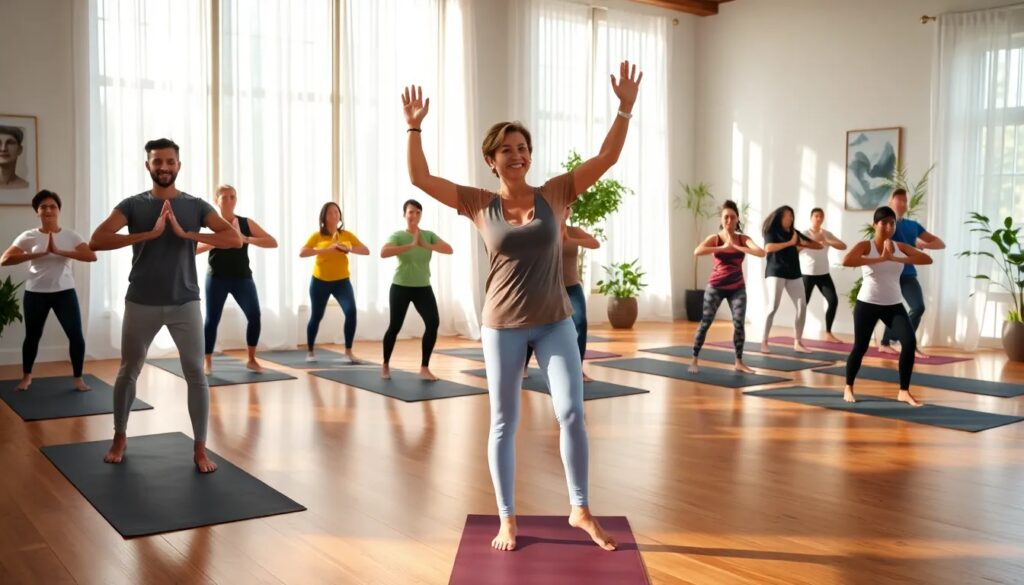
Powerflow yoga is a vigorous, movement-based style in which postures are strung together in continuous sequences timed to the breath. Unlike slower or more static forms of yoga, a power flow class rarely pauses — you move from one pose directly into the next on an inhale or exhale, building heat, cardiovascular endurance, and muscular strength all at once. Most studios use the term loosely, meaning you will find some variation between teachers, but the defining qualities — intensity, breathwork, and a flowing structure — stay consistent.
The same name also refers to a New Jersey hot yoga studio chain. Powerflow Yoga (PFY) is a collective of New Jersey studios that uses the same word for its brand; we cover what that brand is further down the article, in the Powerflow Yoga Studios section. The two uses share a vocabulary but answer different questions, and a reader searching for the style is not always the same reader searching for a specific studio.
- How Power Flow Differs from Standard Vinyasa and Power Yoga
- What Happens in a Typical Power Flow Class
- The Physical Demands: Is It Right for You?
- Benefits of a Consistent Power Flow Practice
- What to Bring and Wear
- How Often Should You Practice Power Flow?
- Powerflow Yoga Studios
- Frequently asked questions
How Power Flow Differs from Standard Vinyasa and Power Yoga
The terms vinyasa, power yoga, and power flow overlap, so it helps to understand where each sits on the spectrum.
| Style | Pace | Structure | Intensity |
|---|---|---|---|
| Vinyasa flow | Moderate to brisk | Creative, varies by teacher | Moderate |
| Power yoga | Brisk | Athletic, strength-focused | High |
| Power flow yoga | Brisk to fast | Athletic vinyasa, few breaks | High to very high |
| Hatha yoga | Slow | Pose-hold, static | Low to moderate |
| Ashtanga yoga | Brisk but set | Fixed primary series | High |
Power flow is essentially the marriage of power yoga's athletic emphasis and vinyasa's continuous-motion format. Where a power yoga class might hold a Warrior pose for several breaths, a power flow class is more likely to move through a sequence of Warriors in rapid succession. The result is a practice that functions almost like interval training: bursts of effort, brief transitions, repeat.
What Happens in a Typical Power Flow Class
Classes generally run 60 to 75 minutes and follow a recognizable arc. Understanding that arc helps first-timers feel less overwhelmed.
- Grounding (5–10 min): Seated or supine breathwork to settle the nervous system and establish a rhythm before movement begins.
- Warm-up flow (10–15 min): Sun Salutation A and B sequences wake up the major muscle groups and introduce the breath-to-movement link.
- Standing sequence (20–25 min): Warriors, lunges, balancing poses, and standing twists. This is the heart of the class — expect to sweat.
- Floor work (10–15 min): Core strengthening, hip openers, and backbends deepen the work and address areas the standing sequence didn't reach.
- Cool-down and Savasana (5–10 min): Forward folds, supine stretches, and a final rest. Do not skip Savasana — the nervous system needs it.
Music is almost always part of the experience. Many power flow instructors build playlists that mirror the class arc, starting energetic and slowing toward the end. If loud music is a concern — for example, if you have sensitivity to sound — it is worth checking with the studio in advance.
Powerflow yoga poses you'll meet in a typical class
The postures below show up across most power flow classes. They are not a fixed sequence — teachers rearrange them freely — but together they sketch the shape of the practice.
- Chaturanga (low plank): The most repeated pose in a power flow class. Holding it with control is what makes the rest of the standing work possible.
- Warrior I, II, and III: The three Warriors carry most of the standing sequence. They are usually chained back-to-back rather than held for long.
- Downward-Facing Dog: Used both as a transition and as a brief rest between harder poses. Most classes revisit it many times.
- Plank and Side Plank: The main core work. Expect to hold a plank for several breaths and to rotate into a side plank at least once.
- Chair Pose and Crescent Lunge: The two postures that load the quads and glutes hardest. They are the "burn" that power flow is known for.
The Physical Demands: Is It Right for You?
Power flow classes are physically demanding. Expect to hold Chaturanga (a low plank) multiple times per class, to balance on one foot, and to generate genuine cardiovascular effort. Regular practice of vigorous flow styles tends to develop upper-body endurance and core stability over time — and if you want to dig into that question, our overview of whether yoga qualifies as strength training covers the comparison in more depth.
If you are wondering whether power flow is "hard," the honest answer is yes, more than most beginner-friendly styles. The pace is the main difficulty, not the individual shapes. That said, power flow is not exclusive to experienced practitioners. Most teachers offer modifications throughout: knees-down for Chaturanga, blocks under the hands in standing poses, Child's Pose as a standing rest. Beginners should be upfront with an instructor before class so they can flag the most important modifications.
People with wrist, shoulder, or knee injuries should approach with caution. The volume of Chaturangas in a single class can be significant, and without solid alignment it is a common source of strain. If you are managing an injury, a gentle flow class may be a better starting point.
Benefits of a Consistent Power Flow Practice
When practiced regularly — two to four times per week — power flow delivers a range of well-documented benefits:
- Strength and muscle tone: Holding and transitioning through bodyweight poses taxes the shoulders, arms, legs, and core in ways that build functional strength over time.
- Cardiovascular fitness: The continuous movement elevates heart rate into moderate aerobic zones, supporting heart health without the impact of running.
- Flexibility: Moving into poses while warm — rather than forcing cold muscles — tends to produce durable gains in range of motion.
- Focus and stress reduction: The requirement to track breath and movement simultaneously occupies the mind in a way that interrupts anxious thought patterns.
- Body awareness: Repeated attention to alignment builds an intuitive sense of where the body is in space, which carries over into daily movement.
What to Bring and Wear
A non-slip yoga mat is essential — power flow generates perspiration, and a mat that slides is both annoying and a safety risk. A grip towel placed over the mat helps if the class is heated. Wear fitted or moderately fitted clothing: loose shorts or wide-leg pants can get in the way during inversions and lunges. Yoga is typically practiced barefoot, so no special footwear is needed.
Bring water, eat lightly (or not at all) in the two hours before class, and arrive five minutes early. Instructors in a busy class may not have time for lengthy individual consultations, so the earlier you arrive, the easier it is to ask questions. If you are searching for powerflow yoga near you, the studio locator on a chain's own website, plus Mindbody and ClassPass, are the most reliable ways to compare schedules in your area.
How Often Should You Practice Power Flow?
Most practitioners find two to three sessions per week sustainable over the long term. Daily power flow without adequate recovery can lead to overuse issues, particularly in the wrists and shoulders. A useful pattern is to alternate power flow days with restorative or yin sessions — the contrast helps both physical recovery and mental engagement with the practice. For guidance on scheduling, see how many days a week to do yoga.
Powerflow Yoga Studios
The phrase "powerflow yoga" also names a specific brand. Powerflow Yoga describes itself, on its official homepage, as "a collective of New Jersey hot yoga studios dedicated to making people feel better inside and out," with the tagline "Hot Yoga for Every Body." It is a studio brand, not a separate yoga style — the classes it runs are an athletic, heat-focused take on vinyasa flow, and the brand's own studio pages sit alongside the same kind of format covered in the rest of this article.
According to the brand's own website, Powerflow Yoga has been in operation since 2015 and currently operates five studios across northern New Jersey:
- Chatham — the flagship studio, listed first on the brand's own sites page.
- Clifton — the location of the brand's mailing address (1288 Van Houten Ave, Clifton, NJ).
- Jersey City — opened in winter 2018, per the studio's announcement on its own homepage.
- Livingston — situated in the town center, per the brand's own studio page.
- Morristown — located off the Morristown Green, per the brand's own studio page.
Class environments at the brand's studios, as listed on its Mindbody profile, are heated to 98°F with around 40% humidity. If you are reading the brand's Jersey City page and trying to decide whether a class is for you, that is a useful data point to compare against the non-heated version of the same style described in the rest of this article.
Two things follow. First, the style and the brand are independent: a power flow class at a studio in another city is the same general format whether or not the studio carries the "Powerflow Yoga" name. Second, public feedback on individual Powerflow Yoga locations is summarized on third-party listings like Mindbody, ClassPass, and Yelp, which is the fastest way to check current reviews before booking. If you are looking specifically for the brand, the About page on the official site is the most reliable starting point.
Frequently asked questions
It can be, but beginners should choose a class explicitly labeled beginner or all-levels and communicate their experience to the instructor beforehand. The moves themselves are learnable; the challenge is the pace. Most teachers are willing to slow down a sequence or offer modifications when they know a newcomer is in the room.
Power flow refers to the movement structure — athletic vinyasa sequences linked to breath. Hot yoga refers to the room temperature, typically 95-105 degrees Fahrenheit. Many studios combine them, offering hot power flow classes, but you can do power flow in a room-temperature studio and hot yoga in a gentler format. The two variables are independent.
Estimates vary by body weight, effort, class length, and room temperature. Power flow's continuous movement produces a sustained moderate-intensity effort that, in heated rooms, trends toward the upper end of what comparable aerobic movement formats burn — but there is no single number that fits every practitioner.
It depends on your goals. Power flow builds functional strength and muscular endurance effectively, but it does not replicate the progressive overload that comes from adding weight over time. For general fitness, power flow is a strong standalone practice. For significant muscle hypertrophy or sport-specific strength, it works best as a complement to resistance training rather than a replacement.
Have a correction or a question about this article? Reach us via our contact page.
Recommended: