Nirguna Yoga: Meditation on the Formless Absolute

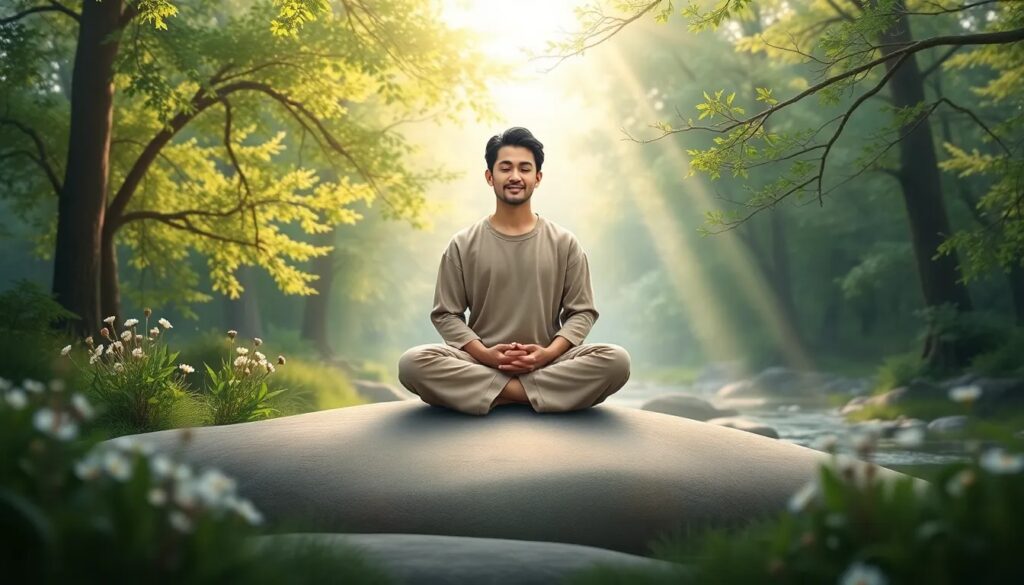
Nirguna yoga refers to meditative practice directed at Nirguna Brahman — ultimate reality conceived as formless and without attributes — rather than at a deity with a name, form, or personality. The term comes from Sanskrit: nir (without) and guna (quality or attribute). Rather than a standalone school with its own postures, nirguna yoga describes an orientation within Indian contemplative traditions, drawing mainly on the Upanishads, Advaita Vedanta, and the path of jnana yoga (the yoga of knowledge).
If you have encountered chanting, deity visualization, or devotional ritual in yoga, you have seen the opposite approach: saguna practice, meditation on the divine with attributes. Understanding the difference between the two clarifies a great deal about how meditation works across yoga traditions, and it is one of the genuine classical debates within Indian philosophy rather than a footnote on either side.
- What does nirguna actually mean?
- Nirguna vs. Saguna: how the two practices differ
- Where the idea comes from
- How a modern teacher might frame the same practice
- How to practice formless meditation: a starting sequence
- Common pitfalls in formless practice
- Is the nirguna approach right for you?
- Frequently asked questions
What does nirguna actually mean?
In Vedantic philosophy, Brahman — the ground of all existence — can be approached in two ways:
- Saguna Brahman: reality with qualities. The divine as a personal god with form, such as Krishna, Shiva, or the Goddess, which the mind can picture, name, and love.
- Nirguna Brahman: reality without qualities. The absolute beyond every image, concept, and description — what remains when all attributes are negated.
The classical Advaita Vedanta of Shankara (c. 8th century CE) treats Nirguna Brahman as the higher truth: forms and attributes are seen as concessions to the limits of the human mind. Other Vedantic schools, such as Ramanuja's Vishishtadvaita, disagree and place the personal, attribute-rich divine at the center. This is a genuine, ancient debate — neither side is a footnote to the other.
Nirguna vs. Saguna: how the two practices differ
| Aspect | Saguna practice | Nirguna practice |
|---|---|---|
| Object of meditation | A deity or divine form | Formless awareness itself |
| Typical methods | Chanting, ritual, visualization, devotional song | Self-inquiry, silent meditation, negation (neti neti) |
| Associated path | Bhakti yoga (devotion) | Jnana yoga (knowledge) |
| Emotional tone | Love, surrender, relationship | Stillness, inquiry, detachment |
| Accessibility | Concrete and approachable for most people | Abstract; traditionally considered more demanding |
| Stated goal | Union with the divine through devotion | Direct realization of non-duality |
Most traditions treat these as complementary rather than competing. Many practitioners begin with form-based meditation and move toward formless practice over time; the sant poets of medieval India, such as Kabir, even combined the two in a devotional style aimed at a formless beloved, known as nirguna bhakti.
Where the idea comes from
The roots of nirguna meditation are in the Upanishads, which repeatedly describe Brahman by negation — neti neti, meaning not this, not this. The Mandukya Upanishad points to a fourth state of consciousness (turiya) beyond waking, dreaming, and deep sleep. Advaita Vedanta later systematized this into a method: discriminating the unchanging witness from everything observable, including thoughts and the sense of self.
One honest caveat: you will rarely find a class called nirguna yoga on a studio schedule. The phrase is used loosely in modern yoga writing for any formless, awareness-oriented meditation. The substance behind it, however, is among the oldest layers of yogic practice, and it overlaps heavily with the meditative limbs of raja yoga.
How a modern teacher might frame the same practice
For Western readers, the language of nirguna and saguna can feel abstract. The same two orientations are often taught in more accessible vocabulary: as meditation with a form (a mantra, an image, a visualisation, a devotional practice) versus meditation on the witness (pure awareness observing experience without grasping it). Several modern yoga and meditation lineages — including the Sivananda tradition and many Advaita-influenced teachers — present the witness-based approach as the core of daily practice instruction, even when they do not use the Sanskrit terms.
This is worth knowing if you are browsing meditation apps, books, or retreats: the same formless practice can show up as witness meditation, self-inquiry, awareness of awareness, or simply sitting in silence. The vocabulary differs; the underlying orientation is the same family as Advaita Vedanta's nirguna approach.
How to practice formless meditation: a starting sequence
- Sit and settle. Take a stable, upright seat. Spend two to three minutes slowing the breath; simple breath awareness or a basic pranayama technique works well.
- Choose a neutral anchor. Instead of an image, rest attention on awareness itself, on silence, or on a non-figurative mantra such as Om or So Ham.
- Apply neti neti. When a thought, sensation, or image arises, note that it is observable — and therefore not the observer — and let it pass without pushing it away.
- Rest as the witness. The instruction is less about doing and more about not doing: remaining as the awareness in which experience appears.
- Keep sessions short and regular. Ten to twenty minutes daily builds more stability than occasional long sits. Formless practice is subtle, and consistency matters more than intensity.
Common pitfalls in formless practice
Three traps catch most beginners, and being aware of them saves months of confusion. The first is blanking out: mistaking dullness or half-sleep for "formless" meditation. Genuine formless practice is awake and clear, not zoned out. The second is suppressing thought: trying to force the mind empty usually produces tension and a sense of failure. The classical instruction is the opposite — let thoughts arise, recognise them as objects, and return to witnessing. The third is dissociation: in longer or more intense sessions, some people drift into an unfocused state that feels spiritual but is actually a mild form of disconnection from the body. A grounded seat, open eyes partway through a session, and a teacher who can correct the form are reliable countermeasures.
Is the nirguna approach right for you?
Formless meditation suits people drawn to inquiry, philosophy, and silence, and those who find imagery-based practice distracting. It can feel dry or disorienting without preparation, which is why classical teachers usually recommended building concentration and ethical grounding first. If you are new to meditation altogether, a structured introduction through breath work or guided practice is a gentler entry point — see our overview of the main types of yoga to find a path that fits your temperament.
A qualified meditation teacher is genuinely useful here. Formless practice is easy to misunderstand — blankness, dissociation, or suppressing thought are common dead ends that a teacher can help you avoid. Browse our yoga styles and lineages overview to see where nirguna orientation sits among the broader family of yoga practices.
Frequently asked questions
No. Nirguna yoga is a meditative and philosophical orientation, not a posture style. It is practiced seated, through silent meditation and self-inquiry, though many people combine it with a regular asana practice for physical balance.
Saguna Brahman is ultimate reality conceived with attributes — a divine form the mind can picture and relate to. Nirguna Brahman is reality without any attributes, beyond every name, form, and concept. Saguna practice uses devotion and imagery; nirguna practice uses inquiry and formless meditation.
Yes, but it helps to build basic concentration first. Short daily sessions of breath awareness make the transition to formless practice much smoother, and classical traditions usually recommend studying with a teacher because formless meditation is easy to misinterpret.
Not inherently. Indian traditions themselves disagree about which approach is higher, and most treat them as complementary. The better practice is the one that suits your temperament and that you can sustain consistently.
Have a correction? Contact us.
Recommended: