Jnana Yoga: The Path of Knowledge Explained — Four Pillars, Method, and How to Begin

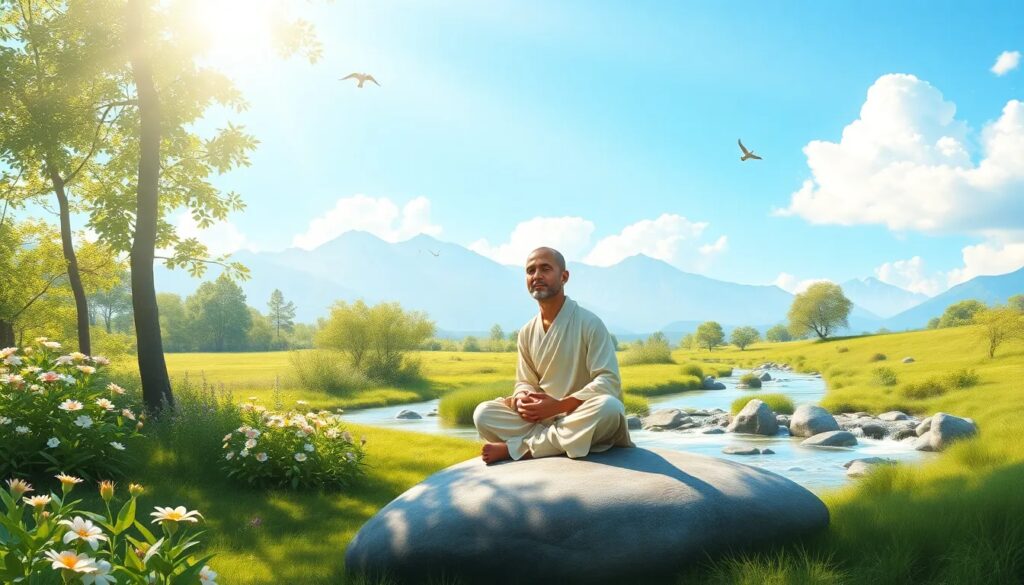
Jnana yoga (Sanskrit jnana, knowledge or wisdom) is the classical Hindu path of liberation through knowledge: a disciplined practice of study, reasoning, and meditative self-inquiry aimed at directly realizing that the true Self (atman) is identical with the ultimate reality (brahman). It is one of the principal yogic paths described in the Bhagavad Gita alongside karma yoga (action) and bhakti yoga (devotion) — and the one with no postures at all. The knowledge it pursues is not book-learning but direct insight into what you fundamentally are.
Where jnana yoga comes from
The path is rooted in the Upanishads, the philosophical texts of late Vedic India, and was systematized most influentially in Advaita Vedanta, the non-dual school associated with the 8th-century philosopher Shankara. Its core claim: suffering arises from a case of mistaken identity — we take ourselves to be the body, mind, and personal history, when our real nature is unconditioned awareness. Jnana yoga is the methodical undoing of that mistake. The Bhagavad Gita treats this path of knowledge at length, particularly in its early chapters, while arguing it works best combined with action and devotion rather than in isolation. For background on how these traditions fit together, see our overview of yoga in Hinduism and the longer view in how old yoga is.
The four pillars: sadhana chatushtaya
Classical Vedanta lists four qualifications (sadhana chatushtaya) a student should cultivate before serious inquiry:
- Viveka (discernment): the ability to distinguish the permanent from the impermanent — the real from the merely passing.
- Vairagya (dispassion): reduced craving for results and possessions; not coldness, but freedom from compulsive grasping.
- Shatsampat (six virtues): calmness of mind (shama), restraint of the senses (dama), withdrawal from compulsive activity (uparati), endurance of discomfort without complaint (titiksha), trust in the teaching and teacher (shraddha), and sustained focus (samadhana).
- Mumukshutva (yearning for liberation): the genuine, motivating desire to be free — without which the practice stays academic.
These four are cultivated before the inquiry proper, not alongside it — without them, inquiry tends to produce the trap described further down this page: fluent talk about non-duality with no real shift in how a person lives.
The method: three steps of inquiry
Traditional jnana practice follows a three-stage sequence:
- Shravana (hearing): systematic study of the teachings — classically the Upanishads, Bhagavad Gita, and Brahma Sutras — ideally with a qualified teacher rather than alone.
- Manana (reflection): rigorous reasoning about what was heard, raising and resolving doubts until the teaching is intellectually clear.
- Nididhyasana (deep contemplation): sustained meditation on the truth of the teaching until it shifts from understood idea to lived recognition.
A well-known related practice is self-inquiry (atma vichara), popularized in the 20th century by the sage Ramana Maharshi: persistently tracing the question of who or what is aware back to its source, rather than answering it with concepts.
Who taught jnana yoga: from Shankara to today
The path has a continuous line of teachers rather than a single founder. Adi Shankara, the 8th-century philosopher who systematized Advaita Vedanta, gave jnana yoga its clearest classical framework: the four pillars and the three-step method both descend from his commentaries on the Upanishads, the Gita, and the Brahma Sutras. Later tradition also credits him with the Vivekachudamani ('Crest Jewel of Discrimination'), a text on self-knowledge often read after the Gita — though modern scholars dispute the attribution, so it is best treated as a work associated with his name rather than settled authorship.
In the modern era, Ramana Maharshi taught self-inquiry (atma vichara) as a direct method: keep returning to the question of who is asking, rather than studying scripture at length. Swami Vivekananda carried jnana yoga and Vedanta to the West, most famously in his 1893 address to the Parliament of the World's Religions in Chicago. Nisargadatta Maharaj, a 20th-century Mumbai teacher of non-duality, is best known for the book I Am That, a widely cited collection of his recorded talks.
Jnana yoga vs. the other classical paths
| Path | Primary means | Suited to | Typical practices |
|---|---|---|---|
| Jnana yoga | Knowledge and self-inquiry | Reflective, analytical temperaments | Study, reasoning, contemplation |
| Bhakti yoga | Devotion and surrender | Emotionally oriented temperaments | Chanting, worship, remembrance |
| Karma yoga | Selfless action | Active, service-minded temperaments | Work offered without attachment to results |
| Raja yoga | Meditation and mental discipline | Those drawn to systematic practice | Patanjali's eight limbs: ethics, posture, breath, meditation |
Tradition treats these as complementary rather than competing — most teachers prescribe a blend weighted toward a student's temperament. Our guide to the yoga disciplines maps these classical paths onto the modern styles you see on studio schedules.
The comparison people search for most often is raja yoga vs. jnana yoga. Raja yoga works through meditation and mental discipline organized into a step-by-step system — Patanjali's eight limbs, from ethics through posture and breath to meditation. Jnana yoga works through intellectual inquiry and self-examination, with no fixed sequence of stages. In practice the two overlap: jnana's nididhyasana stage is itself a form of meditation, and many raja practitioners take up self-inquiry once the mind has settled. The same applies to bhakti yoga, the path of devotion — most teachers, including the Gita itself, recommend combining paths rather than choosing one.
How to begin practicing jnana yoga today
Getting started with jnana yoga as a beginner does not require joining an ashram or reading Sanskrit — it takes a text, a rhythm, and some patience:
- Start with a primary text. The Bhagavad Gita is the most accessible entry point; a translation with commentary helps more than a bare text.
- Set a study-and-reflection rhythm. Even 20–30 minutes daily of reading followed by deliberate reflection follows the shravana-manana structure.
- Add contemplative sitting. A simple daily meditation period gives the material somewhere to settle; inquiry works poorly in an agitated mind.
- Find teaching support. Vedanta study groups, university courses, and reputable online lecture series substitute for the traditional teacher-student setting better than solitary reading.
- Keep the rest of your life in the practice. The Gita's own advice: combine inquiry with ethical action and humility, rather than retreating into pure intellectualism.
What jnana yoga offers
Because jnana yoga has no clinical research base — it is a contemplative tradition, not a measured intervention — any claim about its effects stays in traditional rather than medical language. The tradition and its practitioners describe a few consistent effects: sustained practice of viveka sharpens the everyday ability to separate what is lasting from what is merely passing, and practitioners often report less reactivity around desire and loss from not over-identifying with fleeting states. Because the practice is study, reasoning, and sitting rather than postures, it also stays available regardless of age or physical condition — part of why it is taught as sustainable across a lifetime. None of this replaces medical or mental-health care; it describes what the tradition claims for itself, not a clinical outcome.
Honest notes for modern practitioners
Two caveats are worth stating plainly. First, jnana yoga's claims about the Self and brahman are metaphysical positions held within Vedanta — profound and internally rigorous, but matters of contemplative tradition rather than empirical science, and other Indian schools (including Buddhist ones) dispute them; our article on whether yoga is Hindu or Buddhist covers those debates. Second, the path's intellectual style carries a known trap the tradition itself warns about: mistaking conceptual fluency for realization. The four pillars exist precisely to keep inquiry grounded in character and conduct, not cleverness. Understood that way, jnana yoga remains one of humanity's most serious attempts to answer the question of what the goal of yoga ultimately is.
Jnana is the Sanskrit word for knowledge or wisdom, so jnana yoga means the yoga of knowledge: the classical Hindu path that pursues liberation through study, reasoning, and meditative self-inquiry rather than through postures, devotion, or ritual.
No. Jnana yoga has no asana component — its practices are study, reflection, and contemplation. Many practitioners still keep a physical or meditative practice alongside it for steadiness of body and mind, which the tradition encourages.
The sadhana chatushtaya: viveka (discernment between the permanent and impermanent), vairagya (dispassion), shatsampat (six virtues including calmness, restraint, and focus), and mumukshutva (an earnest desire for liberation).
Tradition often calls it the steepest path because it demands sustained mental discipline and offers little of the emotional warmth of devotion or the tangible structure of postural practice. In practice the paths are usually combined, so the question is less which is hardest than which emphasis fits your temperament.
'Jnana' is pronounced roughly 'GYAH-nah' — the initial j is soft, closer to a g+y sound than an English j — from the Sanskrit word ज्ञान. The second word, yoga, is pronounced as usual.
Adi Shankara systematized the philosophy in the 8th century, and in modern times Ramana Maharshi and Swami Vivekananda are its best-known teachers, each associated with a different piece of the path: self-inquiry practice, and the introduction of jnana yoga and Vedanta to the West, respectively.
Have a correction? Contact us.
Recommended: