Do You Need a Yoga Mat for Pilates? What Actually Matters

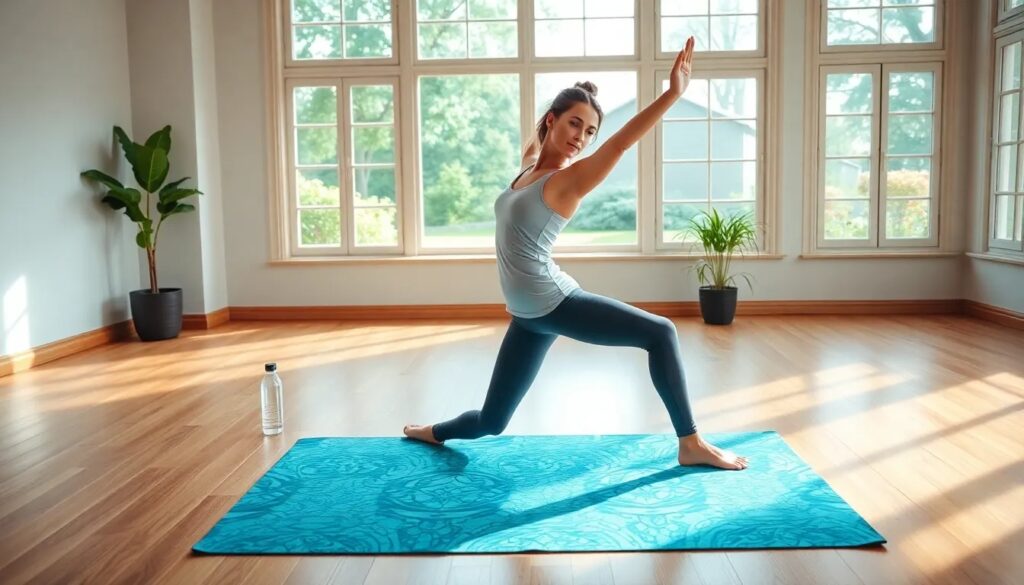
Short answer: you do not need a special mat to start Pilates, and a yoga mat will work — but it is not ideal for regular mat Pilates. Yoga mats are thin (typically 3–5 mm) and built for grip in standing poses. Pilates mats are thicker (usually 8–15 mm) and denser, because mat Pilates involves a lot of lying, kneeling, and rolling along the spine. If you practice Pilates occasionally, use the yoga mat you already own. If you practice several times a week, or rolling exercises hurt your back on your current mat, a Pilates mat is a worthwhile upgrade.
- The short answer: when your yoga mat is enough
- Yoga mat vs. Pilates mat: the real differences
- When a yoga mat is perfectly fine for Pilates
- When it is worth buying a Pilates mat
- Can you use a Pilates mat for yoga?
- What to look for if you buy one mat for both
- What about reformer Pilates and other studio classes?
- Mats worth a look
- Frequently asked questions
The short answer: when your yoga mat is enough
If you are trying Pilates for the first time, own one yoga mat, and do not want to buy gear before knowing you will stick with the practice, that mat is perfectly fine for the first few weeks. The same is true if you only take a mat Pilates class once a week, practice on carpet, or stick to planks, side work, and standing movements rather than rolling exercises like Rolling Like a Ball, Open Leg Rocker, or spine curls. A folded blanket under the spine or a doubled-up mat solves most of the discomfort that comes from the thin profile of a standard yoga mat.
Yoga mat vs. Pilates mat: the real differences
| Feature | Yoga mat | Pilates mat |
|---|---|---|
| Thickness | 3–5 mm (some travel mats are thinner) | 8–15 mm |
| Density | Firmer, thinner — prioritizes ground feel and stability | Dense foam — cushions the spine without bottoming out |
| Surface | Grippy or sticky, to prevent slipping in standing poses | Smoother — the body needs to glide slightly during rolling work |
| Priority | Traction and balance | Cushioning for spine, hips, and knees |
| Portability | Light, rolls tight | Bulkier and heavier |
| Best for | Yoga, stretching, standing work | Mat Pilates, floor-heavy core work |
The core trade-off is simple: yoga rewards ground feel, Pilates rewards padding. A thick soft mat makes balance poses wobbly; a thin firm mat makes spinal rolling uncomfortable. Each tool is shaped by its discipline — if you want a deeper look at how the two practices themselves differ, see our comparison of yoga vs. Pilates.
When a yoga mat is perfectly fine for Pilates
- You are trying Pilates for the first time and do not want to buy gear before knowing you will stick with it.
- You practice occasionally — once a week or less.
- You practice on carpet, which adds cushioning underneath the mat.
- Your session avoids rolling exercises (Rolling Like a Ball, Open Leg Rocker, spine massage) and stays in planks, side work, and standing movements.
- You can layer it — doubling the mat or folding a blanket under your spine for the rolling section solves most discomfort.
When it is worth buying a Pilates mat
- You practice mat Pilates two or more times per week. Repeated rolling on a thin mat over hard flooring is genuinely uncomfortable and discourages practice.
- You feel your vertebrae pressing the floor during roll-downs or spine curls.
- You practice on hardwood, tile, or concrete with no carpet underneath.
- You have sensitive knees, hips, or a bony spine — extra padding makes kneeling and rolling work far more tolerable.
- You want one dedicated home-workout mat — a dense 10 mm mat also serves general core work and stretching well.
Can you use a Pilates mat for yoga?
This direction works less well. Thick, soft mats are unstable under standing and balance poses — your foot sinks and wobbles in poses like Tree or Warrior III — and the smooth surface offers less traction for poses like Downward Dog. If yoga is your main practice and Pilates the occasional add-on, keep a standard yoga mat and pad it when needed; if it is the reverse, prioritize the thicker mat. Mat thickness is a bigger decision than most people expect — our guide to yoga mat thickness breaks down the trade-offs in detail.
What to look for if you buy one mat for both
If you genuinely split your time between the two practices, a reasonable compromise exists:
- Pick 6–8 mm thickness. Enough cushion for most Pilates floor work, still firm enough for basic yoga standing poses.
- Choose dense over plush. A dense 6 mm mat protects better than a soft 10 mm one that compresses flat. TPE and natural rubber tend to be denser than cheap EVA foam. Density matters more than the headline thickness number.
- Check the length. You should fit your full spine plus head with margin when lying down — at least your height plus 10 cm.
- Grippy top surface. Helpful in yoga and not a real problem in Pilates.
- Add padding strategically. Keep a folded blanket or a second cheap mat for rolling exercises and kneeling work.
If you are shopping, our roundup of the best yoga mats includes denser options that handle floor work well. And if you are still deciding which discipline to start with, our yoga for beginners guide is a good companion read. If you already have a yoga mat and want to keep using it, our yoga mat cleaning guide is worth a look before any Pilates session.
Density beats thickness
Two mats can list the same thickness on the spec sheet and feel completely different under your spine. A 10 mm mat made of soft, low-density foam will compress to nearly nothing during Rolling Like a Ball, while a 6 mm mat of dense closed-cell foam will hold its shape. When comparing mats, pick density first and thickness second — that is the single biggest factor in whether the mat actually protects your back during floor work.
What about reformer Pilates and other studio classes?
If your studio class uses a reformer, you do not need a personal mat — the reformer carriage is already padded. Mats only matter for mat Pilates classes (where the whole session is on the floor) and for home practice between classes. For mat classes at the gym, studios usually provide mats; a personal mat is still worth bringing if you prefer your own surface or want guaranteed grip. If you are also doing a 6 mm mat for home practice, that same mat will serve mat classes and general stretching in the studio too.
Mats worth a look
As an Amazon Associate, we earn from qualifying purchases.


Frequently asked questions
Have a correction? Contact us.
Last update 2026-09-10. Price and product availability may change.
Recommended: