Is Yoga Good for a Herniated Disc? A Safety-First Guide

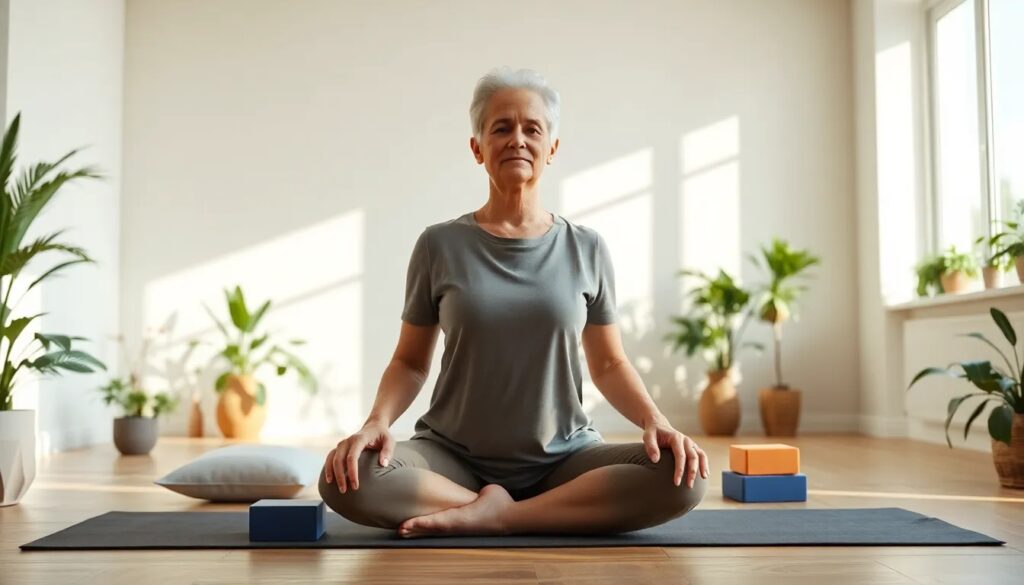
Is yoga good for a herniated disc? Yes, for many people — but only the right kind, at the right time, after a clinician has cleared you to exercise. A herniated disc (also called a prolapsed or slipped disc) is a medical condition with very different presentations, so a blanket "yoga heals herniated discs" claim is misleading. Gentle, controlled practice can ease pain, maintain mobility, and strengthen the muscles that support the spine once the acute flare has settled; several common yoga poses — deep forward folds, loaded twists, extreme backbends — can aggravate an injured disc. The honest answer is yes, conditionally, with modifications and professional guidance.
Medical disclaimer: this article is general information, not medical advice. Get a diagnosis and exercise clearance from a doctor or physical therapist before practicing, and stop immediately if any movement increases pain, numbness, or tingling — especially pain radiating down a leg or arm.
What a Herniated Disc Actually Is
Spinal discs are cushions between the vertebrae with a firm outer ring and a gel-like center. A herniation happens when the inner material pushes through the outer ring, often irritating a nearby nerve root. The NHS describes it as a soft cushion of tissue between the bones in your spine that bulges outward and becomes painful if it presses on nerves.
Symptoms frequently include radiating pain — sciatica down the leg for lumbar herniations, or arm pain for cervical ones. Not all herniations cause symptoms, and most improve substantially with conservative care over weeks to months; movement, done correctly, is usually part of that care rather than the enemy.
Cervical vs. Lumbar Herniations: Different Rules
Search interest clusters around the most common lumbar levels — L4-L5 and L5-S1 — and a smaller but consistent stream of queries about cervical disc herniations (often C5-C6 or C6-C7). The two regions follow different logic, and a yoga routine designed for one is not automatically safe for the other.
| Lumbar (low back) | Cervical (neck) |
|---|---|
| Gentle extension often centralizes symptoms (McKenzie-style work like Sphinx, low Cobra). | Avoid sustained deep neck flexion (rounded forward fold) and loaded neck extension. |
| Forward folds and deep seated twists are common aggravators. | Aggravators: prolonged Chaturanga / Plank with head jutting forward, Shoulderstand with cervical load, aggressive inversions. |
| Core stabilization (Bird-Dog, supported Bridge) is usually well tolerated. | Focus on gentle neck range, upper-back mobility (thread the needle, supported Cat), and shoulder release. |
| Sciatica-style leg symptoms are the main red flag. | Arm pain, hand numbness, or progressive arm weakness are the main red flags. |
For the rest of this guide, examples default to a typical lumbar herniation (the most common pattern), with cervical-specific notes where they differ. Individual assessment still beats any list — including this one.
What the Evidence Actually Says
Harvard Health is direct: yoga can help strengthen back muscles and alleviate low back pain, but older adults can encounter injuries from yoga, and preventive measures matter. The NHS slipped disc page recommends gentle exercise such as walking, swimming, and yoga "as soon as you can" once pain allows, adding that the specific type of exercise is less important than the rule of doing something that does not cause or worsen pain. Major clinical guidelines list yoga among reasonable exercise options for chronic low back pain, which is why physical therapists often incorporate yoga-style movements into rehabilitation. What is not supported: the idea that any pose "heals" a disc, or that reabsorption of herniated material can be sped up by a particular asana. What yoga plausibly does is improve the environment around the injury — stronger core support, better hip and hamstring mobility, less protective muscle guarding, and better pain coping through breathwork.
Safer Yoga Patterns vs. Poses to Avoid
Individual cases differ — a pose that relieves one person can aggravate another. For the typical lumbar herniation, the patterns physical therapists and experienced teachers most often use look like this:
| Generally better tolerated | Commonly aggravating — avoid or modify |
|---|---|
| Sphinx Pose (gentle prone extension) | Deep seated or standing forward folds (Paschimottanasana, Uttanasana) |
| Cobra Pose, low and gentle | Loaded or deep twists (full Ardha Matsyendrasana) |
| Cat-Cow, small pain-free range | Extreme backbends (Wheel, deep Camel) |
| Bird Dog and gentle core stabilization | Seated straight-leg folds with a rounded spine |
| Pelvic tilts and supported Bridge | Plow, Shoulderstand, and other loaded flexion inversions |
| Child's Pose (if flexion is pain-free for you) | Jump-backs and fast vinyasa transitions |
Why extension-biased poses appear on the safer list: many lumbar herniations push disc material backward, and gentle extension — the principle behind the McKenzie method of physical therapy — often centralizes symptoms, meaning pain retreats from the leg toward the spine. That is a good sign. A minority of people feel worse in extension; that is exactly why individual assessment beats any internet list.
For a cervical herniation, the same "gentle, supported, pain-free" rule applies, but the safer list is different: gentle Cat with the head following the spine (not dropping), thread-the-needle sphinx for upper-back rotation, slow neck range within comfort, and a supported side-lying rest pose. Anything that pulls the head forward or loads the cervical spine should be skipped.
How to Practice Safely: A Practical Checklist
- Wait out the acute phase. In the first days of a flare-up, relative rest and your clinician's plan come first. Yoga enters later.
- Get cleared, then tell your teacher. Choose slow classes — gentle hatha, therapeutic, or restorative yoga — and inform the instructor before class so they can offer modifications instead of adjustments.
- Move within the pain-free range only. Mild muscle stretch is fine; any sharp, electric, or radiating sensation means back out of the pose immediately.
- Use props generously. Blocks under the hands shorten the distance in folds, and a yoga strap lets you stretch hamstrings lying on your back with the spine neutral — the single most useful swap for disc patients.
- Hinge from the hips, keep the spine long. A short fold with a flat back is safer and more productive than a deep fold with a rounded one.
- Favor frequency over intensity. Ten to fifteen gentle minutes daily typically beats one ambitious weekly class. Supported setups like those in our restorative poses guide are a sensible template. If sustained floor work is too uncomfortable, a chair yoga session can keep the daily habit going.
For a broader gentle repertoire once you are cleared, see our guide to yoga poses for back pain, and our gentle yoga sequence for a class-length option.
When Yoga Is the Wrong Tool: Red Flags
Stop practicing and seek medical care promptly if you experience any of the following. The NHS advises calling emergency services for the first group, as they can indicate cauda equina syndrome, which is a medical emergency.
- Progressive leg or foot weakness, or foot drop.
- Numbness around the bottom, genitals, or inner thighs; loss of bladder or bowel control — possible cauda equina syndrome, a medical emergency.
- Pain that steadily worsens despite rest and conservative care.
- New numbness or tingling spreading further down a limb during or after practice.
- Pain accompanied by a high temperature, unexplained weight loss, or a swelling in the back, or pain that is worse at night.
These signs mean the priority is medical evaluation, not a modified practice. A herniated disc is a medical condition — your clinician, not your yoga teacher, decides when and how you return to the mat.
Recovery Timeline and When to Return to the Mat
There is no universal timeline, because herniations vary widely. The NHS guidance is to keep active and gradually introduce gentle exercise as soon as pain allows; for many people, that means very short, supported sessions within a few weeks of the acute flare settling, with clearance from a doctor or physical therapist. Start with a few minutes at a time, building by how your symptoms respond rather than by a fixed schedule. Reabsorption of herniated material happens on the body's own timeline, and most people who return to a careful practice feel steadier after a few weeks of consistency than after a single ambitious class. If you are not improving, the NHS recommends seeing a GP; physiotherapy, imaging, and in some cases further treatment can help.
No pose heals the disc itself. Herniated material is reabsorbed by the body on its own timeline, and most cases improve within weeks to months. What gentle yoga can do is reduce pain, maintain mobility, and strengthen the muscles that support the spine while that natural recovery happens.
For typical lumbar herniations, the common aggravators are deep forward folds, loaded or deep twists, extreme backbends like Wheel, Plow and Shoulderstand, and fast vinyasa transitions. Anything that produces sharp or radiating pain should be stopped immediately, whatever the pose.
Often yes, once the acute phase has passed and a clinician has cleared exercise. These lower lumbar levels are the most common herniation sites, and gentle extension-based poses like Sphinx plus core stabilization work are usually better tolerated than deep forward folds or twists. Individual assessment matters more than the disc level.
There is no universal timeline. Many people can begin very gentle, supported movement within a few weeks, but only after the acute flare settles and with clearance from a doctor or physical therapist. Start with short sessions and progress by how your symptoms respond.
Often yes, with different rules than the lumbar spine. Avoid sustained deep neck flexion and loaded neck extension; focus on gentle neck range, upper-back mobility, and shoulder release under a teacher's guidance. Stop on any sharp or radiating arm pain and consult a clinician.
Have a correction? Contact us.
Recommended: