A Gentle Yoga Sequence: 30-Minute Routine (With 15- and 60-Minute Versions)

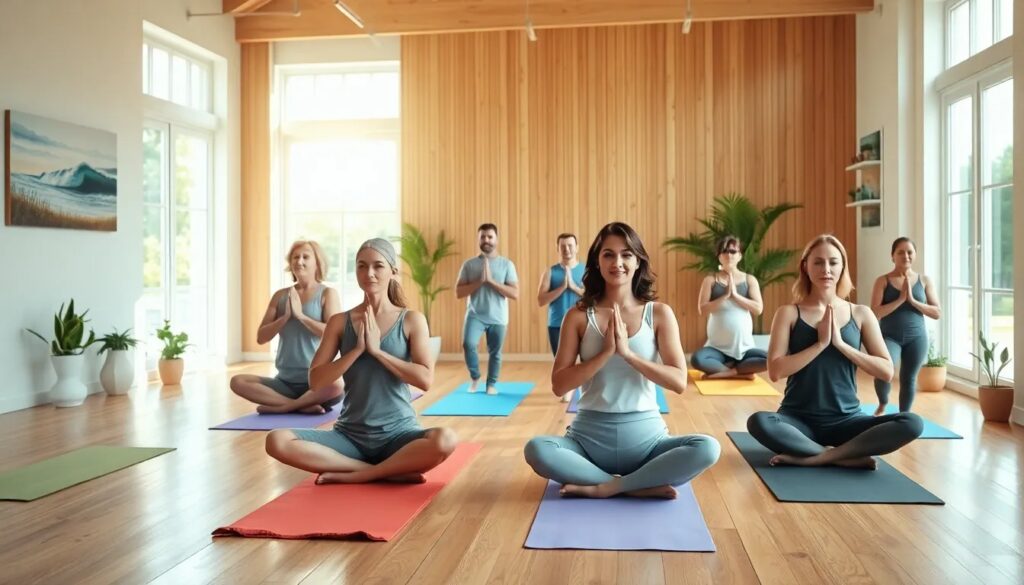
A gentle yoga sequence is a slow, low-intensity series of poses — typically 8 to 12 of them — that moves the spine in every direction, opens the hips and chest, and ends with several minutes of deliberate rest, all without push-up transitions, deep backbends, or anything held to the point of strain. Below is a complete 30-minute sequence you can follow today, with timing for each pose, plus a 15-minute short version and a 60-minute extended one, and the modifications that make the routine work for beginners, stiff mornings, and older practitioners.
What Makes a Sequence Gentle?
Gentle sequencing follows a few simple rules: every pose has an easier variation, transitions are slow (no jumping, no Chaturanga), the spine moves through flexion, extension, side-bending, and rotation across the session, and effort stays at a level where you can breathe slowly through the nose the whole time. If you can not, the pose is too deep — back off. The "gentlest" styles of yoga — restorative, yin, and slow hatha — all share this rule: never push into a strain, only into a long, even exhale. For the broader picture of who this style suits and why, see our overview of gentle yoga.
The 30-Minute Gentle Yoga Sequence
You need a mat, and ideally two blocks (thick books work) and a folded blanket. Move with the breath: inhale to lengthen or lift, exhale to fold or deepen.
- Easy Seat with breath awareness — 3 minutes. Sit cross-legged on the folded blanket, hands on thighs. Lengthen each exhale slightly beyond the inhale; this alone starts shifting the nervous system toward rest.
- Seated neck and shoulder rolls — 2 minutes. Slow circles in both directions, then drop one ear toward a shoulder for three breaths per side.
- Cat-Cow — 2 minutes. On hands and knees, alternate arching and rounding the spine, one movement per breath. Around 8–10 rounds.
- Thread the Needle — 1 minute per side. From hands and knees, slide one arm under the body, resting shoulder and ear on the mat. A gentle rotation for the upper back.
- Child's Pose — 2 minutes. Hips back to heels, arms forward or alongside the body, forehead supported on the mat or a block.
- Low Lunge — 1.5 minutes per side. Back knee on the mat (pad it with the blanket), hands on the front thigh or on blocks. Opens the hip flexors that sitting keeps short.
- Standing Forward Fold with bent knees — 1.5 minutes. Feet hip-width, knees generously bent, torso heavy, opposite elbows held. Sway gently if it feels good.
- Mountain Pose to slow arm raises — 2 minutes. Stand tall; inhale the arms overhead, exhale them down, five slow rounds, then stand quietly for five breaths.
- Supported Bridge — 3 minutes. Lie on your back, feet flat, lift the hips and slide a block at its lowest height under the sacrum. Rest there — this is a supported hold, not a lift.
- Supine Twist — 1.5 minutes per side. Knees to chest, then let them fall to one side, arms wide, both shoulders heavy.
- Legs-Up-the-Wall or calves-on-a-chair — 3 minutes. A mild inversion that drains tired legs and quiets the mind.
- Savasana — 5 minutes. Flat on the back (or knees bent with feet wide if the lower back complains), blanket over you. Do nothing. This is the part that consolidates everything before it — do not skip it.
For a closer look at each posture — cues, alignment, and what to feel — our guide to gentle yoga poses walks through them pose by pose.
Short on Time or Want More? Three Versions Compared
| Version | Keep | Adjust | Best for |
|---|---|---|---|
| 15 minutes | Cat-Cow, Child's Pose, Low Lunge, Supine Twist, Savasana (3 min) | One minute per pose, one side each where time is tight | Mornings, work breaks, building the daily habit |
| 30 minutes (above) | The full 12-pose sequence | As written | Most people, most days |
| 60 minutes | Everything above | Double the holds on floor poses, add Warrior II and Tree at the wall after step 8, extend Savasana to 8–10 minutes | Weekends, high-stress weeks, replacing a studio class |
How to Adapt the Sequence
For complete beginners
Do the 15-minute version for the first two weeks. The goal is familiarity, not depth — a shallow pose with steady breath beats a deep pose with held breath every time. If you want to understand the named poses better first, our guide to hatha yoga walks through the foundational postures this sequence draws on.
For seniors and anyone with limited floor mobility
Every floor pose here has a seated or supported equivalent — Cat-Cow works beautifully in a chair, twists translate directly, and Legs-Up-the-Wall becomes calves-on-a-chair. Our chair yoga guide covers the full adaptation, and our broader yoga for seniors page covers the wider picture. Check with a healthcare professional first if you have osteoporosis, blood pressure issues, or are recovering from surgery.
For evenings and poor sleep
Drop the standing section (steps 7–8), double the time in Supported Bridge, the twist, and Legs-Up-the-Wall, and dim the lights. If even this feels like too much effort at the end of the day, a fully propped practice may fit better — that is exactly what restorative yoga is for.
Props That Make Gentle Practice Better
- Two blocks bring the floor up to you in lunges and folds — the single best investment for stiff hamstrings.
- A folded blanket pads knees in lunges and lifts the hips in seated poses so the spine can lengthen.
- A strap (or bathrobe belt) extends your reach in hamstring stretches without rounding the back.
- A bolster or two firm pillows turn the supine poses into something closer to pure rest.
As an Amazon Associate, we earn from qualifying purchases.


- YOGA BLOCK and YOGA STRAP COMBO: Makes for a great yoga prop and accessories starter kit, providing the support you need to get started
- STABILITY and BALANCE: Yoga blocks and yoga straps provide the stability and balance needed in your practice to help with optimal alignment, deeper poses and increased strength
- EXTEND with DEEPEN STRETCHES: Blocks and straps enable you to extend, support and deepen your stretches while also working to increase range of motion; Easy release D ring metal buckle holds 6 feet strap securely in place allowing your shoulders to relax
- MODIFY and ALIGN: Use under your hands, feet or seat (meditation) to ensure the proper alignment needed in order to safely support and modify poses to suit your level of flexibility; If you feel tight, don't risk injury and grab a block and a strap
- CARE INFO: Spot clean with mild detergent; towel or air dry (Block Dimensions: 9 inches W x 6 inches H x 4 inches D / Weight: 4.6 ounces; Strap Dimensions: 6 feet)

How Often Should You Do This Sequence?
Because the intensity is low, recovery is not a limiting factor — daily practice is fine, and three to four sessions a week is enough for most people to notice looser hips, an easier lower back, and calmer evenings within a few weeks of consistent practice. Consistency beats duration: the 15-minute version done five days a week will do more for you than a single long session on Sunday. If you find yourself drawn to the long, quiet holds more than the movement, explore yin yoga, which makes those holds the entire practice.
Frequently Asked Questions
Anywhere from 15 to 60 minutes works. A 30-minute session is the sweet spot for most people: long enough to move the spine in every direction and still include a proper Savasana, short enough to repeat several times a week.
Yes — it is one of the best starting points, because every pose has an easier variation and nothing depends on strength or flexibility you do not have yet. Start with a 15-minute version and let depth come gradually.
Yes. The intensity is low enough that daily practice does not create a recovery problem, and short daily sessions generally produce better results than one long weekly one.
Gentle yoga still involves active movement and held standing poses at low intensity. Restorative yoga removes effort entirely: the body is fully supported by props in a handful of poses held for 5 to 20 minutes each. Gentle is slow exercise; restorative is structured rest.
Generally yes, because the intensity stays low and most poses can be modified with a chair, the wall, or extra props. Check with a qualified professional first if you have osteoporosis, blood pressure issues, or are recovering from surgery.
This article is general information, not medical advice. If you are pregnant, recovering from injury or surgery, or living with a health condition, check with a qualified professional before starting a new movement routine.
Have a correction? Contact us.
Last update 2026-09-10. Price and product availability may change.
Recommended: