Crazy Yoga: 9 Unconventional Yoga Styles and Which Ones Are Worth Trying

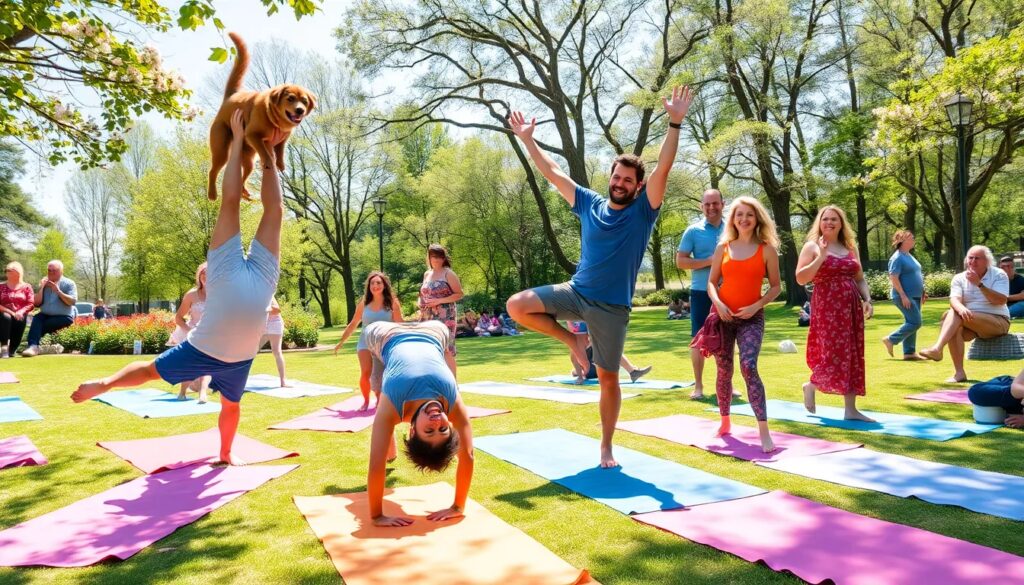
There is no single style officially called crazy yoga. The phrase is what people type when they have seen a video of goats standing on someone in Down Dog, or a class practicing on paddleboards, and want to know what these unconventional formats actually are. This guide covers the nine best-known novelty yoga styles — what really happens in each class, what each one is genuinely good for, and which ones deserve extra caution before you book.
Why Unconventional Yoga Classes Exist
Novelty formats solve a real problem: many people find a traditional class intimidating or, frankly, boring on the first try. Adding animals, music, water, or comedy lowers the barrier to showing up. The trade-off is that the yoga content is usually diluted — a goat yoga session is mostly gentle stretching punctuated by laughing at goats. That can still be worthwhile; it just is not the same workout or mindfulness training as a focused vinyasa or hatha practice.
9 Unconventional Yoga Styles Compared
| Style | What happens | Best for | Caution |
|---|---|---|---|
| Goat yoga | Gentle poses while baby goats climb on participants | Mood boost, group outings, yoga-curious beginners | Outdoor surfaces, animal scratches; minimal actual workout |
| Aerial yoga | Poses supported by a fabric hammock, including inversions | Decompressing the spine, core strength, fun inversions | Not advised with glaucoma, high blood pressure, or pregnancy |
| Laughter yoga | Intentional laughter exercises plus yogic breathing | Stress relief, team events, seniors | Little physical training; feels awkward at first |
| SUP yoga | Poses on a stand-up paddleboard on calm water | Balance, deep core work, summer variety | Swimming ability required; conditions change fast |
| Acro yoga | Partner-based flying and basing, gymnastics-influenced | Trust, strength, playful athletes | Highest fall risk on this list; needs a spotter |
| Beer or wine yoga | A light flow with sips between poses | Social nights, bachelorette events | Alcohol impairs balance; treat it as entertainment |
| Glow / blacklight yoga | Regular flow under UV light with body paint and music | People bored by studio ambience | None beyond a normal class |
| Doga | Gentle stretching incorporating your dog | Bonding with a calm dog | Depends entirely on the dog's temperament |
| Rage yoga | Flow with loud music, venting, and irreverent language | People allergic to serene studio culture | Not for those who want quiet mindfulness |
Formats Without Their Own Deep-Dive
Four of the styles above already have a full guide on this site: goat yoga, aerial yoga, SUP yoga, and acro yoga each get their own breakdown. The other five formats in the table are niche enough that they do not have a standalone page yet, so here is what actually happens in each one.
Laughter yoga runs as a scripted sequence of pretend-then-real laughter exercises — clapping, chanting, eye contact with other participants — mixed with yogic breathing, and it usually closes with a few minutes of guided relaxation. There are no postures to learn, which makes it one of the few formats on this list that genuinely welcomes people with mobility limits. It reads as silly for the first five minutes and often stops feeling that way once the group is actually laughing together.
Beer or wine yoga is a slow, simplified flow with a drink break built into the pauses between poses — a handful of standing and seated postures stretched across an hour, with a pour or two along the way. It is closer to a social hour with stretching than a fitness class, which is exactly the point for most people who book it. Because alcohol affects balance and reaction time, studios usually keep the sequence gentle and skip anything that requires real coordination, like inversions.
Glow or blacklight yoga takes a standard flow and moves it into a dark room lit with UV light, often with body paint, glow sticks, or neon accessories and a club-style playlist. The poses themselves are not modified — it is the same sequence you would do in daylight — so the appeal is entirely atmosphere for people who find a quiet studio uninspiring. Wear light-colored or white clothing, since that is what actually glows under blacklight, and skip loose jewelry that can catch on a dark floor.
Doga is a class built around your own dog rather than yourself: gentle stretches, some assisted poses with the dog draped over or beside you, and a lot of scratches in between. How much actual yoga happens depends far more on the dog's temperament than on the instructor — a calm, low-energy dog makes for a relaxing session, while an excitable one turns it into a wrangling exercise with a yoga soundtrack. It works best as a bonding activity, not a workout.
Rage yoga pairs a normal-looking flow with loud music, cursing, and space to vent out loud instead of staying silent on the mat. The format was created in 2015 by instructor Lindsay Istace, who started teaching it in a bar in Calgary, Alberta, after finding that staying quiet during a traditional practice was not working for her. Physically it is close to a beginner flow class; the difference is permission to be loud, which is the entire draw for people who find standard studio etiquette off-putting.
Which Ones Hold Up as Actual Exercise?
If you strip away the novelty, three of these formats deliver real physical training:
- Aerial yoga builds genuine upper-body and core strength because the hammock is unstable, and supported inversions give many people their first comfortable experience of being upside down.
- SUP yoga is arguably harder than the equivalent class on land — every pose becomes a balance challenge, and stabilizer muscles work constantly.
- Acro yoga is closer to partner acrobatics than to a stretch class and develops strength, body awareness, and communication.
Goat yoga, doga, beer yoga, and laughter yoga are better understood as social or mood-focused experiences with light movement attached. Laughter yoga is the interesting outlier: it was developed by physician Madan Kataria in Mumbai in 1995 and has been studied for mood and stress outcomes, with some small trials showing short-term benefits — modest evidence, but more than most novelty formats can claim.
As an Amazon Associate, we earn from qualifying purchases.

- IDEAL CHOICE: Enjoy your aerial yoga journey with our premium aerial silks. Made of Tricot , our aerial silk fabric is soft, durable and wide enough with just the right stretch for all practice levels.
- EASY TO USE: Get started immediately with our pre-knotted aerial yoga hammock. Adjust as you wish with our 6-loop extension straps and set it up anywhere indoor or outdoor. (Recommended for indoor hanging heights of 8 - 11 ft)
- NOT JUST FOR YOGA: Try different aerial yoga poses, train your core balance, relieve back pain, use as a therapy swing, or simply relax in it. Use aerial silks for home exercise or take it to the studio - practice anywhere you want! Make your own decision, it's your call!
- PEACE OF MIND: Twist and spin as you want, our aerial yoga hammocks are super sturdy! They can withstand up to 500 lbs while other rigging accessories can hold up over 2000 lbs.
- BONUS VALUE: Includes complete set of aerial silk (13x9 ft), 2 carabiners, 2 extension straps (3 ft), 2 o-slings, and a manual guide. Mounting rig is NOT INCLUDED
How to Try an Unconventional Class Without Regretting It
- Check the instructor's base qualification. A novelty format is only as safe as the teacher running it. Look for a standard yoga certification (such as RYT-200) plus format-specific training for aerial or acro.
- Ask what a session actually includes. Some goat yoga events are 20 minutes of stretching and 40 minutes of photos. That may be exactly what you want — just know before paying.
- Book a beginner-specific slot for aerial, acro, or SUP. Mixed-level drop-ins move too fast for a first time.
- Disclose injuries and conditions up front. Inversions in particular are unsuitable for some medical situations.
- Keep a regular practice alongside the novelty. If you are new to yoga entirely, build basics first with a beginner-friendly routine — the fun formats become safer and more enjoyable once the foundational poses are familiar.
Are These Classes Still Yoga?
Purists argue that yoga with beer or goats has drifted a long way from a contemplative discipline, and they have a point: most novelty classes keep the postures and drop the breathwork, philosophy, and sustained attention. A fair way to think about it is that these formats are gateways, not destinations. Plenty of people attend a goat yoga birthday party, enjoy the movement more than expected, and end up in a weekly class — at which point questions like how often to practice start to matter more than the gimmick that got them through the door.
Health note: aerial, acro, and SUP yoga carry a higher injury risk than mat-based classes, and inversions are not appropriate for everyone. This article is general information, not medical advice — if you are pregnant, have a heart condition, eye pressure issues, or a recent injury, check with a healthcare professional before trying these formats.


Frequently Asked Questions
Not really. Sessions are built around gentle, accessible poses so the goats can interact safely, and much of the hour goes to laughing and photos. Treat it as a feel-good social activity with light stretching rather than a substitute for a regular class.
Generally yes, in a beginner-specific class with a properly rigged hammock and a certified instructor. The hammock actually supports many poses that are hard on the mat. It is not recommended during pregnancy or with conditions like glaucoma or uncontrolled high blood pressure because of the inversions.
It is a real, structured practice developed by Dr. Madan Kataria in 1995, combining voluntary laughter exercises with yogic breathing. Small studies suggest short-term improvements in mood and stress. The evidence base is modest, but it is more researched than most novelty formats.
They keep the postures but usually drop the breathwork and sustained attention that define a traditional practice. They work well as a fun entry point or an occasional change of pace, ideally alongside a regular hatha, vinyasa, or restorative practice rather than instead of one.
No, most people searching for crazy yoga are actually looking for CRZ Yoga, the activewear brand. If that's you, see our CRZ Yoga review. This article covers unconventional yoga styles like goat, aerial, and laughter yoga, not the clothing brand.
Have a correction? Contact us.
Last update 2026-09-10. Price and product availability may change.
Recommended: