Acro Yoga for Beginners: Roles, First Poses, and How to Start Safely

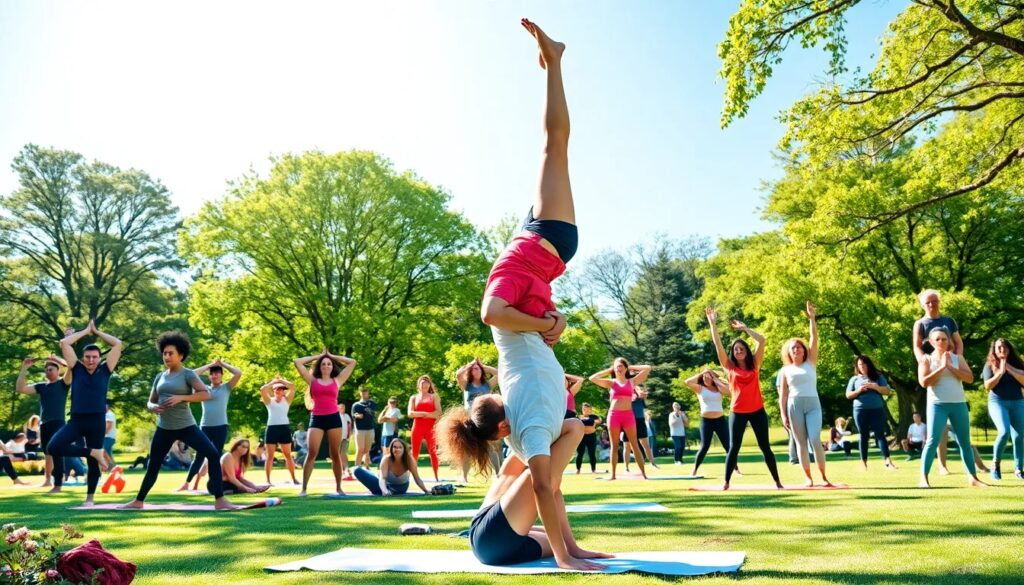
Acro yoga is a partner practice that combines yoga postures, partner acrobatics, and elements of Thai massage. One person (the base) supports another (the flyer) off the ground, while a third (the spotter) guards against falls. The modern practice was formalized in the 2000s — most visibly by AcroYoga International, co-founded in 2003 by Jason Nemer and Jenny Sauer-Klein — and has since grown into a worldwide community of classes, festivals, and informal meetups called jams.
You do not need to be strong, flexible, or experienced to start. Beginner poses like Bird and Throne rely on skeletal alignment — stacked bones, not muscle — which is why a smaller base can comfortably fly a larger flyer once the technique clicks.
The Three Roles: Base, Flyer, and Spotter
- Base. Lies on their back with legs (and often arms) vertical, supporting the flyer. The base's job is stability: keeping joints stacked so bones, not muscles, carry the load.
- Flyer. Balances on the base's feet or hands. The flyer's job is body tension — staying firm like a plank rather than going floppy — plus clear communication about how each position feels.
- Spotter. Stands beside the pair, hands ready near the flyer's hips, with one job only: making sure the flyer lands on their feet if anything slips. Beginners should never practice without one.
Good acro etiquette is to rotate through all three roles. Basing teaches you what flyers need; flying teaches you what bases feel; spotting trains your eye and makes you a safer partner all around.
The Two Sides of Acro Yoga: Acrobatic and Therapeutic
| Acrobatic (solar) practice | Therapeutic (lunar) practice | |
|---|---|---|
| Goal | Strength, balance, dynamic skills | Relaxation, release, gentle traction |
| Feel | Energizing, playful, challenging | Calming, restorative |
| Typical content | Bird, Throne, Star, washing-machine flows | Folded Leaf, flying massage, Thai massage on the ground |
| Flyer's role | Active — holds body tension | Passive — relaxes and receives |
Most beginner classes mix both: acrobatic basics first while everyone is fresh, then therapeutic flying or Thai massage to wind down.
5 Acro Yoga Poses Beginners Learn First
- Plank on Plank. The base holds a strong plank; the flyer makes a plank on top, hands on the base's ankles, feet on the shoulders. Not flying yet — just learning body tension and trust.
- Bird (Front Plank). The foundational flying pose. The base places their feet on the flyer's hip bones (toes pointing slightly out), grips hands, and slowly straightens their legs as the flyer leans forward. Once stable, release hands and the flyer extends arms back like wings.
- Throne. The flyer sits on the base's feet as if on a chair, the base's feet flat under the flyer's thighs. A stable, restful pose that feels surprisingly secure — great for building confidence.
- Folded Leaf. A therapeutic pose: the flyer folds forward over the base's feet (placed at the hip crease), arms dangling, spine in gentle traction. The base can add a light back massage — this is the signature acro-Thai crossover.
- Star (assisted). An intermediate goal pose: the flyer balances inverted on the base's feet and hands in a straddle. Learn it only with an experienced spotter after Bird and Throne are solid.
Once these five feel comfortable, our full acro yoga poses guide walks through the intermediate and advanced flows that build on them.
How to Practice Safely
- Always use a spotter for any pose where the flyer's hips go above the base's feet.
- Communicate constantly. Standard calls — like saying down to come out of a pose — should be agreed before you fly.
- Warm up wrists, hamstrings, and core before basing or flying; wrists take more load than in most solo yoga.
- Practice on grass, mats, or sprung floors, never bare concrete.
- Progress one step at a time. The classic beginner mistake is attempting washing machines (flowing pose sequences) before static poses are reliable.
- Respect consent and comfort. Acro involves close physical contact; anyone can decline any pose or partner, anytime.
As an Amazon Associate, we earn from qualifying purchases.


Is Acro Yoga a Good Workout? (Benefits)
Yes — though it doesn't feel like a typical workout. Basing builds real strength through isometric holds, with legs, core, and shoulders engaged the entire time a flyer is up. Flying develops balance and body awareness, since staying rigid and reading small weight shifts takes focus rather than muscle. Spotting sharpens attention and reaction speed. Poses are held in short bursts with rest between attempts, so acro yoga trains strength and balance rather than continuous cardio, with a strong social component built in.
How to Find Acro Yoga Classes and Jams Near You
Search for acro yoga plus your city on Google Maps, Meetup, and Facebook — most local communities organize through Facebook groups. Yoga studios increasingly run introductory workshops, and many cities have free weekly jams in parks where experienced practitioners are usually happy to fly a newcomer. For a first experience, a structured beginner workshop with certified teachers beats a jam: you will learn spotting technique properly from day one.
No partner? Not a problem — acro classes and jams almost always rotate partners, and arriving solo is completely normal.

- 【𝐍𝐨𝐧 𝐒𝐥𝐢𝐩 𝐆𝐫𝐢𝐩 𝐟𝐨𝐫 𝐓𝐨𝐭𝐚𝐥 𝐒𝐭𝐚𝐛𝐢𝐥𝐢𝐭𝐲】Our grip socks feature sticky silicone dots on the sole for non slip traction on hardwood, tile, or gym floors. Whether you're doing Pilates, barre, or barefoot workouts at home, these grippy socks help you stay balanced and safe—ideal for yoga, studio training, or hospital use.
- 【𝐋𝐨𝐰 𝐂𝐮𝐭 & 𝐁𝐫𝐞𝐚𝐭𝐡𝐚𝐛𝐥𝐞 𝐟𝐨𝐫 𝐀𝐥𝐥-𝐃𝐚𝐲 𝐂𝐨𝐦𝐟𝐨𝐫𝐭】Made from a breathable cotton-spandex blend, these low cut athletic socks fit like footies and wick away moisture to keep feet dry. The ankle-height profile ensures maximum movement freedom and blends easily with sneakers or ballet routines.
- 【𝐁𝐮𝐢𝐥𝐭 𝐟𝐨𝐫 𝐁𝐚𝐫𝐫𝐞, 𝐃𝐚𝐧𝐜𝐞 & 𝐌𝐨𝐫𝐞】Designed for versatility, these Pilates socks are great for barre, ballet, yoga, dance, and gym workouts. They’re also as hospital socks, pregnancy socks, or everyday home essentials—combining hygiene and control wherever you move.
- 【𝟓 𝐒𝐭𝐲𝐥𝐢𝐬𝐡 𝐂𝐨𝐥𝐨𝐫𝐬 & 𝐎𝐧𝐞 𝐒𝐢𝐳𝐞 𝐅𝐢𝐭𝐬 𝐌𝐨𝐬𝐭】Each set includes 5 trendy colors: Purple, White, Pink, Grey, and Black, perfect for matching your workout outfits or loungewear. With stretchy elasticity, these grippers comfortably fit most US women’s shoe sizes 5–10—no need to choose between sizes.
- 【𝐏𝐞𝐫𝐟𝐞𝐜𝐭 𝐆𝐢𝐟𝐭 𝐟𝐨𝐫 𝐀𝐜𝐭𝐢𝐯𝐞 & 𝐂𝐚𝐫𝐢𝐧𝐠 𝐖𝐨𝐦𝐞𝐧】Soft, functional, and stylish, these anti-skid grippy socks make a thoughtful gift for fitness lovers, seniors, pregnant moms, or anyone needing support. Great for hospital stays, cold mornings, or home workouts—comfort and stability packed in every step.
How Acro Yoga Relates to Other Practices
Acro yoga sits at the intersection of several disciplines. Unlike solo yoga, where you move through poses alone on your mat, acro adds a partner, a spotter, and controlled flight — the main difference between yoga and AcroYoga. The pose vocabulary still comes from yoga — a flowing style like vinyasa yoga helps with the body control acro demands. Prefer to stay grounded? Partner yoga keeps both people on the floor, no lifting required. The partner-balance skills overlap with 2 person yoga poses, a gentler entry point if flying feels intimidating, and groups of friends often graduate to 4 person yoga poses. The advanced end of acro — hand-to-hand, icarian games — rivals the hardest yoga poses in difficulty. For a broader comparison, our guide to hatha yoga covers the foundation most yoga forms build on, or browse the full range of yoga styles and lineages we cover.
No. Acro classes and jams almost always rotate partners, and showing up alone is normal. Teachers pair people by size and experience, and rotating partners is actually the fastest way to learn because every base and flyer feels different.
Less than you would think. Beginner poses like Bird and Throne use bone stacking — the base's legs are vertical, so the skeleton carries the flyer's weight rather than muscle. Technique and alignment matter far more than raw strength.
Practiced with a spotter, soft surfaces, and step-by-step progression, beginner acro yoga has a reasonable safety record — falls from beginner poses are short and usually land on the feet. Risk rises sharply when people skip spotters or attempt advanced poses too early.
Partner yoga keeps both people on the ground, using each other for support and deeper stretches. Acro yoga lifts one person off the ground on the other's feet or hands, adding acrobatic balance and a spotter to the equation.
Fitted athletic clothing that will not slide or catch — leggings or close-fitting shorts and a fitted top. Avoid slippery fabrics, zippers, and jewelry, and practice barefoot so the base's feet can grip and the flyer can land safely.
Yes, but it does not feel like a typical cardio session. Basing builds real strength through sustained holds in the legs, core, and shoulders, flying develops balance and body awareness, and spotting sharpens attention. Poses are held in short bursts with rest between attempts, so it trains strength and balance rather than continuous cardio, with a strong social element built in.
Have a correction? Contact us.
Last update 2026-09-10. Price and product availability may change.
Recommended: