Common Thread Yoga: What to Know Before Your First Class

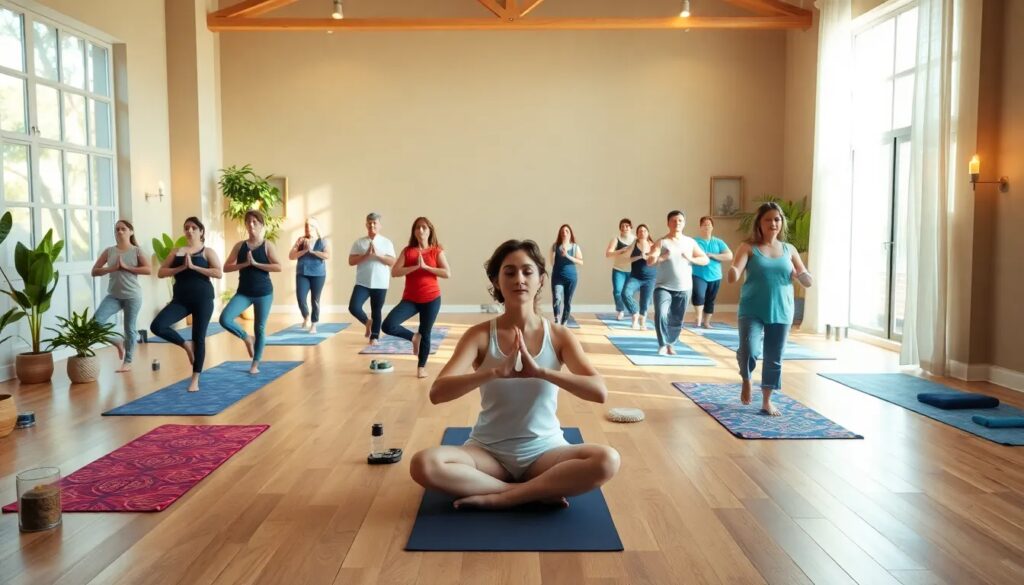
Common Thread Yoga and Wellness is an independent, alignment-based yoga studio at 7341 N Lilley Rd in Canton, Michigan. It is a single-location, locally owned studio — not a chain — and its stated mission on the official site is to build "an inclusive community through a principled alignment based yoga studio designed for every body." This page covers what the studio publicly offers, what alignment-based practice looks like in its rooms, and how to decide whether it fits your goals, with notes for readers outside Canton who want to find a comparable studio near them.
- What is Common Thread Yoga and Wellness?
- Where is Common Thread Yoga?
- What does Common Thread offer?
- What is alignment-based yoga in practice?
- Is Common Thread Yoga right for you?
- How to choose a community yoga studio (anywhere)
- How Common Thread compares to other Canton MI yoga options
- Frequently asked questions
What is Common Thread Yoga and Wellness?
Common Thread Yoga and Wellness is an alignment-based yoga studio in Canton, MI, just west of Detroit. The studio is independently operated and the website lists it as a single physical location, so what you find in Canton is the studio. There is no national "Common Thread" chain of studios; the name belongs to this one business.
The studio's public mission statement, shown on its home and about pages, is:
building an inclusive community through a principled alignment based yoga studio designed for every body
That sentence is worth reading literally. "Alignment based" is the method; "inclusive community" is the goal; "every body" is the audience. It is not a flow-driven, performance-oriented studio, and the language is explicit about that. The studio's Instagram lists the owner as Alice Ahearn, 500 E-RYT (Experienced Registered Yoga Teacher, 500-hour).
Where is Common Thread Yoga?
The studio's address, taken from the official site and from the Google business profile, is:
- 7341 N Lilley Rd, Canton Township, MI 48187
- Phone: (734) 228-5924
- Official website: commonthreadyogaandwellness.com
- Booking platforms: Mindbody and ClassPass
Hours on the Google profile run mornings and evenings on weekdays, with weekend mornings only. Hours change, especially around holidays, so check the live schedule on the official site or on Mindbody before you go.
Inside, the studio describes three separate rooms on its home page:
- the hub — a small studio reserved for beginner classes and small-group private sessions.
- double h — a private room for one-to-three-person sessions.
- the garden — the larger studio for general group classes.
That three-room setup is a deliberate design choice: beginners are not dropped into a full group class before they are ready, and small-group privates get a room of their own. It is one of the more tangible differences between Common Thread and a warehouse-style studio.
What does Common Thread offer?
The studio's own class descriptions and the Mindbody listing show a mix of styles. Common Thread describes itself as an alignment-based studio, and the class offerings on its site and third-party listings include alignment-focused hatha-style classes, yin yoga, chair yoga, small-group privates, and a rotating calendar of workshops and events. The studio has also listed a 200-hour yoga teacher training (YTT) on its navigation, which is the format used for U.S.-based registered yoga schools.
The site's navigation also lists a few standing offerings beyond the core class formats: a "Happy Hour Yoga" format, a "yoga to go" option for off-site or private sessions, and a periodic spring yoga retreat (a 2026 edition is listed as of this writing). These rotate more than the regular class schedule, so treat them as things to ask about rather than guaranteed weekly options.
Because class schedules rotate and programming evolves, the most reliable way to see what is on this week is the studio's own schedule page or its Mindbody profile. Anything specific — a particular teacher, a beginner series, a YTT cohort — should be confirmed on the source.
| Format | What it is | Typical audience |
|---|---|---|
| Alignment-based hatha | Foundational poses, slower pace, detailed cuuing | All levels, especially beginners |
| Yin yoga | Long-held passive postures, focused on connective tissue | Flexibility work, stress relief, recovery days |
| Chair yoga | Seated or standing poses using a chair for support | Limited mobility, older adults, beginners |
| Small-group private | Personalized instruction in the private "double h" room | Focused work, injury management, beginners |
| Workshops and events | Rotating special programming | Deepening practice, community events |
| YTT (when in session) | 200-hour teacher training, registration-based | Aspiring or current teachers |
What is alignment-based yoga in practice?
"Alignment-based" is an instructional emphasis, not a single trademarked style. Studios that describe themselves this way care more about how each student positions their body than about flow, speed, or how a class looks from the outside. The most well-known alignment-based tradition is Iyengar yoga, developed by B.K.S. Iyengar, which makes heavy use of props — blocks, straps, bolsters, blankets — to help students reach correct form regardless of their current flexibility.
Common Thread's approach shares that ethos without necessarily being a strict Iyengar school. The practical effect for a new student is that the instructor will slow the room down, explain why a pose is set up the way it is, and offer adjustments. If you have ever felt lost in a vinyasa class where everyone else seems to know the choreography, an alignment-focused studio is usually a better starting point. For an overview of the broader tradition, see our page on what Hatha yoga is — alignment emphasis and Hatha roots often go together.
Is Common Thread Yoga right for you?
If you live in or near Canton, MI, and you are looking for a studio that takes alignment seriously, runs smaller class sizes, and has an explicit community focus, Common Thread is worth a try. The studio is verifiably operational across multiple third-party listings (Mindbody, ClassPass, Yelp, Google Maps, Facebook), and its website presents a coherent picture of an alignment-based practice designed to be approachable.
It is a less obvious fit if you specifically want a fast vinyasa or power-yoga format, a heated room, or a large group class with music and a flow. None of those describe what the studio's own materials say it offers, and walking in expecting them is a setup for disappointment. If you are still exploring styles, our guide on gentle flow yoga covers a related but more movement-oriented option.
For current rates, the live schedule, and to book a first class, go directly to commonthreadyogaandwellness.com or to its Mindbody profile. A first visit will tell you more than any review can.
How to choose a community yoga studio (anywhere)
"Community" is one of the most overused words in yoga marketing. Some studios actually build it; others just describe it. Here is what to look for in any town, not just Canton:
- Instructors know students by name. This only happens with smaller class sizes and a relatively consistent teaching roster. Big warehouse classes and high instructor churn cannot deliver it.
- The studio hosts events beyond regular classes. Workshops, retreats, teacher trainings, and community gatherings are the infrastructure of an actual community, not the marketing copy.
- Pricing is transparent and flexible. Look for class packs, drop-ins, and memberships, without pressure to commit to long contracts before you have taken a class.
- Beginners are welcomed, not merely tolerated. Does the studio explain what to bring? Is there an intro offer? Does anyone check in after your first class? Those details matter more than the website tagline.
- The physical space is human-scaled. Sharing a room with 10 to 15 people creates proximity; sharing it with 50 does not.
Once you have found a studio where showing up feels sustainable, the next question is how often to go. Our guide on how many days a week to practice yoga walks through that decision.
How Common Thread compares to other Canton MI yoga options
Canton and the surrounding western Detroit suburbs have more than one studio, and the right one depends on what you want. Common Thread sits in the alignment-based, community-focused, single-location category. Other studios in the area lean different ways: some prioritize heated vinyasa or power formats, others focus on barre-yoga hybrids, and others are multi-location regional chains. The Google business listing for Canton, MI surfaces several of these in the local pack alongside Common Thread, and browsing them is the fastest way to see the local options side by side.
Use that comparison as a filter, not a ranking. If the alignment-based philosophy described on Common Thread's site is what you want, the studio is a strong match. If you are looking for a heated flow or a quick lunchtime class, you may find a different Canton studio a better fit.
Frequently asked questions
Common Thread Yoga and Wellness is at 7341 N Lilley Rd, Canton Township, MI 48187. Its official website is commonthreadyogaandwellness.com, and it also books through Mindbody and ClassPass.
Common Thread describes itself as an alignment-based studio. Class formats on its site and third-party listings include alignment-focused hatha, yin, chair yoga, small-group privates, workshops, and occasional 200-hour YTT cohorts.
Yes. The studio maintains a smaller room, called the hub on its website, specifically for beginner classes and small-group private sessions, so beginners are not dropped into a large general class.
The studio has listed 200-hour YTT programs on its website. YTT schedules run by enrollment, so current dates, prerequisites, and pricing should be confirmed on the studio's official site.
It is a single independently owned location with three specialized rooms: the hub for beginners and small-group privates, double h for one-to-three-person privates, and the garden for larger group classes. Its approach is alignment-based and community-focused rather than standardized across multiple branches.
Have a correction or a question about this article? Reach us via our contact page.
Recommended: