Yoga Routine: A Practical 20-Minute Sequence You Can Actually Stick To

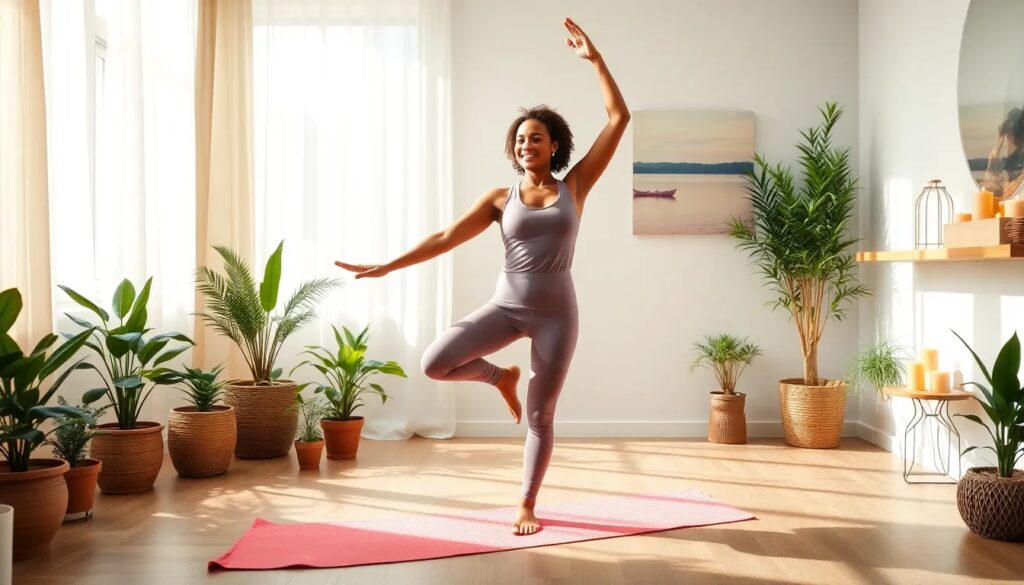
A yoga routine is a set sequence of poses and breathing you repeat on a regular schedule — and the single most useful design rule is this: a routine you can repeat beats a routine that is impressive. For most people that means fifteen to thirty minutes, at the same time of day, built from a small set of poses you know well. Consistency, not duration or difficulty, is what produces the flexibility, strength, and stress benefits people look for in a daily yoga routine.
The rest of this guide gives you the structure of any solid routine, a ready-made twenty-minute sequence you can do at home, a way to plan your week depending on your goal, and the habits that make a home yoga routine survive more than a month.
What Makes a Good Yoga Routine?
Every workable routine, from a ten-minute wake-up to a full ninety-minute practice, follows the same arc:
- A short arrival. One or two minutes of stillness and slow breathing, seated or lying down. This is what separates yoga from stretching.
- A warm-up. Gentle spinal movement — Cat-Cow, easy twists — before anything demanding.
- A main block. Standing poses, Sun Salutations, or a flowing sequence, depending on your style and energy.
- A counterbalance. Forward folds or gentle backbends to undo the main work.
- A real ending. At least two minutes in Savasana or a seated breath practice. Skipping this is the most common way people shortchange themselves.
If you do not yet know which style suits you, a slower format is the right default. Our guide to hatha yoga explains why held poses are the best classroom for beginners, while vinyasa suits people who want movement and a light cardio effect.
A 20-Minute Yoga Routine You Can Repeat
The sequence below is the core of the whole guide. It covers the full arc, fits inside twenty minutes, and uses only poses a beginner can find in any warrior, triangle, or sun-salutation reference. Read it through once, then follow it on the mat.
- Easy seat, slow breathing — 2 minutes. In through the nose, longer exhale than inhale.
- Cat-Cow — 1 minute. Move with the breath; the whole spine, not just the neck.
- Downward-Facing Dog — 1 minute, pedaling the heels to release the calves.
- Sun Salutation A — 4 rounds, about 5 minutes. Step back instead of jumping if you are warming up.
- Warrior II, both sides — 1 minute per side. Front knee tracks over the front ankle.
- Triangle Pose, both sides — 1 minute per side. Lengthen the lower side waist before you reach.
- Standing Forward Fold — 1 minute, knees soft, head heavy.
- Seated twist, both sides — 2 minutes total. Lengthen on the inhale, rotate on the exhale.
- Savasana — 3 minutes minimum. Cover the eyes if light bothers you.
That is the whole thing. Done five mornings a week, this modest sequence will do more for you than an ambitious seventy-five-minute plan you abandon by February.
Build Your Week Around Your Goal
Once the daily routine is in place, decide what the week as a whole is for. The table below maps common goals to a realistic weekly structure and the styles that fit. Pick one row that matches your main aim; you can change it every month or two.
| Goal | Weekly structure | Styles that fit |
|---|---|---|
| Flexibility | 3–4 short sessions, long holds | Hatha, yin yoga |
| Strength and fitness | 3 sessions of 30–45 min | Vinyasa, power, hot yoga |
| Stress and sleep | Short daily evening practice | Gentle hatha, yin, breathwork |
| Back and posture | Daily 10–15 min, gentle | Hatha with core focus |
| General health | 2–3 mixed sessions | Alternate one active, one slow |
Mixing one active and one slow session per week is a reliable template: the active day builds strength, the slow day restores range of motion and downshifts the nervous system. If you can only do two sessions a week, make one of them the twenty-minute sequence above and skip the rest.
Morning or Evening: When to Practice
Whichever time you can protect. Morning practice tends to survive busy schedules better because nothing has had a chance to derail it yet, and it pairs naturally with energizing sequences like Sun Salutations. Evening practice works better for people using yoga to unwind — favor forward folds, twists, and longer holds, and keep strong backbends and vigorous flows earlier in the day if they leave you wired.
The practical test is simple: which hour is still free three weeks from now? The body adapts to whatever slot you defend. A routine that happens at 6:45 a.m. because the house is quiet will beat a "perfect" routine that lives at 7:00 p.m. on the to-do list.
The Mistakes That Kill Home Yoga Routines
Most abandoned routines fail for the same handful of reasons. None of them are about the poses.
- Making it too long. A sixty-minute plan fails the first busy week. Start with fifteen to twenty minutes and let it grow only after a month of consistency.
- Changing the sequence every day. Novelty feels productive but prevents the familiarity that makes practice automatic. Repeat the same routine for at least a few weeks before you swap a pose.
- Skipping Savasana. The ending consolidates the calm you practiced for. Two minutes is enough; zero is not.
- Pushing into pain. Mild stretch sensation is fine. Sharp, pinching, or radiating pain is a signal to back off and modify the pose.
- Having no trigger. Attach the routine to something fixed — after brushing your teeth, before coffee, right after the kids' school run — rather than relying on motivation.
What You Actually Need
A yoga mat and floor space are genuinely all you need to start. A non-slip mat makes the standing poses feel stable and protects your knees and wrists in the floor work; that is the only piece of equipment most home routines rely on for years. Blocks and a strap become useful as you progress into deeper folds and longer holds, but they are not required for the sequence above.
Writing your sequence down — on paper or a note on your phone — removes the small daily decision of what to do, which is exactly where most routines stall. List the poses in order with rough timings and keep the note where you practice.
As an Amazon Associate, we earn from qualifying purchases.


Safety Notes for a Daily Yoga Routine
Even a short daily routine deserves a few ground rules:
- Stop for sharp, pinching, or radiating pain. Mild stretch feeling is fine; anything else is a signal to back off, modify, or skip the pose.
- Keep a soft bend in the knees in forward folds and standing poses if your hamstrings are tight. A straight leg is not a goal.
- Stack the joints in standing poses: front knee over front ankle in Warrior II, wrist under shoulder in Downward Dog.
- Avoid strong inversions and deep twists if you have a back, neck, or shoulder injury until a teacher has cleared the position.
- If you are pregnant or returning from injury, check the sequence with a qualified prenatal or rehabilitation teacher before making it daily.
For most people, 15 to 30 minutes is the sweet spot: long enough to warm up, work, and rest, and short enough to repeat daily. Length matters far less than consistency.
Yes — repeating one well-balanced sequence is how the practice becomes automatic, and it makes progress easy to notice. Vary it every few weeks, or alternate one active and one slow routine, to keep the body adapting.
Yes. Twenty focused minutes covering a warm-up, a few standing poses, and a short relaxation is enough to improve flexibility, balance, and stress levels when done most days of the week.
Whichever time you can keep consistently. Mornings survive busy schedules better and suit energizing sequences; evenings suit slower, calming practices. The best time is the one nothing else competes with.
This article is general information, not medical advice. If you have an injury or a chronic condition, check with a qualified health professional before starting a new movement routine.
Have a correction? Contact us.
Last update 2026-09-10. Price and product availability may change.
Recommended: