Yoga Retreat in Morocco: Regions, Costs & What to Expect

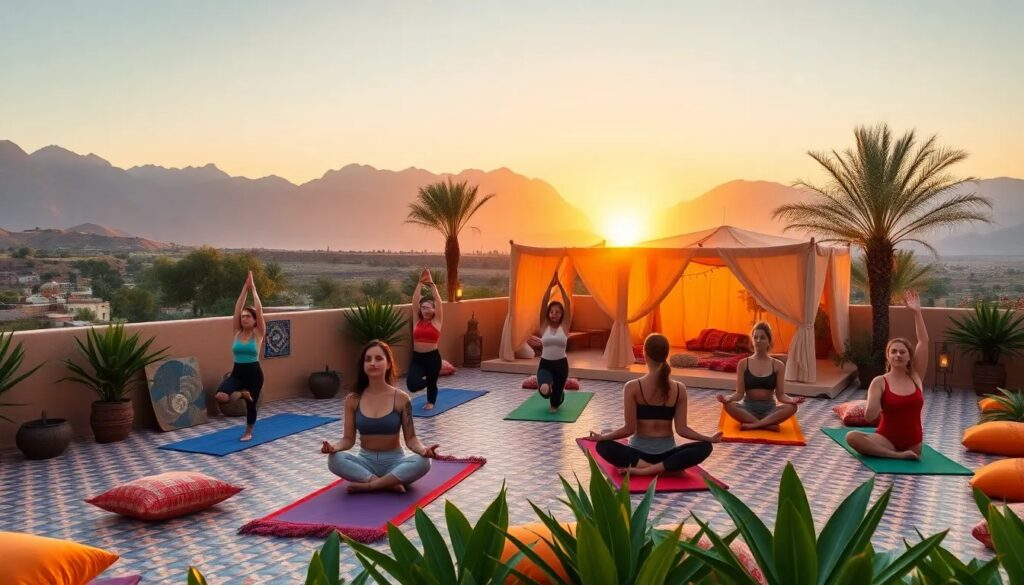
A yoga retreat in Morocco usually means one of four settings: a riad or villa around Marrakech, a surf-and-yoga camp on the Atlantic coast near Taghazout or Essaouira, a mountain hideaway in the High Atlas, or a desert camp at the edge of the Sahara. The right pick depends less on the country and more on which of those landscapes you want to wake up in, and the season you are traveling in. This guide compares the four main regions, what a typical retreat day looks like, and how to plan a Morocco yoga retreat that actually matches the experience you are after.
- Why Morocco works well for a yoga retreat
- The four main retreat regions compared
- What a yoga retreat typically includes
- How long is a typical retreat
- Budget levels, without the price tag
- What a typical retreat day looks like
- When to go
- Practical tips before you book
- Picking the right travel mat
- Comparing Morocco with other retreat destinations
- Frequently asked questions
Why Morocco works well for a yoga retreat
Morocco combines short flight times from Europe with a genuinely different cultural setting: medinas, hammams, mint tea, mountain villages, and desert silence. Most retreats lean into that context, pairing daily practice with cooking classes, souk visits, or trekking. English-speaking teachers are common at internationally marketed retreats, and the country has a mature retreat infrastructure on the coast and around Marrakech.
The four main retreat regions compared
| Region | Vibe | Typical add-ons | Best season |
|---|---|---|---|
| Marrakech and surroundings | Riad comfort, gardens, city energy nearby | Hammam and spa, cooking classes, medina tours | Spring and autumn; summers are very hot |
| Atlantic coast (Taghazout, Tamraght, Essaouira) | Laid-back surf town | Surf lessons, beach walks | Year-round; ocean keeps summers mild |
| High Atlas Mountains | Quiet villages, big views | Hiking, Berber village visits | Spring through autumn |
| Sahara (Merzouga, Agafay) | Desert camps, star-filled nights | Camel trekking, fireside meditation | Cooler months; summer is extreme |
If you cannot decide, the coast is the most forgiving choice: mild weather most of the year, plenty of retreat operators, and an easy mix of practice and downtime.
What a yoga retreat typically includes
Most week-long retreats follow a similar pattern, with the exact schedule set by the operator. The inclusions below are the ones to expect as a baseline, regardless of region:
- Daily practice: usually two sessions, a more vigorous morning flow and a slower afternoon or sunset practice, often restorative or Yin.
- Meals: locally sourced Moroccan-Mediterranean cooking, with mint tea throughout the day; vegetarian options are common.
- Accommodation: ranging from shared rooms in surf houses to private rooms in riads, kasbahs, and desert camps.
- Cultural time: medina walks, souk visits, hammam bookings, or a half-day excursion built into the program.
What is usually NOT included: flights, travel insurance, optional spa treatments, and some excursions outside the scheduled program. Always read the inclusions line by line, because operators define "all-inclusive" differently.
How long is a typical retreat
Most published retreats run for a full week (six or seven nights). That is the format operators build their schedules around: enough time to settle in, two full rest days, and a closing circle. Shorter formats exist: weekend escapes (two or three nights) are common around Marrakech and on the coast, and four-day focused intensives turn up during the cooler months in the desert and the Atlas. Longer ten-day formats are also available if you want a slower pace or a more substantial teacher training component.
Budget levels, without the price tag
Costs vary widely with season, group size, and accommodation level, so think in bands rather than numbers. What changes between bands is mostly the room, the location, and how much is bundled into the daily rate.
- Budget surf-and-yoga houses: shared rooms and simple meals on the coast. The cheapest end of the market, aimed at travelers who care more about the practice and the waves than the thread count.
- Mid-range retreats: private rooms, daily classes, and most meals included, usually in a riad, a small kasbah, or a countryside villa. This is where most established operators sit.
- High-end retreats: boutique riads, private estates, or luxury desert camps with spa treatments, small-group teaching, and a higher staff-to-guest ratio. The premium buys the setting and the service, not a different style of yoga.
Across all bands, expect airport transfers, optional excursions, and a couple of meals per week to be the items that are typically excluded. Flights are almost never included.
What a typical retreat day looks like
- Morning practice, often a dynamic flow before breakfast. If you are new to the style, our primer on vinyasa yoga covers what to expect.
- Late, unhurried breakfast.
- Free time or an excursion: surfing, hiking, a hammam visit, or a souk trip.
- Late-afternoon or sunset session, usually slower and more restorative.
- Shared dinner, often Moroccan tagines and salads; many retreats are vegetarian-friendly by default.
When to go
Spring (March to May) and autumn (September to November) are the sweet spots for Marrakech, the Atlas, and the desert. The coast works nearly year-round, with winter swells favoring surfers and summer staying breezier than the interior. February works well on the coast and in Marrakech; in the desert, expect cold nights even when days are mild. Avoid the Sahara in midsummer. If your dates fall during Ramadan, retreats run normally, but expect quieter towns during the day and plan excursions accordingly.
Practical tips before you book
- Verify the teacher, not just the venue. Look up their training background and read reviews that mention the actual classes.
- Match the level honestly. Most Moroccan retreats welcome beginners, but surf-heavy weeks assume reasonable fitness.
- Pack in layers. Desert and mountain nights get cold even when days are hot; bring a warm layer for early practice.
- Dress considerately off the mat. Morocco is relaxed in tourist zones, but modest cover in medinas and villages is appreciated.
- Check entry requirements for your nationality before booking; short-stay visa exemptions are common for many passports, but rules change, so confirm with the official authority of your destination before you pay.
- Ramadan, weather extremes, and other caveats. Desert midsummer is genuinely harsh; mountain winter brings snow to higher passes; Ramadan shifts the rhythm of medinas even when retreats themselves keep running. Build those into your dates, not around them.
Picking the right travel mat
Not every retreat provides a mat, and checked-bag space is limited on the routes into Marrakech, Essaouira, and Agadir. A lightweight travel mat that rolls tight and grips well on warm skin is the piece of kit that gets the most use across a week of twice-daily practice.
As an Amazon Associate, we earn from qualifying purchases.


Comparing Morocco with other retreat destinations
If you are weighing Morocco against other destinations, compare it with our guides to a yoga retreat in Bali, a yoga retreat in Costa Rica, and a Hawaii yoga retreat. Those drawn to a more meditation-heavy format may also want to read about what happens at a kundalini yoga retreat.
Frequently asked questions
Established retreats in Marrakech, the coast, and the Atlas host solo travelers, including women, routinely. The retreat handles transfers and excursions, which removes most of the friction. Standard travel awareness in cities applies, as it does anywhere.
Spring and autumn for Marrakech, the Atlas Mountains, and the Sahara. The Atlantic coast works nearly year-round thanks to the ocean breeze, and February is a solid month on the coast. Midsummer desert trips are best avoided.
Costs fall into three loose bands: budget surf-and-yoga weeks on the coast with shared rooms, mid-range retreats with private rooms and most meals included, and high-end boutique or desert-camp weeks with spa and small-group teaching. What changes most between bands is the room, the setting, and how much is bundled. Flights are rarely included at any band.
Usually not. Most retreats welcome all levels and offer modifications, though it is worth confirming the styles taught and the daily intensity before booking, especially for surf-and-yoga combinations.
Have a correction? Contact us.
Last update 2026-09-10. Price and product availability may change.
Recommended: