Yoga Retreat in Mexico: Regions, Seasons, and How to Choose

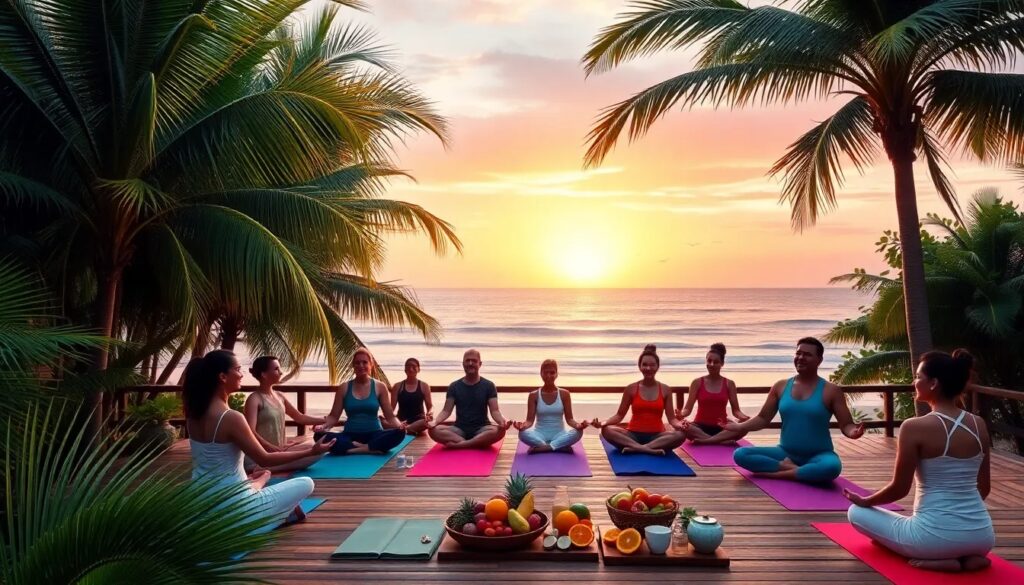
Mexico is one of the most popular yoga retreat destinations in the Americas, and for practical reasons: short flights from the US and Canada, year-round warm regions, a wide price spectrum from rustic eco-camps to luxury resorts, and an established retreat infrastructure on both coasts. A yoga retreat in Mexico typically means a multi-day program, most running four to seven nights, combining daily yoga classes, accommodation, most meals, and free time or excursions, hosted either at a dedicated retreat center or a venue rented by a visiting teacher.
Where to go: Mexico's main retreat regions
The country's retreat scene clusters in a handful of regions with distinct personalities, and the right pick depends less on "the best" and more on the kind of week you want:
| Region | Setting | Vibe | Best season |
|---|---|---|---|
| Tulum & Riviera Maya | Caribbean beaches, cenotes, jungle | International, social, wellness-scene heavy | November–April |
| Puerto Vallarta & Sayulita / Riviera Nayarit | Pacific coast, jungle-backed coves | Mix of surf towns and secluded eco-resorts | November–May |
| Oaxaca (coast and valleys) | Pacific surf beaches; mountain and valley towns | Quieter, culture-rich, fewer crowds | October–April |
| Baja California Sur (Todos Santos, La Paz area) | Desert-meets-ocean landscapes | Minimalist, nature-focused | October–May |
| Central highlands (San Miguel de Allende, Tepoztlán) | Colonial towns, mountains | Arts, spirituality, cooler climate | Year-round |
If you want a single week that combines cenotes, jungle, and a strong English-speaking wellness community, Tulum and the Riviera Maya remain the default. Sayulita and the Riviera Nayarit lean surfier and smaller-scale. Oaxaca is the pick for travelers who prefer fewer crowds and a stronger cultural layer. Baja suits travelers chasing desert-meets-ocean landscapes and minimalist design. The central highlands are the right call if you want cooler weather, a town setting, and proximity to Mexico City.
Best season: weather, sargassum, and the hurricane window
Mexico's retreat season is shaped less by temperature and more by rain, seaweed, and tropical-storm risk. The two coasts behave differently.
Dry season vs green season on the Pacific and Caribbean
The Pacific coast (Puerto Vallarta, Sayulita, Oaxaca, Baja) follows a dry-season pattern from roughly November into May, with the green season running from June into October. The Caribbean coast (Tulum, Riviera Maya) shares a similar calendar but the green season is wetter and more humid.
Sargassum seaweed on the Caribbean coast
Recurring sargassum blooms affect Caribbean beaches from roughly spring into late summer, with year-to-year variation in intensity. Some retreat properties work around it with cenote-based or jungle programming, and beach-focused retreats are generally a better fit for the dry winter months.
Hurricane and tropical-storm risk
The Atlantic hurricane season runs from June through November, with peak activity between August and October. The Pacific has its own season, broadly May through November. Modern retreats operating in these regions plan around the risk with indoor shalas, modified schedules, and clear refund policies, so this is more a question of when to book than whether to book.
What does a yoga retreat in Mexico cost?
Prices vary enormously with venue, season, room type, and who is hosting, but the market falls into broad tiers rather than fixed numbers:
- Budget: shared dorm-style rooms at simple eco-centers or surf camps, often the lowest entry point for a multi-night stay including classes and some meals.
- Mid-range: private or twin rooms at dedicated retreat centers, typically priced per person for a week-long package with most meals included. This is the largest segment of the market.
- Luxury: boutique resorts and high-end wellness properties with spa services, gourmet menus, and small group sizes, where a week can cost several times the mid-range rate.
- All-inclusive: a packaging label that typically bundles accommodation, all meals, daily classes, airport transfers, and one or two excursions. Read the fine print: it usually does not include flights, spa treatments, or specialty workshops.
Watch what the package actually covers. Flights are almost never included; airport transfers, excursions, and specialty workshops are sometimes extras. Single-occupancy supplements are common, and deposits are often non-refundable, so it is worth reading the cancellation policy before paying anything.
How to vet a retreat before booking
- Look up the teacher, not just the venue. Many Mexico retreats are venues rented by visiting instructors. Check the lead teacher's credentials, style, and reviews from previous retreats.
- Confirm the daily schedule. Two yoga sessions per day is typical; some retreats are closer to a vacation with one optional class, others are intensive. Match the dose to your intention.
- Check the yoga style. Vinyasa dominates, but hatha, yin, restorative, and Ashtanga programs all exist.
- Read recent third-party reviews on booking platforms rather than relying only on the retreat's own testimonials.
- Ask about group size, dietary accommodation, and what happens if weather disrupts outdoor sessions.
- Verify logistics: distance from the arrival airport, transfer arrangements, and whether the area suits solo travelers if you are coming alone.
Types of retreats you will find in Mexico
Beach yoga retreats are the classic format, with open-air shalas, ocean-facing savasanas, and optional snorkeling or cenote trips on the Caribbean side. Surf-and-yoga combinations are a specialty of Sayulita and the Oaxacan coast, and if that pairing appeals, our guide to surf and yoga retreats goes deeper. Couples retreats with partner yoga and private accommodation are widely offered around Tulum and the Riviera Nayarit. Traditional and ceremony-inflected retreats, including temazcal sweat lodge sessions or Mayan cultural elements, are common in the Yucatán, and any ceremony add-ons deserve the same scrutiny as the yoga program itself. And training-focused retreats blur into teacher training, so if the goal is certification rather than rest, compare formats in our overview of yoga teacher training retreats.
Mexico vs other retreat destinations
Mexico's advantages are proximity for North American travelers, warm winters, food, and sheer variety. Two nearby comparisons come up most often.
Mexico vs Costa Rica
Costa Rica competes directly with Mexico on jungle-and-beach settings, with a stronger ecotourism identity and a smaller retreat scene. If you want more solitude and a nature-first framing, see our guide to affordable yoga retreats in Costa Rica for the comparison. If your priority is minimizing travel time and maximizing beach hours, Mexico is hard to beat.
Mexico vs India
India offers deeper immersion in yoga's source traditions at generally lower cost, which is a different experience entirely. Our guide to yoga retreats in India covers the formats and trade-offs. For a first retreat where the goal is rest and reset, Mexico is the easier entry point.
Practical tips for the trip
- Bring reef-safe sunscreen and strong insect repellent. Jungle-adjacent shalas come with mosquitoes, especially in the green season.
- Drink bottled or purified water. Reputable retreat kitchens use purified water, but confirm.
- Pack a light layer for air-conditioned transfers and cooler highland evenings.
- Most retreats welcome solo travelers, and many offer shared-room pricing to avoid the single supplement.
- Check current travel guidance for the specific region you are visiting, as conditions vary across the country.
November through April is the dry, pleasant high season on both coasts. May through October brings heat, humidity, lower prices, and on the Caribbean side hurricane risk and seasonal sargassum seaweed, so beach-focused retreats are best booked in winter.
Generally yes. Retreats are group environments with transfers usually arranged by the organizer, and many attendees come alone. Standard travel precautions apply, and it is sensible to check current regional travel guidance before booking.
No. Most Mexico retreats are open-level and teachers expect a mix of abilities. Check the program description, though, since some retreats are explicitly advanced, Ashtanga-focused, or training-oriented.
Four to five nights is a sweet spot for a first retreat: long enough to disconnect and feel the effect of daily practice, short enough to commit to comfortably. Week-long formats suit returners who already know they enjoy the rhythm.
Typically accommodation, daily yoga classes, and most meals. Flights are essentially never included, and airport transfers, excursions, spa treatments, and some workshops are often paid extras, so compare what each package covers line by line.
Have a correction? Contact us.
Recommended: