Couples Yoga: What It Is, Benefits, and How to Start

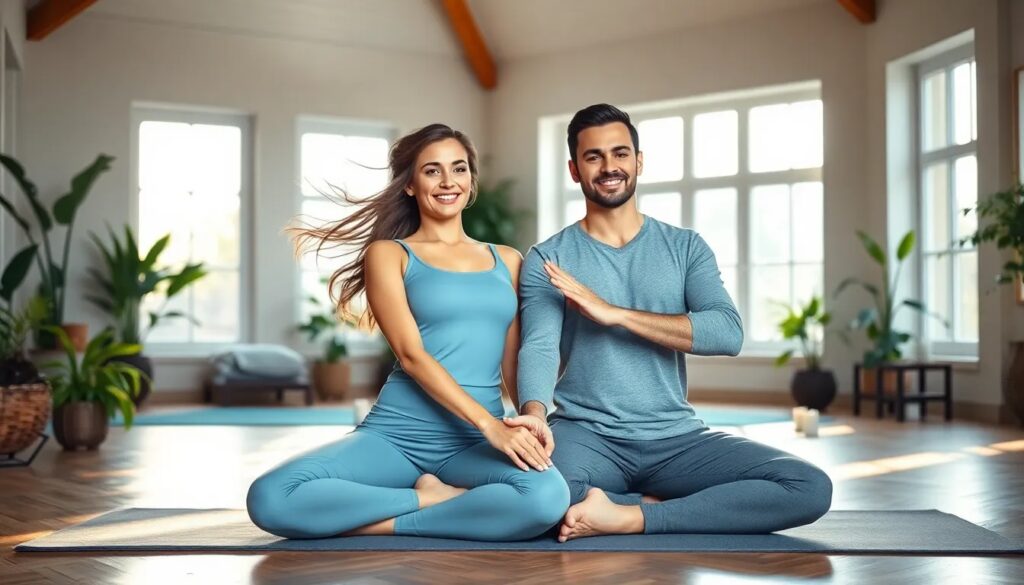
Couples yoga is a form of partner practice in which two people share a single sequence of postures, using each other’s weight, support and counterbalance rather than practicing side by side. Many people first encounter the term through date-style workshops, but the same practice shows up under other names: partner yoga, shared practice, or two-person yoga. The appeal is straightforward. With a partner you can stretch deeper, balance longer, and stay accountable to a routine — benefits that are hard to replicate in a solo home practice. Couples yoga is a distinct style from tantra yoga for couples, which focuses more on presence and breath than on shared asana.
Couples Yoga vs a Regular Class
In a standard studio class the teacher cues the room, and your attention stays mostly on your own breath and alignment. Couples practice flips that: every pose becomes a small negotiation between two bodies. How much weight should one of you take? How far can the other lean before the shape collapses? That back-and-forth is why partner work feels less meditative and more conversational — expect talking, occasional laughter, and the occasional wobble. Physically, a partner gives you three things solo practice cannot: a stable anchor for deeper stretches, a real counterweight for balance work, and honest external feedback about whether your alignment is actually correct.
What the Benefits Actually Are
Most claims about couples yoga fall into five buckets, and the honest ones are worth taking seriously:
- Communication under load. Partner poses require clean, immediate feedback — more weight, less, stop — which is a transferable skill: saying plainly what you need, and hearing it without taking offence, works the same way off the mat.
- Trust as a built-in feature. Counterbalance and supported backbends literally require you to lean on someone else. Done repeatedly, that has a way of generalizing.
- Deeper, safer stretching. A partner-assisted stretch can go further than a solo one because someone is regulating the load. The key rule is that the person being stretched always sets the limit; the partner responds, not the other way around.
- Adherence to a routine. Shared habits stick. A session someone else is expecting you at is simply harder to skip than a solo one.
- Play. A surprising amount of the appeal is just that it is fun — closer to a cooperative game than to a workout.
Be skeptical of bigger claims. Couples yoga is not couples therapy. It will not repair a struggling relationship on its own, although many pairs find that shared practice surfaces things worth talking about.
5 Beginner Poses, Step by Step
- Back-to-Back Breathing. Sit cross-legged with your spines touching, knees relaxed. Close your eyes and try to synchronize your breath for two to three minutes. Start every session here; it sets the tone for everything that follows.
- Partner Seated Twist. Stay back to back. Both partners twist to the right, each placing the right hand on the other’s left knee. Hold for three to five breaths, then switch sides.
- Seated Forward Fold and Supported Backbend. One partner folds gently forward while the other leans back against them for a supported opening across the chest. Talk through the whole movement; switch roles before either of you gets tired.
- Double Tree Pose. Stand side by side, inner arms around each other’s waist, outer foot placed on the calf or inner thigh — never on the knee. Press palms together in front, or raise the outer arms overhead. Hold for three to five breaths, then swap sides.
- Temple Pose. Face each other about a leg’s length apart, hinge forward from the hips, and bring your forearms together overhead. Walk your feet back until both of you feel a stretch across the shoulders. Hold five breaths, then walk the feet back in slowly together.
If either of you is brand new to yoga, a quick read of our primer on vinyasa yoga helps terms like “fold” and “breath cue” feel familiar before you start.
Poses by Level
| Level | Example poses | What they demand |
|---|---|---|
| Beginner | Back-to-back breathing, partner twist, Temple, Double Tree | Communication and basic balance — no prior yoga needed |
| Intermediate | Double Downward Dog, partner Boat, supported backbend over partner | Some upper-body strength and body awareness from both |
| Advanced / AcroYoga | Flying poses where one partner balances on the other’s feet, counterbalanced standing shapes | Real strength, a spotter, and ideally in-person instruction |
The advanced tier overlaps heavily with AcroYoga, a distinct discipline that blends yoga and acrobatics. The flying shapes look great on social media, but they belong in a class with a spotter, not on your living-room floor after watching a clip. For the pose library itself, our couples yoga poses article goes deeper into the beginner and intermediate shapes.
Common Mistakes to Avoid
- Skipping the warm-up. Five minutes of gentle solo movement first prevents most strains. Cold muscles and assisted stretching are a poor combination.
- Forcing a partner deeper. The person being stretched always sets the limit. If your partner says stop, the stretch ends immediately.
- Pressing a foot into the knee in any tree-pose variation. The foot belongs above the knee (thigh) or below it (calf), never on the joint itself — the knee is not designed to take lateral load.
- Mismatched assumptions about the session. Decide beforehand whether you want a calm, restorative practice or a more playful, challenging one. The two feel very different.
- Trying flying poses from a video without a spotter or any instruction. The failure modes are not graceful.
How to Start This Week
You need a quiet space the size of two mats and about twenty minutes. Begin with back-to-back breathing, run through the five beginner poses above, and finish lying down side by side for a few minutes of rest. Two or three short sessions a week is plenty to start noticing the benefits. If you want guidance, look for partner yoga or couples yoga workshops at local studios — they are commonly scheduled as occasional events rather than weekly drop-in classes, and some modern chains such as YogaSix host themed sessions for couples. Independent studios often run them around Valentine’s Day or as date-night offerings.
Couples yoga is also a good fit for slower, quieter shared practice. Two mats side by side in a yin yoga session work beautifully, and gentler seated options like chair yoga make shared practice possible at any age or mobility level. If you want a full two-person practice that includes poses like Double Downward Dog, our guide to two-person yoga poses picks up where this one leaves off. For a wider view of partner work, including non-romantic options, see our partner yoga overview.
Frequently Asked Questions
No. Beginner partner poses are simple variations of basic postures, and the skill that matters most is communication rather than flexibility. Complete novices can do everything in a typical beginner session.
Not at all. Partner yoga works equally well with friends, siblings, or a parent and adult child. Studios usually call the broader practice partner yoga for that reason, and reserve the couples yoga label for date-style workshops.
That is normal and easy to manage. Most partner poses can be adjusted so each person works at their own intensity, and the less flexible partner always sets the limit in assisted stretches. Mismatched abilities mainly rule out advanced counterbalance and flying poses.
Couples or partner yoga uses gentle mutual support and stretching and is beginner-friendly. AcroYoga blends yoga with acrobatics, including flying poses where one person balances on the other’s feet, and should be learned in classes with a spotter.
A home session of five beginner poses plus warm-up and rest runs roughly 20 minutes. A studio workshop is typically 60 to 90 minutes and may include a longer guided relaxation at the end.
Have a correction? Contact us.
Recommended: