Yoga Retreat Greece: Where to Go, When to Go, and How to Choose

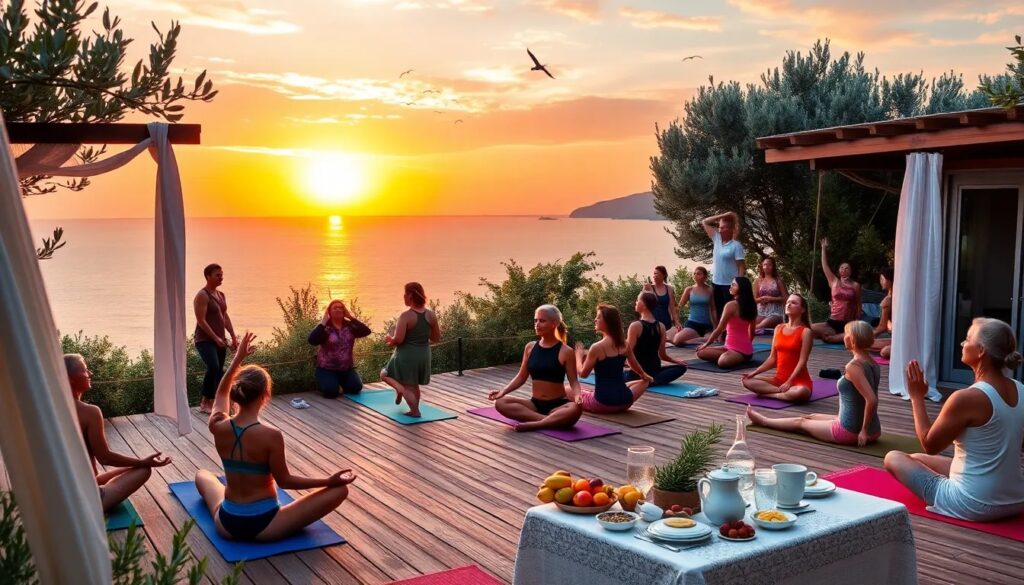
A yoga retreat in Greece pairs a structured daily practice with a real Mediterranean holiday: morning asana and breathwork in a sea-view shala, a long lunch, an afternoon for a swim or a village walk, optional excursions, and an evening practice before dinner. The country has been hosting yoga retreats for over two decades, and the combination of a long warm season, hundreds of programs across the islands and mainland, easy flight connections through Athens, and a generally relaxed travel framework is the reason it sits near the top of most people's retreat shortlist. This guide covers where to go, when to travel, what to expect from a typical week, and how to vet a program before you pay.
- Where in Greece should you do a yoga retreat?
- What does a yoga retreat in Greece cost?
- When is the best time for a yoga retreat in Greece?
- How to choose a good retreat (and avoid a bad one)
- What to pack for a Greek island retreat
- What to wear on a yoga retreat in Greece
- How does Greece compare with other retreat destinations?
- Gear that helps on a Greek retreat
- The bottom line
- Frequently asked questions
Where in Greece should you do a yoga retreat?
| Region | Vibe | Best for | Getting there |
|---|---|---|---|
| Santorini | Dramatic caldera views, upscale, busy in summer | Special occasions and a higher-end venue experience | Direct flights or ferry from Athens |
| Crete | Big, varied island — mountains, gorges, a quieter south coast | Longer retreats, hiking-plus-yoga, off-season stays | International flights to Heraklion or Chania |
| Cyclades (Paros, Naxos, Amorgos, Folegandros) | Classic whitewashed islands, quieter than Santorini or Mykonos | Balance of beach, authenticity, and a less touristed setting | Ferries from Piraeus; some have small airports |
| Ionian islands (Corfu, Lefkada, Zakynthos) | Green, lush, calmer seas | Nature-focused and family-friendly retreats | Direct seasonal flights from much of Europe |
| Pelion and the mainland coast | Forested mountains meeting the sea, very low-key | Secluded, authentically Greek, and a quieter base for the practice | Drive or bus from Athens or Thessaloniki |
A useful rule of thumb: the more famous the island, the more you pay for the same retreat structure. Santorini sits at the higher end of the spectrum for what is otherwise a fairly standardized week; Paros, Naxos, Crete, and the mainland deliver similar practice, food, and sea for noticeably less.
What does a yoga retreat in Greece cost?
What you pay depends on four variables: the season, the island, the room type, and the group size. A 6–7 night program with accommodation, most meals, and twice-daily classes is the standard package across the country. A shared room in shoulder season on the mainland or a less-frequented island is at the lower end of the spectrum; a private room in a boutique setting on Santorini in July is at the other end. Mid-range programs with private rooms, established teachers, and a good location make up the largest segment of the market.
Flights are usually excluded, and many retreats leave one or two dinners open so guests can explore a local taverna. Always check exactly what the price includes — transfers from the port or airport are a common hidden cost on the islands, and a small list of "extras" (airport pickup, excursions, massage) can add up. Ask for a written breakdown before you pay the deposit.
When is the best time for a yoga retreat in Greece?
- May–June: arguably the best window — warm, green, the sea warming up, before peak crowds and peak prices.
- July–August: hottest, busiest, most expensive; fine if you want maximum beach energy, but midday heat limits outdoor practice to early morning and sunset.
- September–October: the other sweet spot — the sea is at its warmest, the crowds thin out, and prices drop. Most retreat calendars run strong through early October.
- November–April: a much smaller selection, mostly on Crete and the mainland; quiet and cheaper, but cooler weather moves practice indoors and ferry schedules thin out.
How to choose a good retreat (and avoid a bad one)
- Research the teacher, not just the venue. Look up the lead teacher's training, lineage, and reviews from past retreats. A gorgeous villa does not fix mediocre teaching.
- Match the style and intensity to your level. Programs range from gentle Hatha-and-Yin weeks to twice-daily Ashtanga. Check the daily schedule — a good listing shows it hour by hour. If you are unsure what a retreat format involves at all, start with our primer on what a yoga retreat is.
- Read recent reviews on the booking platform and independently. Look specifically for comments about food quality, room accuracy, and whether the schedule matched the listing.
- Check group size. Smaller groups (typically under fourteen guests) usually mean more individual attention; larger groups (twenty or more) tend to be a more social, less corrective experience.
- Confirm cancellation and deposit terms in writing. Policies vary widely between organizers, and island travel is vulnerable to ferry disruptions and weather.
- Ask about non-yoga time. The best Greek retreats build in genuinely free afternoons — the country is half the point.
What to pack for a Greek island retreat
- Lightweight yoga clothes plus one warm layer — island evenings and morning practice can be breezy even in summer.
- Your own mat only if you are attached to it; most retreats provide mats and props (ask first). If you bring one, a thin travel mat is enough — see our yoga mat guide for foldable options.
- High-SPF sunscreen, a hat, and sunglasses — outdoor shala sessions add up to serious sun exposure.
- Swimwear, a beach towel, and water shoes for pebbly coves.
- Comfortable walking sandals or trainers for village and coastal paths.
- A journal — retreats reliably generate things worth writing down.
What to wear on a yoga retreat in Greece
Practically, the dress code is the same as for a regular yoga class: breathable, stretchy clothing that lets you move through poses without restriction, and layers for the cool-down stretch or the early-morning outdoor session. For everything outside the shala, the rhythm is Mediterranean casual — light fabrics, sandals, a cover-up for village walks, and a light layer for evenings by the sea. There is no cultural expectation of modesty beyond the obvious; most islanders dress for the heat, and the retreat environment is informal.
How does Greece compare with other retreat destinations?
Greece occupies a middle position that suits a lot of travelers: more accessible and shorter-haul than Bali, less ascetic and more vacation-flavored than a traditional ashram-style program in India, and culturally closer to home than either. Within the Mediterranean, it competes with Italy, Spain, and Portugal on climate, sea, and food, and tends to win on a combination of value, English-speaking infrastructure, and the breadth of available programs. Choose Greece when you want strong daily practice woven into a genuine Mediterranean holiday — sea swims, village dinners, ancient sites — rather than a purely inward-focused immersion. For a broader look at options worldwide, see our overview of international yoga retreats.
Gear that helps on a Greek retreat
Most Greek retreats provide mats, blocks, straps, and bolsters in the shala. If you are flying with hand luggage only, a thin travel mat folds down to towel size and gives you a defined footprint for early-morning or beach sessions, plus a layer of protection on the harder shala floors some venues have. If you are checking a bag, the venue's mat is usually fine and one less thing to haul.
As an Amazon Associate, we earn from qualifying purchases.

- NEW ECO FRIENDLY MATERIAL: The upgraded Gruper Yoga mat is made with premium friendly material. It costs more to make, but it is safer and more soft than traditional non-green PVC and EVA yoga mats.The exercise mats are suitable for many forms of Yoga, Pilates and fitness.
- UPGRADED ANTI-SKID DESIGN AND DOUBLE LAYER ANTI TEAR: Special sticky non slip texture on both sides , more Hard-wearing than regular yoga mats and resistant to tearing and deformation. Double layer structure coupled with a non-slip textured surface provides optimal grip without sacrificing comfort.
- TWO DIFFERENT SIZE OTPTIONAL : ①☛ Standard Size:72"(183cm) x 24" (61cm); Thickness: 0.24"(6mm); Weight: 2.6lb. ②☛ Thickened Size:72"(183cm) x 24" (61cm); Thickness: 0.32"(8mm); Weight: 3.1lb.
- CARE INSTRUCTIONS: 1.Clean with damp cloth (cold water) or mild detergent, dry flat. 2.Do not use a washing machine or dryer or exposed to the sun for extended periods of time. 3.Designed for barefoot exercise. Your shoes or your pets' paws may tear the mat.
- FREE CARRY STRAP & STORAGE BAG - No need to go buy a yoga carrying strap and bag. Easy to carry your yoga mat around with.you can carry to the gym or anywhere you want

The bottom line
A yoga retreat in Greece delivers an unusually good ratio of practice to pleasure: real teaching in the morning, the Aegean in the afternoon. Book May–June or September–October for the best conditions, pick your island by atmosphere and what you want from the week rather than by fame, and vet the teacher as carefully as the view. Done right, it is the kind of week that sends you home with both a deeper practice and an actual holiday behind you.
Frequently asked questions
What you pay depends on the season, the island, the room type, and the group size. A 6 to 7 night program with accommodation, most meals, and twice-daily classes is the standard package, with shared rooms in shoulder season on the mainland or a less-frequented island at the lower end of the spectrum, and private rooms in a boutique setting on Santorini in July at the higher end. Mid-range programs with private rooms and established teachers make up the largest part of the market. Flights are normally extra, and a written breakdown of what is included is worth requesting before you pay the deposit.
It depends on your priorities. Santorini offers the famous caldera views at the higher end of the price spectrum, Crete suits longer stays and hiking-plus-yoga weeks, and quieter Cyclades islands like Paros, Naxos, and Amorgos balance beauty, authenticity, and a less touristed setting. The mainland Pelion region is a strong choice for a quieter, more authentically Greek week.
No. Most Greek retreats welcome all levels and many are explicitly beginner-friendly. Check the listed styles and the daily schedule — twice-daily dynamic Vinyasa or Ashtanga programs suit experienced practitioners, while mixed-level Hatha and Yin weeks suit newcomers.
May, June, September, and early October offer the best combination of warm weather, swimmable sea, thinner crowds, and lower prices. July and August are hotter, busier, and more expensive.
Have a correction? Contact us.
Last update 2026-09-10. Price and product availability may change.
Recommended: