Yoga Bras: How to Choose the Right One


A yoga bra is a low- to medium-impact sports bra designed for stretching, bending, and inverting rather than running or jumping. The practical difference from a high-impact bra: yoga bras prioritize soft, four-way-stretch fabric, minimal hardware, and freedom of movement over maximum bounce control. That makes choosing one simpler than it looks — you mainly need to match three things: the right support level for your body and class, a fit that stays put upside down, and a fabric that suits how much you sweat.
Yoga Bra vs. Sports Bra: What's the Difference?
All yoga bras are sports bras, but not all sports bras work for yoga. Bras are usually labeled by impact level, and that label is the single most useful thing on the tag:
| Impact level | How it feels | Best for | Typical features |
|---|---|---|---|
| Low impact | Soft, light hold | Hatha, yin, restorative, meditation | Pullover style, thin straps, light elastic |
| Medium impact | Snug, secure | Vinyasa, power yoga, hot yoga, inversions | Wider band, fuller coverage, removable pads |
| High impact | Compressive, structured | Running, HIIT — usually overkill for yoga | Underwire or molded cups, hooks, adjustable straps |
A common mistake is buying a strappy low-impact bralette for a sweaty vinyasa class, or a rigid high-impact bra that restricts deep breathing in slow practice. Match the bra to the class, not to the aesthetic. If you are still assembling a basic outfit, our guide to what people wear to yoga covers the full picture.
Low-impact bras
Best for slower classes where you spend most of the time on the mat. Think hatha, yin, restorative, meditation, and breathwork. The hold is gentle; the priority is comfort and a clean line so the bra does not interrupt long holds.
Medium-impact bras
The workhorse category for most students. Vinyasa, power yoga, hot yoga, and any class with inversions or arm balances all fall here. You want a wider band, fuller coverage, and removable pads you can keep or take out depending on preference.
When a high-impact bra makes sense
Rarely, but sometimes. A high-impact bra is fine for yoga if you are larger-busted, if your class mixes short bursts of jumping cardio with the asana, or if you simply feel more secure in structured support. The trade-off is breathability and deep breathing — make sure the ribcage can still expand.
How a Yoga Bra Should Fit: A 4-Point Check
You can test fit at home in two minutes:
- The band does the work. Most of the support comes from the band, not the straps. It should sit level and snug — you can slide two fingers under it, but it does not lift away when you raise your arms.
- Forward-fold test. Hinge into a standing forward fold. Nothing should gap, spill, or slide — yoga puts you upside down more than any other workout.
- Strap dig test. Reach both arms overhead. Straps should stay put without digging; grooves in your shoulders mean the band is too loose and the straps are compensating.
- Breath test. Take ten slow, deep belly breaths. If the bra restricts the ribcage, size up or choose a less compressive style — deep breathing is the point of the practice.
Fabrics That Actually Work for Yoga
Most quality yoga bras are nylon- or polyester-spandex blends. What to look for depends on your practice:
For hot and sweaty classes
Prioritize moisture-wicking synthetics and perforated or mesh panels. Cotton-heavy bras hold sweat and chafe — the same logic we explain in what to wear to hot yoga. Lightweight knits with a slick finish dry fastest between sun salutations.
For slow and gentle classes
Brushed, buttery knits and cotton-modal blends are more comfortable, and breathability matters less because you are not generating as much heat. Soft, second-skin fabrics disappear into long holds.
Sensitive skin
Look for seamless or bonded construction and tagless designs; flat seams prevent chafing in long holds. Fabric weight and stretch behave the same way in bras as in leggings — our breakdown of what material are yoga pants made of explains the fiber trade-offs in detail.
Yoga Bras for Larger Busts
Generic one-size-curve advice fails most people above a D cup. What genuinely helps:
- Sized bras over S/M/L. Brands that sell by band and cup size (rather than alpha sizing) fit far more reliably.
- Wide, adjustable straps distribute weight and let you fine-tune support for inversions.
- Full coverage and higher necklines (the "high neck yoga bra" look) prevent spillage in Downward Dog and forward folds.
- Underband width: a band of two inches or more spreads pressure and stays anchored.
- Encapsulation plus compression. Bras with shaped cups inside a compressive layer control movement better than compression alone.
It is reasonable to wear a medium- or even high-impact bra for yoga if that is what feels secure — comfort and confidence beat category labels. Inclusive-sizing activewear lines have improved a lot; the brands we cover in plus size yoga pants generally carry matching extended-size bras.
Support for larger busts without compression alone
Compression-only styles flatten and can ride up; encapsulation (separate cups) shapes and lifts in a way that feels more stable across inversions. The best larger-bust options combine the two — a compressive outer layer with shaped cups sewn in.
What "sagging" actually means in a sports bra
Movement during exercise stretches the Cooper's ligaments that support breast tissue, and once stretched they do not bounce back. A bra that limits that movement is not about aesthetics — it is about keeping the existing shape over years of practice. This is why the band fit, the strap width, and the encapsulation matter more than the cup size on the label.
As an Amazon Associate, we earn from qualifying purchases.


The 3-Bra Rule: Why You Should Rotate
A widely shared piece of practical advice — sometimes called the "3 bra rule" — is to own at least three bras you actually like, and rotate them between wears. Two reasons it works:
- Elastic recovery. Spandex needs 24 to 48 hours between wears to return to its original shape. Wearing the same bra two days in a row is the fastest way to stretch out the band.
- Moisture and bacteria. Even with a wash, a bra you wore to a hot class and then immediately put back in the drawer holds sweat and odor. A rotation lets each piece fully air out.
Three is a practical minimum. If you practice daily, owning four or five in the same style is what serious students and teachers tend to do.

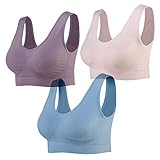
- Designed for yoga and training. Medium support
- Sleek, sweat-wicking fabric with decent compression, so comfortable and four-way stretch
- A-D Cups. 26-33 underbust best. Wirefree soft cups with removable pads
- Fixed bonded criss-cross straps offer more support
- Wide underband stays in place and won't roll up
Removable Pads: Keep Them or Toss Them?
Most yoga bras ship with thin removable foam pads. They add modesty and light shaping, but they also migrate and fold in the wash. Practical advice: remove pads before washing (or wash in a mesh bag), reinsert while the bra is damp so they seat smoothly, and if you always remove them anyway, simply take them out permanently — the bra loses nothing structurally.
Care: Make a Good Bra Last
- Wash cold on gentle, ideally in a mesh bag; elastic is degraded most by heat.
- Never machine-dry — the dryer is the main killer of bands and stretch fabric.
- Skip fabric softener, which coats wicking fibers.
- Rotate two or three bras; elastic recovers between wears and each bra lasts longer.
- Replace when the band no longer holds snug on the tightest comfortable setting or fabric stays baggy after washing — with regular use, a typical replacement window is roughly every 9–12 months.
Where to Buy Yoga Bras
Yoga bras span a wide range of brands at very different price points — basic lines from retailers like Hanes and Champion, mid-range activewear from Athleta, Sweaty Betty, and Beyond Yoga, and premium options from Lululemon and Alo. Price usually tracks nicer fabric and finish, but fit matters more than brand — a well-fitting basic bra outperforms an ill-fitting premium one. When buying online, check the return policy and reviews mentioning your size. If you practice aerial styles, note the extra coverage rules in what to wear to aerial yoga. For a broader shopping view, our guide to the best yoga clothes covers tops, bottoms, and layers. If you want a bra-focused shopping list, our yoga sports bra roundup is a good companion read.


A yoga bra is a low- to medium-impact sports bra that prioritizes stretch, soft fabric, and freedom of movement, while high-impact sports bras prioritize bounce control with compression, structure, and hardware. For most yoga classes a low or medium impact bra is the right choice.
Yes. Practicing in a bra top is normal and accepted in most studios, especially in hot yoga where less fabric is practical. Wear whatever lets you move and breathe comfortably; there is no formal dress code beyond basic coverage in typical studios.
Look for a bra sold in band and cup sizes with wide adjustable straps, full coverage, a band at least two inches wide, and encapsulation-plus-compression construction. A medium or high impact rating is fine for yoga if it feels more secure.
With regular use and proper care, a typical replacement window is roughly every 9 to 12 months. Replace it sooner if the band no longer feels snug on its tightest comfortable setting, the fabric stays stretched out after washing, or straps need constant readjusting.
Generally yes. Underwires can dig during long holds and forward folds, and they restrict the deep breathing that yoga emphasizes. A soft, wireless bra with a wide band and good coverage is the more common choice for most yoga classes.
Have a correction? Contact us.
Last update 2026-09-10. Price and product availability may change.
Recommended: