Yoga Retreats in Croatia: Regions, Costs, and When to Go

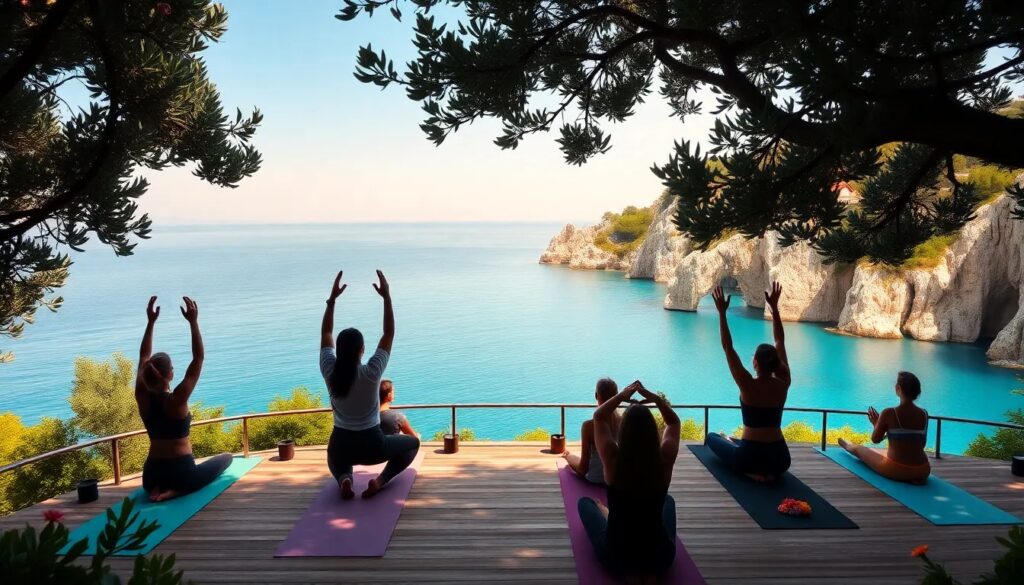
Croatia has quietly become one of Europe's busiest yoga retreat destinations, and the appeal is easy to state in one line: an Adriatic coastline scattered with more than a thousand islands, reliable summer weather, and a sailing-plus-yoga format you will not find in many other Mediterranean countries. Most retreats run from May to October and cluster in three broad areas: the Istrian peninsula in the north, the Dalmatian islands such as Hvar, Brač, Vis, and Korčula, and the historic coast around Split and Dubrovnik. This guide covers the regions, what a week realistically costs in qualitative terms, the sailing-plus-yoga format that is distinctive to Croatia, the months worth booking for, and how to choose well between a villa retreat and a live-aboard week.
Where Yoga Retreats Cluster in Croatia
| Region | Feel | Good for | Getting there |
|---|---|---|---|
| Istria (Rovinj, Pula, inland villas) | Hill towns, olive groves, Italian-influenced food and wine | Villa-based retreats with food, truffle-hunting, and culture add-ons | Fly to Pula or Trieste; drivable from much of central Europe |
| Dalmatian islands (Hvar, Brač, Vis, Korčula) | Quiet coves, pine forest shade, slow island pace | Secluded retreats, swimming-focused programs, sailing departures | Fly to Split, then catamaran or car ferry |
| Split and Dubrovnik coast | Historic cities, busier and better connected | Short retreats combined with sightseeing, easy airport transfers | Direct flights from most of Europe |
| Sailing retreats (multi-island) | Live-aboard yacht or gulet, new bay every morning | Active travelers comfortable with shared cabins and deck practice | Usually departs from Split or Zadar |
What a Yoga Retreat in Croatia Costs
Croatia sits in a middle band of European retreat pricing: noticeably more affordable than the Amalfi Coast or the south of France for a comparable setting, and generally more expensive than long-haul destinations such as India or parts of Southeast Asia, though the gap narrows once flights are factored in. The main variables are room type, the boat or villa, how many meals are included, and whether excursions (truffle hunting, island-hopping, wine tasting) are bundled in. As a rough shape rather than a fixed quote, the market breaks down into four tiers:
- Budget and shared-room retreats: the entry point. Usually twice-daily classes, most meals, and a shared room in a villa or small guesthouse.
- Mid-range villa retreats: private or twin rooms, fuller meal plans, and a dedicated indoor or outdoor shala. This is the most common format in Istria and on the larger islands.
- Sailing and yoga weeks: live-aboard cabins on a yacht or traditional Turkish-built gulet, with meals on board and daily route changes.
- Luxury retreats: high-end boutique hotels, private villas, and small-group programs with a higher staff-to-guest ratio.
Shoulder months (May, early June, September, October) are noticeably cheaper than July and August and often more pleasant for practice, since midsummer afternoons on the coast regularly exceed 30°C (86°F). For current pricing on any specific program, the best move is to compare a few operators directly in the same week and region; quotes change quickly with the calendar.
The Sailing-Plus-Yoga Format
Croatia's most distinctive retreat format is the live-aboard week: a small yacht or traditional gulet sails between islands, with practice on deck in the morning, swimming and exploring during the day, and a restorative session at anchor in the evening. The format combines three things you rarely get in a single retreat elsewhere — a moving base, daily access to quiet coves that are not reachable by road, and a built-in social group because everyone lives in the same hull. Two honest caveats: cabins are compact and shared spaces are unavoidable, and practice space on deck is tighter than a studio, so these weeks favor adaptable practitioners over prop-heavy routines. If you prefer solid ground and a consistent shala, a villa retreat is the better choice. For how other multi-activity programs balance movement and rest, our guide to surf and yoga retreats describes a similar rhythm.
When to Go
- May to mid-June: warm, green, quiet; the sea is still cool for long swims, and the island trails are at their freshest.
- Late June to August: hottest and busiest; book months ahead and expect peak pricing. Mornings and evenings are the only comfortable practice windows on a non-air-conditioned deck.
- September: arguably the best month — the sea is at its warmest, summer crowds thin out, and the light softens. Programs run as late as mid-October.
- October: quieter retreats still run in Istria and around Split; pack layers for cool mornings and the occasional rain front.
How to Choose a Croatia Retreat
- Decide land or sea first. A villa retreat and a sailing retreat are not interchangeable experiences. One gives you a stable shala, the other gives you new anchorages every day.
- Check who is actually teaching. Many Croatia retreats are run by visiting teachers from elsewhere in Europe; look up their background, training, and class style before booking.
- Confirm the practice space. Ask for photos of the shala or deck, and whether mats, blocks, and straps are provided or whether you need to bring or buy your own.
- Map the transfer. Island retreats can require a flight plus a ferry plus a taxi; confirm whether transfers are included or paid separately, since the totals can shift the value comparison considerably.
- Read what is included. Some retreats include all meals and excursions; others include breakfast only and price activities as add-ons. The same headline price can mean very different things.
- Look at group size. A twelve-person sailing week feels very different from a thirty-person villa retreat, even in the same region and season.
If you are new to the format altogether, start with our explainer on what a yoga retreat involves, and compare Croatia against other destinations in our overview of international yoga retreats. Travelers choosing between Mediterranean and long-haul options may also find our guides to yoga retreats in the UK, yoga retreats in India, and yoga retreats in Bali useful for contrast on style, season, and budget.
What to Pack for a Croatia Retreat
Few operator websites list a packing list in any detail, so the practical points tend to come up only after arrival. A short list that covers the common gaps:
- Reef-safe sunscreen. The Adriatic is clear and shallow; standard sunscreen washes off swimmers and damages the marine environment the retreat depends on.
- A quick-dry travel towel. Useful for sailing weeks where the same towel goes between shala, deck, and swim stops. Cotton is slow to dry on a boat.
- Layers for shoulder months. May, June, September, and October mornings and evenings can sit well below practice temperature, even when the day reaches the high twenties.
- Slip-on shoes. Sailing decks and rocky coves are easier in shoes you can pull on and off at the gangway; laces and boat life do not mix well.
- A lightweight rain jacket. September squalls along the Dalmatian coast are short but real, and a proper layer makes the difference between staying on deck for sunset practice or going below.
- Mosquito repellent. Inland Istria and any villa near standing water will have mosquitoes in late spring and early autumn; the coast and the islands are mostly fine.
If you do not yet own a mat, or yours is too bulky for travel, a thinner travel mat is the single most useful purchase for a Croatia retreat. The selection below updates with current Amazon pricing.
As an Amazon Associate, we earn from qualifying purchases.


Pricing varies widely by season, room type, and operator. As a rough shape rather than a fixed quote, expect budget shared-room retreats at the low end, mid-range villa retreats with private or twin rooms as the most common tier, sailing weeks in a similar band depending on the boat, and luxury boutique programs at the top.
September is the sweet spot for most people: the sea is at its warmest, summer crowds have thinned, and the light softens. May and June are the best alternative if you prefer green landscapes and quieter venues over warm water; October still has running programs in Istria and around Split.
Yes. Most villa retreats teach mixed-level classes and welcome first-timers, often with a morning flow for everyone and an afternoon session that adapts to the room. Sailing retreats are also beginner-friendly on the yoga side, though the boat life itself suits people comfortable with compact shared cabins and basic dinghy transfers.
Usually not. Villa retreats typically arrange pickup from the nearest airport or port, and sailing retreats are reached by ferry or organized transfer. A car only becomes useful if you plan to explore independently outside the program, such as driving inland in Istria or along the Split hinterland between sessions.
Have a correction? Contact us
Last update 2026-09-10. Price and product availability may change.
Recommended: