Yoga for Shoulder Pain: 7 Gentle Poses That Actually Help

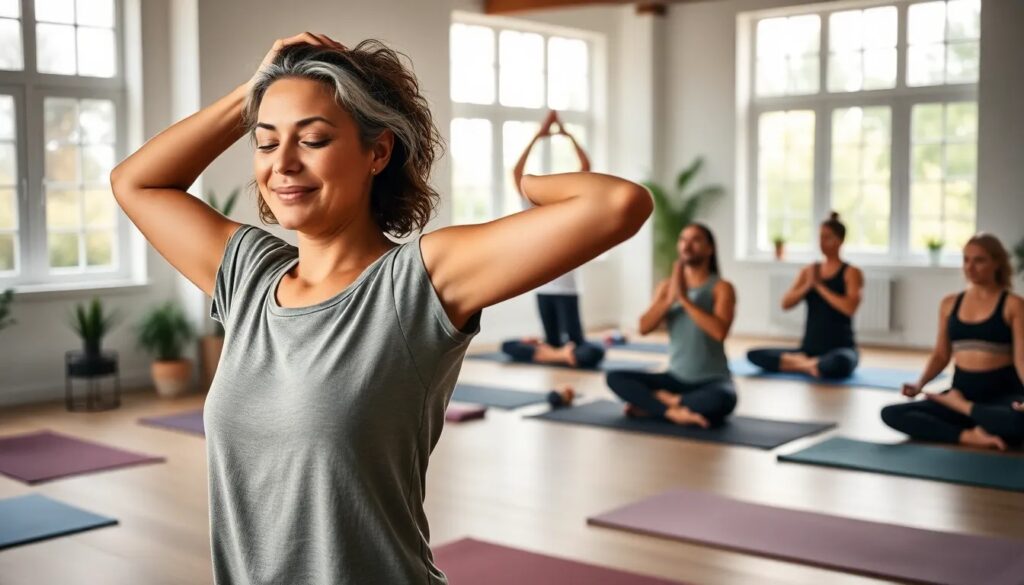
Gentle yoga can ease many common types of shoulder pain — especially the aching, tight kind that builds up from desk work, stress, and rounded posture. Slow stretches that open the chest and mobilize the upper back reduce muscle tension, improve range of motion, and help correct the slumped position that keeps shoulders irritated. What yoga cannot do is repair a structural injury, so the first step is knowing which kind of pain you have.
This article is general information, not medical advice. If your shoulder pain started after a fall or injury, wakes you at night, or comes with weakness, numbness, or tingling down the arm, see a doctor or physical therapist before practicing.
When Yoga Helps Shoulder Pain — and When It Does Not
Most everyday shoulder pain is muscular: tight chest muscles, overworked upper trapezius, and a stiff thoracic spine from hours of sitting. This is the kind yoga handles well. Structural problems are a different story and need professional evaluation first. If you have just searched for "yoga for shoulder pain youtube" or "yoga for shoulder pain adriene" because you want a written map before you follow a video, the rest of this guide works as that map: which poses to pick, which to skip, and how to string them into a daily routine.
| Type of shoulder pain | Can yoga help? | Best approach |
|---|---|---|
| Postural tension (desk work, phone use) | Yes — often very well | Daily gentle stretching plus posture breaks |
| Stress-related tightness (neck and traps) | Yes | Slow poses with long exhales; restorative styles |
| Stiffness after sleeping awkwardly | Usually | Gentle mobility once sharp pain fades |
| Suspected rotator cuff injury | Not as treatment | Get evaluated; yoga only within a rehab plan |
| Frozen shoulder (adhesive capsulitis) | Only as a supplement | Follow a physical therapy program first |
| Pain with numbness or arm weakness | No — see a doctor | Medical evaluation before any stretching |
7 Gentle Yoga Poses for Shoulder Pain Relief
Move slowly into each pose, breathe through the nose, and stop short of any sharp or pinching sensation. A mild pulling stretch is the goal; pain is not.
1. Seated Cat-Cow
Sit cross-legged or on a chair, hands on knees. Inhale, lift the chest and draw the shoulder blades together; exhale, round the upper back and let the shoulders spread apart. Repeat for 8–10 slow breaths. This warms up the thoracic spine, which does much of the work in healthy shoulder movement.
2. Eagle Arms
Stretch your arms forward, cross the right arm under the left, and wrap the forearms so the palms (or backs of the hands) touch. Lift the elbows slightly and breathe into the space between the shoulder blades for 5 breaths, then switch sides. If wrapping is too intense, simply hug yourself and reach the fingertips toward the shoulder blades.
3. Thread the Needle
From hands and knees, slide your right arm under your left armpit, palm up, until your right shoulder and ear rest on the floor. Hold 5–8 breaths, pressing lightly into the left hand to adjust the intensity, then switch. This releases the back of the shoulder and the muscles between the shoulder blades.
4. Cow Face Arms with a Strap
Hold a strap (or a towel) in your right hand, reach the right arm up and bend the elbow so the hand drops behind your head. Reach the left hand behind your lower back and walk it up the strap. Stop wherever you feel a stretch — most people with shoulder pain should not force the hands to touch. Hold 5 breaths per side.
5. Puppy Pose
From hands and knees, walk the hands forward and lower the chest toward the floor while keeping the hips over the knees. Rest the forehead down and breathe for 5–10 breaths. This opens the chest and the front of the shoulders without loading them with body weight.
6. Supported Fish
Lie back over a firm cushion or folded blanket placed lengthwise under the spine, arms relaxed out to the sides with palms up. Stay 1–3 minutes. This is a passive chest opener that counteracts rounded posture — a core idea borrowed from restorative yoga, where props do the work so muscles can release.
7. Child's Pose with a Side Walk
From Child's Pose, walk both hands to the right until you feel a stretch along the left side of the torso and shoulder. Hold 5 breaths, return to center, and repeat to the left. A gentle finish that also eases the lats, which attach near the shoulder.
Pressure Points and Self-Care Between Sessions
A common spot people press when the upper shoulder is tight is the muscle band that runs from the side of the neck to the top of the shoulder (the upper trapezius). Steady pressure there with the opposite thumb or two fingers for 20–30 seconds, breathing slowly, can give a short window of relief between yoga sessions. The same idea applies to the tender band between the shoulder blades. This is self-massage between practices, not a treatment, and it is not a substitute for the routine below if your pain is daily.
A 10-Minute Daily Routine
For most people whose shoulder pain is postural or stress-related, this short daily routine is the single best exercise for shoulder pain they can do at home. Consistency matters more than intensity: ten minutes daily typically does more for tension-related pain than one long session a week.
- Seated Cat-Cow — 1 minute
- Eagle Arms — 1 minute per side
- Thread the Needle — 1 minute per side
- Puppy Pose — 1 minute
- Cow Face Arms with strap — 1 minute per side
- Supported Fish — 2 minutes
- Slow shoulder rolls and rest — 1 minute
As an Amazon Associate, we earn from qualifying purchases.

- Home PT Strap for Independence (3 Recovery Stages) – A physical therapy stretching strap designed for gentle knee/hip/leg mobility at home. Use it across recovery: Stage 1 bedside assist (when movement is limited), Stage 2 PT stretching/ROM, Stage 3 daily warm-up to maintain mobility—so you can stay independent
- Non-Elastic, Steady Holds (No Rebound / No Surprise Stretch) – The strap does not stretch, so there’s no bounce and no sudden “give.” You can pull to the angle you need and it stays there, helping you move slowly and safely—especially after knee replacement or hip replacement recovery.
- Loops = Easier Grip + Adjust Depth + Track Progress – Multiple loops provide clear hand/foot holds with less grip strength than towels or ropes. Switch loops anytime to adjust stretch depth, repeat the same position each session, and track ROM progress for hamstrings, calves, hips/hip flexors, and lower back—without forcing.
- Leg Lifter Strap / Mobility Aid for Bed & Car – Can also be used as a leg lifter to help lift your leg into bed or car, supporting daily movement tasks when flexibility is limited (use gently within comfort). gently within comfort).
- PT-Style Daily Stretching for Legs, Back & Feet (Comfort Tip) – Built for slow, controlled home stretching and mobility work for legs, hips, lower back, ankles, and feet (calf/Achilles tightness included)—not an elastic resistance band. For comfort during longer holds, socks or light gloves may help. during longer holds, socks or light gloves can help if you have sensitive hands/skin. gloves can help if you have sensitive hands/skin.
At a Desk All Day? Try Chair-Based Versions
You can do Seated Cat-Cow, Eagle Arms, and a gentle chest opener (hands clasped behind the chair back) without leaving your desk. A short midday round breaks the slump-tension-pain cycle that builds between morning and evening. If you want a structured way to build the habit, a 28-day chair yoga challenge is an accessible place to start.
Poses to Modify or Avoid While Your Shoulder Hurts
Slower styles are generally the safest choice during a flare-up, and they answer the common question of which yoga is best for neck and shoulder pain: restorative and gentle hatha, not fast vinyasa. Once pain has calmed down, longer passive holds in yin yoga can help maintain the range of motion you have regained. And because shoulder and spine mechanics are closely linked, many people benefit from pairing this work with yoga for back pain or a few gentle poses for the lower back.
- Chaturanga (low push-up): heavy load on the front of the shoulder. Drop the knees or skip it entirely.
- Shoulderstand and Plow: compress the neck and shoulders under body weight. Substitute Legs-Up-the-Wall.
- Full Wheel: demands extreme shoulder flexion. Use Bridge Pose instead.
- Long Downward Dog holds: fine for many people, but if it aggravates your shoulder, bend the knees, shorten the hold, or rest in Child's Pose.
- Fast vinyasa transitions: repetitive load with little recovery. Choose slower classes until pain settles.
Frequently Asked Questions
No. A torn rotator cuff is a structural injury that needs medical evaluation, and stretching into it can make things worse. Gentle mobility work may be part of recovery, but only within a rehab plan guided by a doctor or physical therapist.
For everyday tension and posture-related shoulder pain, many people notice reduced tightness within a few weeks of short daily practice. Pain built up over years of postural habits usually takes longer and improves fastest when stretching is combined with regular movement breaks during the day.
The most common causes are shrugging the shoulders toward the ears or collapsing into the joint. Bend your knees, push the floor away to lengthen the spine, and rotate the upper arms outward. If pain continues despite good alignment, skip the pose and ask a teacher to watch your form.
Restorative yoga is gentler because every pose is fully supported by props, which makes it the safer choice while the shoulder is irritated. Yin yoga involves deeper, longer-held stretches and is better saved for after the acute pain has settled.
A common spot people press is the muscle band that runs from the side of the neck to the top of the shoulder (the upper trapezius); steady pressure with the opposite thumb for 20 to 30 seconds while breathing slowly can give a short window of relief. The same idea applies to the tender band between the shoulder blades. This is self-massage between yoga sessions, not a treatment.

- Natural Cork: Elevate your yoga practice with our eco-friendly, non-slip Gaiam Cork Yoga Brick, perfect for yoga, Pilates, and more.
- Modify Your Poses: Ideal for all skill levels; shorten or deepen your stretches effortlessly. Dimensions: 9"W x 5.5"H x 3"D, lightweight at 1.5 lbs.
- Rounded Edges & Superior Grip: Designed for your comfort, the rounded edges and textured surface provide excellent grip and control during challenging poses.
- Perfect Dimensions: Measuring at 9"W x 5.5"H x 3"D, this yoga brick provides ample support for optimal alignment and posture.
- Versatile & Portable: Compact and lightweight, this cork yoga brick is your go-to fitness accessory for home or gym workouts.

Have a correction? Contact us.
Last update 2026-09-10. Price and product availability may change.
Recommended: