Yoga Flow Sequence: How to Build One and a 30-Minute Routine

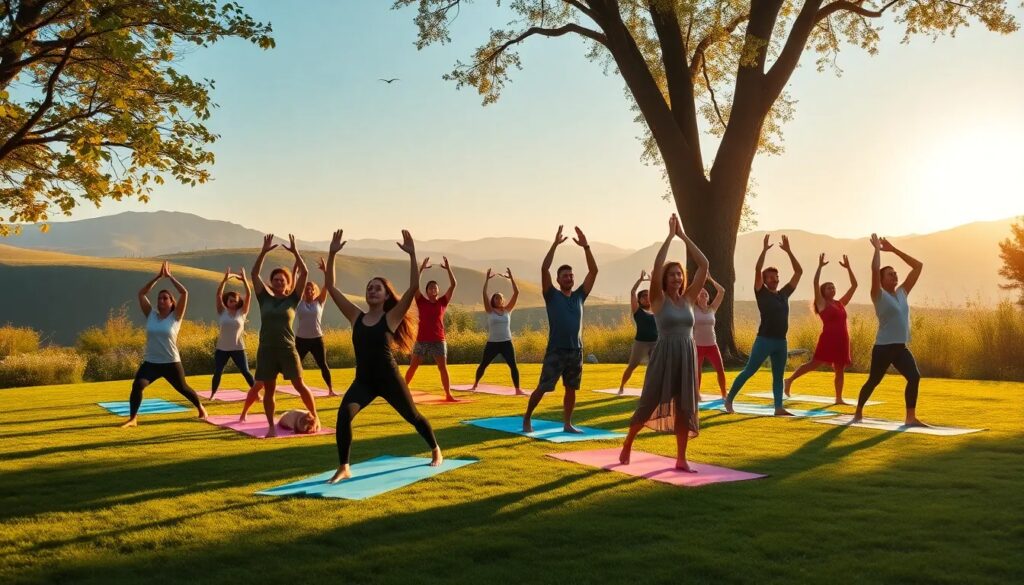
A yoga flow sequence is a series of poses linked together by the breath, so you move continuously from one posture to the next instead of holding each one in isolation. Typically, one inhale or one exhale accompanies each transition. This breath-led format — the defining feature of vinyasa yoga — builds gentle heat, improves mobility, and turns a list of poses into something closer to moving meditation.
Below you will find how a well-built flow is structured, a complete 30-minute sequence you can practice today, simple ways to adapt it depending on whether you want to wind down, wake up, or recover, and how to scale the same skeleton to 10, 30, or 60 minutes.
What is a yoga flow sequence?
A yoga flow sequence is the practical application of vinyasa's breath-to-movement principle. Each transition is timed to an inhale or an exhale, which is why the same shape can feel completely different inside a flow than it does held in isolation. The breath is the speedometer: when you can't breathe smoothly through the nose, you slow down.
That single rule is what separates a yoga flow from a list of poses performed back to back. It's also what makes flows forgiving for beginners — the format forces you to move at the pace of your breath rather than chasing flexibility.
How a yoga flow is structured
Almost every well-designed flow follows the same arc, whatever its length or theme. Understanding this arc lets you build your own sequences instead of memorizing someone else's.
- Grounding (2–4 minutes). A still starting position — seated, Child's Pose, or lying down — where you settle the breath and set a pace for the practice.
- Warm-up (4–6 minutes). Gentle spinal movement such as Cat-Cow, followed by a few rounds of Sun Salutations to raise the heart rate gradually.
- Building phase (10–15 minutes). Standing poses — Warrior variations, lunges, side angles — linked into short repeatable mini-sequences, often balanced left and right.
- Peak or focus (3–5 minutes). The most demanding moment of the practice: a balance pose, a deeper hip opener, or simply the longest hold.
- Cool-down and rest (5–8 minutes). Seated forward folds, a reclined twist, and a genuine Savasana. Skipping this step is the most common mistake in home practice.
A 30-minute yoga flow sequence, step by step
This sequence follows the arc above and needs nothing more than a mat. Move with the breath: in general, inhale on lifting or opening movements, exhale on folding or twisting ones.
- Child's Pose — 2 minutes. Knees wide, arms forward, breathe into the back ribs.
- Cat-Cow — 1 minute. Inhale to arch, exhale to round, moving the whole spine.
- Downward-Facing Dog — 1 minute. Pedal the feet, bend the knees as much as you need.
- Sun Salutation A — 3 rounds, about 4 minutes. Step back instead of jumping if you prefer a softer pace.
- Low Lunge to Warrior II to Side Angle — right side, 3 minutes. Hold each shape for 3–5 breaths before moving on.
- Repeat on the left side — 3 minutes.
- Warrior I to Humble Warrior to Triangle — right then left, 6 minutes. This is the building block of the practice; repeat it twice per side if you have energy.
- Tree Pose — 1 minute per side. A balance peak that also gives the legs a break from lunging.
- Seated forward fold — 2 minutes. Bend the knees generously; the goal is release, not reach.
- Reclined twist — 1 minute per side.
- Savasana — 4 minutes. Set a timer so you can actually let go.
From the poses above you can pick the seven most foundational — Child's Pose, Cat-Cow, Downward-Facing Dog, Cobra (or Chaturanga), Forward Fold, Warrior II, and Savasana — and you've already covered the basic building blocks of almost any beginner flow.
Shorter and longer flows: 10, 30, and 60 minutes
Thirty minutes is the sweet spot for home practice, but the same skeleton scales up and down cleanly.
- 10-minute version. Keep grounding, warm-up, and a single mini-sequence (Low Lunge to Warrior II on both sides). End with a 2-minute Savasana. This is the format most people actually finish on a busy morning.
- 30-minute version. The full sequence above. This is the default we recommend.
- 60-minute version. Run the full sequence twice with one change: replace the second standing block with a longer hip-opening peak (Pigeon, Lizard, or a deep squat held for several rounds) and finish with a 6–8 minute Savasana.
If you prefer long passive holds over continuous movement, a yin yoga sequence is the natural complement to flow practice — many practitioners alternate the two across the week.
Adapting the flow to your goal
The same skeleton can serve very different purposes. Small changes in pace, holds, and pose selection change the character of the practice completely.
| Goal | What to change | Poses to emphasize |
|---|---|---|
| Stress relief | Slow the transitions, lengthen the exhale, halve the standing series | Child's Pose, forward folds, supported twists |
| Energy | Add Sun Salutation rounds, shorten static holds | Sun Salutation B, Chair Pose, lunges |
| Flexibility | Hold poses 5–8 breaths instead of 3 | Triangle, Pyramid, Low Lunge, seated folds |
| Recovery | Replace the building phase with floor poses and props | Supported shapes from restorative yoga |
Two simple props make every variation in the table easier — a mat with real grip and a block you can hold onto when balance wobbles.
As an Amazon Associate, we earn from qualifying purchases.


Tips for flowing well
- Let the breath set the pace. If you cannot breathe smoothly through the nose, slow down — the breath is the speedometer.
- Repeat mini-sequences. Flowing through the same three poses twice feels better than rushing through six different ones.
- Modify without apology. Knees down in Plank, hands on blocks in folds, shorter stances in Warriors.
- Keep transitions deliberate. The movement between poses is part of the practice, not dead time.
- Finish properly. Even a 15-minute flow deserves 2–3 minutes of rest at the end.
If balance is part of the goal, a single cork block under the hand in standing poses keeps the line of the pose without forcing you to reach.

- Natural Cork: Elevate your yoga practice with our eco-friendly, non-slip Gaiam Cork Yoga Brick, perfect for yoga, Pilates, and more.
- Modify Your Poses: Ideal for all skill levels; shorten or deepen your stretches effortlessly. Dimensions: 9"W x 5.5"H x 3"D, lightweight at 1.5 lbs.
- Rounded Edges & Superior Grip: Designed for your comfort, the rounded edges and textured surface provide excellent grip and control during challenging poses.
- Perfect Dimensions: Measuring at 9"W x 5.5"H x 3"D, this yoga brick provides ample support for optimal alignment and posture.
- Versatile & Portable: Compact and lightweight, this cork yoga brick is your go-to fitness accessory for home or gym workouts.

Flow sequences also work well first thing in the day — see our morning yoga routine for a version built specifically around waking the body up.
Common mistakes to avoid
- Sequencing for variety instead of logic. Poses should prepare the body for what comes next, not just look different from each other.
- Going too fast. Speed hides poor alignment; slow flows are usually harder and safer.
- Front-loading intensity. Deep backbends or big hip openers belong after the body is warm, not in the first five minutes.
- Skipping one side. Always balance left and right, even when shortening the practice.
A yoga flow sequence is a series of poses linked by the breath so you move continuously from one posture to the next, usually with one inhale or exhale per transition. It is the format used in vinyasa-style classes.
Anywhere from 10 to 75 minutes works. A 30-minute flow is long enough to include a warm-up, a standing series, and a proper rest at the end, which is why it is the most popular length for home practice.
The seven foundational poses that show up in almost every beginner flow are Child's Pose, Cat-Cow, Downward-Facing Dog, Cobra (or Chaturanga), Forward Fold, Warrior II, and Savasana. From those you can build the great majority of short sequences.
Yes. Beginners should choose slower flows, hold each pose for several breaths, and use modifications such as lowering the knees in Plank. Learning a few foundational poses first makes the continuous format much easier to follow.
This article is for general information only and is not medical advice. If you have an injury or a health condition, check with a qualified professional before starting a new exercise routine.
Have a correction? Contact us.
Last update 2026-09-10. Price and product availability may change.
Recommended: