Yoga Before Bed: 8 Calming Poses and a 10-Minute Routine

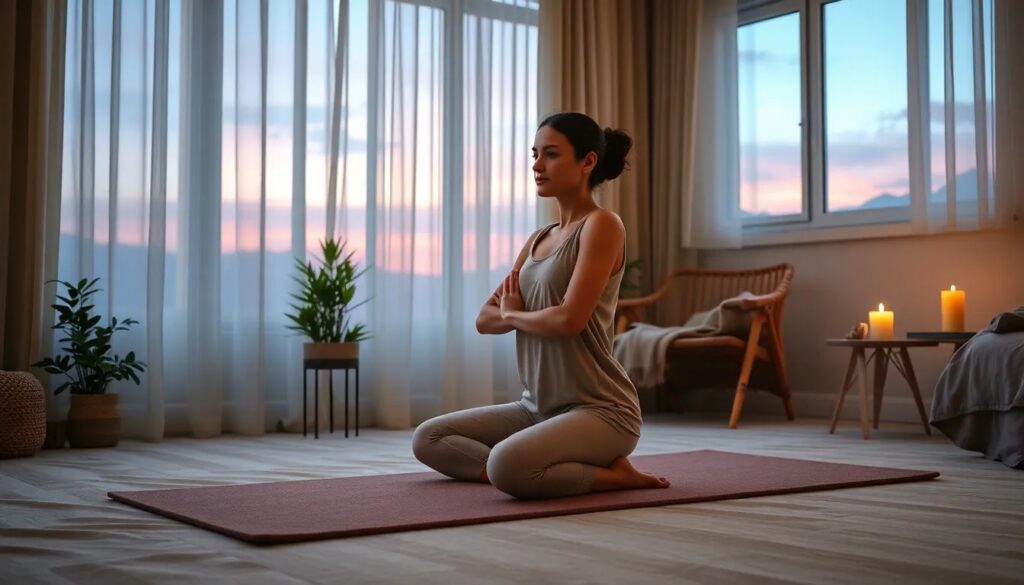
Ten to fifteen minutes of slow, supported yoga before bed is usually enough to help you fall asleep faster. The practice works by shifting the body out of the fight-or-flight response and into the parasympathetic rest-and-digest state — long exhales do most of the heavy lifting by stimulating the vagus nerve and lowering your heart rate, and the gentle stretches release the tension that accumulates through the day in the hips, lower back, and shoulders. The goal is a deliberate wind-down, not a workout. Below you will find the eight best poses for sleep, a complete 10-minute routine you can follow tonight, the common mistakes that keep evening yoga from working, and a short FAQ.
Why Yoga Before Bed Helps You Sleep
Two mechanisms do most of the work:
- Slow breathing calms the nervous system. Extending the exhale stimulates the vagus nerve, lowering heart rate and signaling safety to the brain — the physiological opposite of the stress response that keeps you staring at the ceiling.
- Gentle stretching releases accumulated physical tension. Hips, lower back, and shoulders collect tightness from sitting all day; releasing it removes a layer of physical restlessness.
Research reviews on yoga and sleep generally report modest improvements in sleep quality and time-to-fall-asleep, particularly in people with mild insomnia, though many studies are small. Yoga is best understood as one useful tool inside good sleep hygiene — not a guaranteed cure. If you want an even more passive evening practice, restorative yoga uses props to support the body completely so there is no muscular effort at all.
The 8 Best Yoga Poses Before Bed
| Pose | Hold | What it helps |
|---|---|---|
| Child's Pose (Balasana) | 1–2 min | Lower back release, inward focus |
| Cat-Cow (Marjaryasana-Bitilasana) | 5–8 slow rounds | Spinal mobility, links breath to movement |
| Standing Forward Fold (Uttanasana, knees bent) | 1 min | Hamstrings, calms a busy mind |
| Reclined Butterfly (Supta Baddha Konasana) | 2–3 min | Hips and groin, opens the chest for easier breathing |
| Legs-Up-the-Wall (Viparita Karani) | 3–5 min | Tired legs, strong relaxation response |
| Happy Baby (Ananda Balasana) | 1 min | Hips and lower back |
| Reclined Twist (Supta Matsyendrasana) | 1 min per side | Spine and outer hips, releases the day's tension |
| Corpse Pose (Savasana) | 2–5 min | Full-body stillness before sleep |
Legs-Up-the-Wall deserves special mention: it is the single most sleep-friendly pose for most people because it requires zero effort and can even be done in bed with your legs up the headboard. It belongs to the family of gentle inversions covered in our guide to inversion yoga.
If you only have time for three poses, the best minimal set is Legs-Up-the-Wall (3 min), Reclined Butterfly (2 min), and a Reclined Twist on each side (1 min per side). That six-minute version still covers the hips, lower back, and the relaxation response.
A 10-Minute Bedtime Yoga Routine
Do this sequence on a mat or directly on the bed, in dim light, ideally within 30 minutes of sleep. Breathe through the nose, making each exhale slightly longer than the inhale.
- Cat-Cow — 1 minute of slow rounds to settle into the breath.
- Child's Pose — 2 minutes, arms relaxed alongside the body.
- Reclined Butterfly — 2 minutes, with pillows under the knees if the hips feel strained.
- Legs-Up-the-Wall — 3 minutes, arms resting on the belly or out to the sides.
- Reclined Twist — 1 minute per side, letting the shoulders stay heavy.
If your mind is still racing afterward, finish lying on your back with a short body scan: move attention slowly from toes to head, relaxing each area. That technique is the core of yogic sleep — see our step-by-step guide to yoga nidra and how it is used specifically as a yoga nidra sleep practice. Beginners often find that even a 5-minute version of this sequence — Cat-Cow, Child's Pose, Legs-Up-the-Wall — already changes how quickly they fall asleep.
What to Avoid in an Evening Practice
- Vigorous styles. Strong vinyasa, power yoga, or hot yoga right before bed raises core temperature and heart rate, which works against sleep.
- Deep backbends and energizing breathwork. Poses like Wheel and fast breathing techniques such as kapalabhati are stimulating; save them for the morning.
- Bright lights and screens. A phone propped up to follow a video undercuts the melatonin benefit; learn a short sequence by heart instead.
- Forcing depth. Evening muscles may feel warm and loose, but pushing stretches hard triggers a protective tension response — the opposite of what you want. Beginners especially should stay at roughly 60–70% of their usual edge.
- Practising through pain or injury. If you have a flare-up in the back, knees, or shoulders, swap the pose for a gentler one or skip it for the night.
If you prefer to keep evenings completely restful, you can shift your more active practice to the start of the day instead — see our guide to morning yoga for beginners. Seniors and anyone with limited mobility can do the entire routine seated in a chair or lying in bed; the breathing pattern matters more than the shape of the pose.
How Long and How Often Should You Practice?
Consistency beats duration. A 10-minute routine done five nights a week will do more for your sleep than an occasional 45-minute session. Most people notice the wind-down effect immediately; changes in overall sleep quality typically show up after two to three weeks of regular practice. Pairing the routine with a fixed bedtime — and ideally doing it within 30 to 60 minutes of lights out — strengthens the association so the sequence itself becomes a sleep cue. If a full 10 minutes is unrealistic on a given night, the three-pose version above still gives you most of the benefit.
As an Amazon Associate, we earn from qualifying purchases.


Frequently Asked Questions
Yes, as long as the practice is gentle and slow. Restorative poses, long exhales, and supported stretches help the body wind down. Avoid vigorous flows, deep backbends, and energizing breathwork within an hour or two of bed.
Yes. Ten minutes of slow poses with extended exhales is enough to trigger the relaxation response. Done consistently, a short nightly routine outperforms occasional longer sessions.
Legs-Up-the-Wall (Viparita Karani) is the most reliable choice for most people. It requires no effort or flexibility, drains tension from tired legs, and reliably slows the heart rate. You can even do it in bed with your legs up the headboard.
Studies suggest gentle evening yoga can shorten the time it takes to fall asleep and improve sleep quality, especially for mild insomnia, though research samples are often small. It works best alongside good sleep hygiene. Persistent insomnia deserves an evaluation by a healthcare professional.
Yes. Reclined poses such as Reclined Butterfly, Happy Baby, gentle twists, and Legs-Up-the-Wall can all be done on a firm mattress. The only constraint is range of motion: very deep folds are easier on a mat, while gentle floor poses are perfectly comfortable in bed.
This article is general information, not medical advice. If you have chronic insomnia, recent injuries, glaucoma, uncontrolled blood pressure, or are pregnant, check with a healthcare professional before starting a new practice.
Have a correction? Contact us
Last update 2026-09-10. Price and product availability may change.
Recommended: