Trap Yoga: What It Is, Origins, and What a Class Is Like

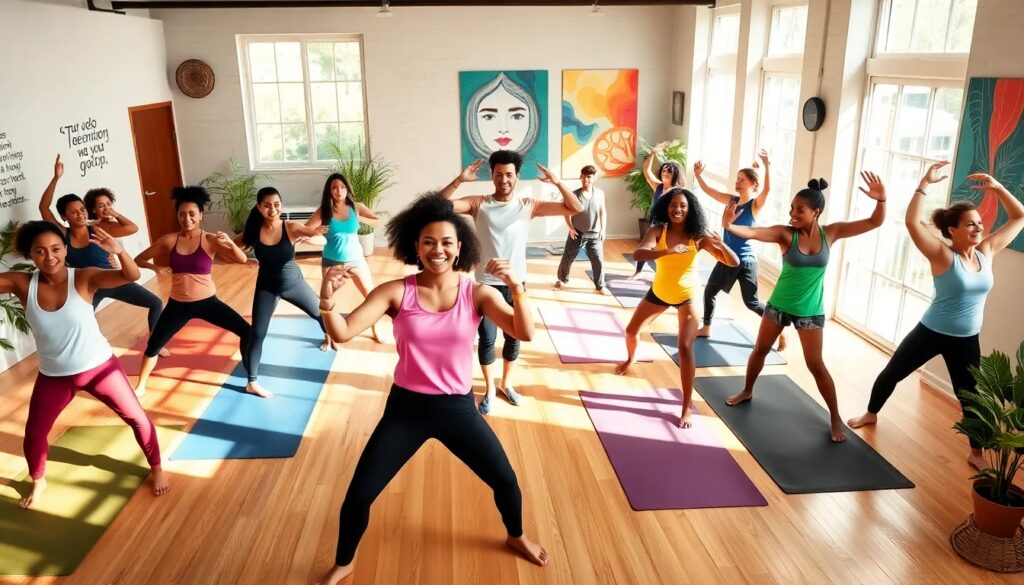
Trap yoga is a yoga class format that pairs a traditional vinyasa-style flow with trap and hip-hop music — bass-heavy, percussive tracks that originated in the southern United States. The asanas, breathwork, and class structure are the same ones you'd find in any vinyasa or power flow: a warm-up, a standing sequence, floor work, and a final rest. What changes is the soundtrack and the energy in the room, and that single change is why the format has built a following of its own over the last decade.
- What Trap Yoga Actually Is
- Where Trap Yoga Came From
- Trap Yoga vs Trapeze Yoga (Don't Confuse Them)
- What a Trap Yoga Class Looks Like
- Who Trap Yoga Is For
- What to Bring to Your First Trap Yoga Class
- Where Trap Yoga Is Practiced
- Trap Yoga vs Standard Vinyasa: Quick Comparison
- Frequently asked questions
What Trap Yoga Actually Is
Strip away the music and trap yoga looks almost identical to a standard vinyasa flow class. You still move through Sun Salutations, standing poses like Warrior I, II, and III, balancing work, and a closing floor series. Instructors still cue breath, alignment, and modifications. Most classes still run 60 minutes and follow the same broad arc — opening, warm-up, peak flow, cool-down, Savasana.
What trap yoga adds is a playlist built to match that arc. The opening might lean on slower, melodic trap or R&B. The standing flow is when the beat typically drops into higher-energy tracks. The floor work and Savasana pull back down to something calmer. Instructors describe this as giving students an external rhythm to lock into, which a number of beginners find easier to follow than abstract breath cues alone.
The atmosphere tends to be louder and more communal than a typical studio vinyasa. There's often more vocal encouragement from the teacher, more movement between poses, and a room that looks more like a celebration than a meditation. None of that is required for the physical benefits of yoga, but it is the main reason people seek out trap yoga specifically.
Where Trap Yoga Came From
The format emerged in the early-to-mid 2010s, and the credit for "who started it" is genuinely contested in published reporting. Two figures come up most often, and they represent slightly different lineages of the practice.
Brandon Copeland, a Washington, D.C.-based teacher, opened Khepera Wellness in 2013 and built a "Trap Yoga" class around Ashtanga-influenced sequencing over trap beats. He's described in The Fader, the Washington Post, and Yogapedia as the developer of the format and as someone who explicitly designed the class to draw more Black students into yoga spaces that had felt culturally homogeneous to him.
Asia Nichole Jones, a Chicago-based yogi, is credited with developing her version of the practice in 2014 during a retreat in San Diego County and holds the registered trademark on the term "Trap Yoga" according to the United States Patent and Trademark Office, as reported by Religion Dispatches and the Detroit Free Press. Her framing leans on the community and accessibility side of the format — a room where people who might not otherwise step into a yoga studio feel welcome.
Both lineages are still active. Both are documented in independent reporting. The honest summary is that trap yoga was developed by multiple practitioners in the same period, and that the only legally registered trademark on the name belongs to Jones. Outside that legal fact, "who created it" depends on which studio you ask.
Trap Yoga vs Trapeze Yoga (Don't Confuse Them)
Because the names sound similar, search engines and curious beginners sometimes conflate trap yoga with trapeze yoga, also called aerial yoga. They are not the same thing.
Trap yoga is floor-based. You bring a mat, you move through standing and seated poses, and the only thing that distinguishes the room from a standard vinyasa class is what's playing through the speakers.
Trapeze or aerial yoga uses a fabric hammock, sometimes called a yoga swing, suspended from the ceiling. The hammock supports part of your body weight and lets you invert, hang, and move through shapes that aren't possible on the floor. It has its own training path for teachers, and it has nothing to do with trap music.
If a studio advertises "swing" or "hammock" or "silks" alongside the class name, you're looking at aerial yoga. If the class description mentions playlists, DJs, or a specific genre, it's trap yoga.
What a Trap Yoga Class Looks Like
Most trap yoga sessions run about 60 minutes and follow a structure familiar to anyone who's taken a flow class:
- Opening and centering (about 5 minutes): The instructor sets an intention for the room, often tied to the music or to the idea of working through what's weighing on you. The playlist starts relatively low-key.
- Warm-up (10–15 minutes): Cat-Cow, seated twists, light hip openers, and breath work. The music begins to build.
- Standing flow (20–25 minutes): Sun Salutations, Warriors, lunges, balances, and the most physically demanding part of the class. This is when the playlist hits its peak energy.
- Floor sequence (about 10 minutes): Core work, deeper hip openers, backbends or forward folds depending on the day's focus.
- Savasana (5–10 minutes): The music drops to something slow or instrumental for the final rest.
How much the playlist drives the pacing varies by teacher. Some instructors time transitions to the beat; others let the music play more as background and keep the sequencing breath-led. Asking before your first class, or checking the studio's class description, sets expectations either way.
Who Trap Yoga Is For
Trap yoga was built with a specific audience in mind: people who had walked into mainstream yoga studios and felt the room wasn't really for them. The format, the music, the energy — all of it was a deliberate invitation to communities that had been statistically underrepresented in U.S. yoga spaces. That origin still shapes who the format serves best, and it remains a major part of why the practice exists.
But trap yoga also has broader appeal. Beginners who find silence during exercise uncomfortable often take to it more easily than to a quiet vinyasa class, because the music provides an external rhythm. Anyone who likes a high-energy workout, including fans of power yoga with a hip-hop soundtrack, will recognize the intensity.
It is not for everyone. People who prefer a quiet, contemplative environment, or who find loud music disruptive to breathwork, will generally do better in a standard vinyasa or yin yoga class. Both are valid choices, and most studios that offer trap yoga also offer a quieter alternative on the same schedule.
What to Bring to Your First Trap Yoga Class
The physical demands of trap yoga are similar to a regular flow class, so the gear is largely the same — with a few small adjustments for a format that tends to run warm.
- A mat with good grip. Sweaty palms and a slick mat are the most common reason first-timers slip during standing balances. A mat with a textured, non-slip surface makes a noticeable difference.
- A towel. Many trap yoga rooms run on the warmer side, and a small towel for your hands and the top of your mat helps maintain grip through the standing flow.
- Clothes that move and breathe. Form-fitting athletic wear that wicks moisture works better than loose cotton, which gets heavy when you sweat.
- Water. Most studios have a refill station, but bringing your own bottle means you don't have to leave the room mid-flow.
If you're planning to build a home practice around trap yoga playlists, a good pair of workout headphones makes the difference between a session that feels like a class and one that feels like a workout with music in the background. The setup is otherwise identical to practicing any other flow at home, and our guide on how many days a week you should do yoga applies the same way it would for vinyasa, hatha, or any other style.
As an Amazon Associate, we earn from qualifying purchases.

- NEW ECO FRIENDLY MATERIAL: The upgraded Gruper Yoga mat is made with premium friendly material. It costs more to make, but it is safer and more soft than traditional non-green PVC and EVA yoga mats.The exercise mats are suitable for many forms of Yoga, Pilates and fitness.
- UPGRADED ANTI-SKID DESIGN AND DOUBLE LAYER ANTI TEAR: Special sticky non slip texture on both sides , more Hard-wearing than regular yoga mats and resistant to tearing and deformation. Double layer structure coupled with a non-slip textured surface provides optimal grip without sacrificing comfort.
- TWO DIFFERENT SIZE OTPTIONAL : ①☛ Standard Size:72"(183cm) x 24" (61cm); Thickness: 0.24"(6mm); Weight: 2.6lb. ②☛ Thickened Size:72"(183cm) x 24" (61cm); Thickness: 0.32"(8mm); Weight: 3.1lb.
- CARE INSTRUCTIONS: 1.Clean with damp cloth (cold water) or mild detergent, dry flat. 2.Do not use a washing machine or dryer or exposed to the sun for extended periods of time. 3.Designed for barefoot exercise. Your shoes or your pets' paws may tear the mat.
- FREE CARRY STRAP & STORAGE BAG - No need to go buy a yoga carrying strap and bag. Easy to carry your yoga mat around with.you can carry to the gym or anywhere you want

Where Trap Yoga Is Practiced
Trap yoga has its strongest presence in a handful of U.S. cities where the format was developed or where studios have built a dedicated following.
- Washington, D.C.: Khepera Wellness, opened by Brandon Copeland in 2013, remains one of the most cited homes of the format.
- Chicago: Asia Nichole Jones's home base, and where the trademarked version of the practice is most often hosted.
- Detroit: The Trap Yoga & Massage Studio runs ongoing classes and pop-up sessions, and is the studio Google surfaces most prominently for the search term.
- Atlanta: Pop-up and ticketed trap yoga events are common, including the recurring "Trap Yoga Tuesday" series at venues like The Interlock.
- Other cities: San Francisco, Los Angeles, Milwaukee, and New York have all hosted recurring classes or one-off events at various points since the mid-2010s.
Outdoor and park-based sessions are especially common during warmer months in any of those cities. For people who don't live near a dedicated studio, the practice translates well to a home setup, and several instructors publish full-length trap yoga flows on video. The trade-off is the loss of the communal energy, which is genuinely part of the format's draw, so most teachers recommend pairing home sessions with an occasional in-person class.
For anyone building a playlist for home practice, our overview of yoga music covers how instructors typically structure a class arc, which can help you sequence your own tracks.

- Block the World, Keep the Music: Four built-in mics work together to filter out background noise — whether you're in a packed office, on a crowded commute, or moving through a busy street — so every beat comes through clean and clear. (Not available in AUX-in mode.)
- Two Ways to Hear More: BassUp technology delivers deep, punchy bass and crisp highs in wireless mode — then step it up further by plugging in the included AUX cable to unlock Hi‑Res certified audio for studio-level clarity.
- 40 Hours. 5-Minute Top-Up: With ANC on, a single charge keeps you listening through days of commutes and long-haul flights. Running low? Just 5 minutes plugged in gives you 4 more hours — so you're never stuck waiting.
- Two Devices, Zero Hassle: Stay connected to your laptop and phone at the same time. Audio switches automatically to whichever device needs you — so a call never interrupts your flow, and getting back to your playlist is just as easy. Designed for commuters and remote workers who move smoothly between work and personal listening throughout the day.
- Your Sound, Your Rules: The soundcore app puts everything at your fingertips — dials your ideal EQ with presets or build your own, flip between ANC, Normal, and Transparency modes on the fly, or wind down with built-in white noise. One app, total control.
- Hear What Matters, When It Matters: Transparency mode blends your surroundings into your listening — catch a train announcement, respond to a colleague, or navigate busy streets without ever taking your earphones off.
Trap Yoga vs Standard Vinyasa: Quick Comparison
| Feature | Standard Vinyasa | Trap Yoga |
|---|---|---|
| Music | Ambient, instrumental, or none | Trap, hip-hop, R&B |
| Atmosphere | Often quiet and reverent | Energetic, communal, louder |
| Poses used | Traditional vinyasa sequence | Traditional vinyasa or Ashtanga-influenced sequence |
| Pacing | Breath-led, teacher varies | Often synced to musical rhythm |
| Typical room | Broad; historically skews toward one demographic | Intentionally inclusive; broadens who shows up |
The poses on the mat are the same. The difference is the music, the energy, and the room.
Frequently asked questions
Yes, it is a genuine yoga practice. The asanas, breathwork, and class structure are the same as in any vinyasa or power flow class; the soundtrack and atmosphere are what change. The format has been offered continuously in community centers, dedicated studios, and university wellness programming since the mid-2010s.
No. Most trap yoga classes welcome complete beginners and offer pose modifications throughout. Many first-timers find the steady musical rhythm easier to follow than pure breath cues, which can make the first class feel less intimidating.
Primarily trap and hip-hop, with instructors often mixing in R&B or other genres. Playlists are typically curated to match the arc of the class: higher energy for the standing flow, slower tracks for the floor work and Savasana.
Trap yoga is floor-based vinyasa or power flow set to trap and hip-hop music. Trapeze yoga, also called aerial yoga, uses a fabric hammock suspended from the ceiling to support and invert the body. They are different formats with different equipment, different teacher training, and different physical demands.
Have a correction or a question about this article? Reach us via our contact page.
Last update 2026-09-10. Price and product availability may change.
Recommended: