Cat Yoga: What It Is and How Classes Actually Work

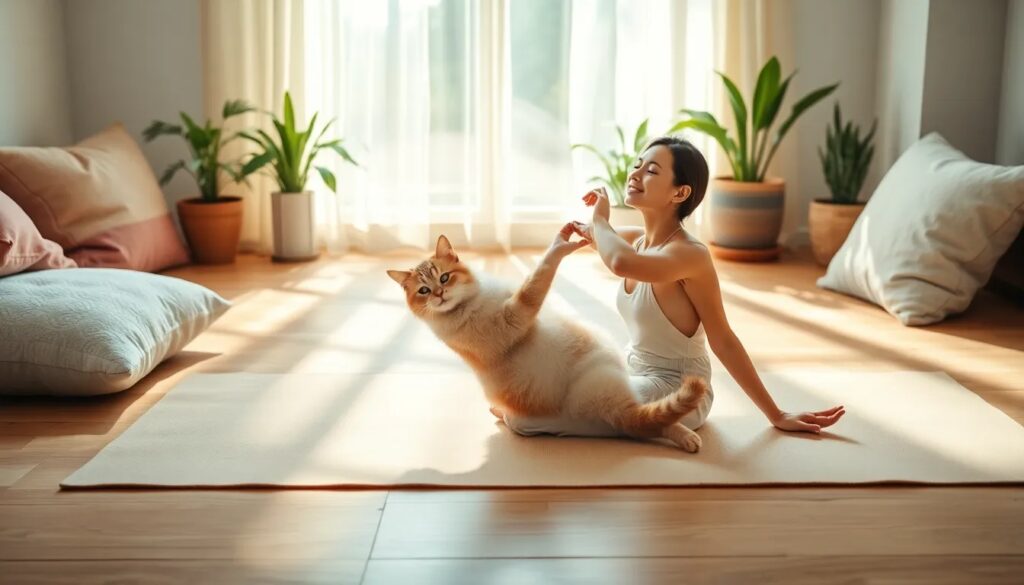
Cat yoga is a yoga class practiced while cats wander freely around the room. The humans follow a normal — usually gentle — sequence; the cats do whatever they want, which is precisely the point. Most organized cat yoga sessions take place at animal shelters and cat cafes, where the events double as socialization and adoption opportunities for the cats. You can also practice an informal version at home with your own cat, as long as you accept that your cat sets the terms. It sits alongside other yoga styles and lineages as a novelty format rather than a traditional lineage.
One quick clarification, because the search results mix these up: cat yoga (yoga with cats present) is not the same thing as Cat Pose (Marjaryasana), the spinal stretch you flow through in the classic Cat-Cow warm-up. This article covers the practice with actual cats, though Cat-Cow does make an appearance below — it is one of the poses cats most reliably ignore you from.
How a Cat Yoga Class Actually Works
A typical class looks like this: a certified instructor leads a 45–60 minute beginner-friendly session — often slow flow or gentle hatha yoga — in a room where several cats live or have been brought in for the event. There is no choreography involving the animals. Cats climb on mats, nap in the middle of the circle, investigate bags, or ignore everyone entirely.
Shelter- and cat-cafe-hosted sessions typically charge a fee that supports the hosting organization, and the cats in the room are frequently available for adoption. Because the cats are the variable nobody controls, instructors keep sequences simple and interruptions are expected — that relaxed, low-stakes atmosphere is a big part of the appeal.
Where to Find Cat Yoga Classes
Cat yoga is event-driven rather than studio-driven, so it does not usually appear on a regular studio schedule. The places that host the majority of sessions fall into a few predictable categories:
- Animal shelters and humane societies. Most of the recurring cat yoga events in any given city come out of local shelters, often as one-off adoption fundraisers rather than a weekly class.
- Cat cafes. Cafes that house adoptable cats frequently run early-morning or evening sessions before or after opening hours.
- Pop-up events and festival programming. Wellness festivals, pet expos, and similar events sometimes include a cat yoga block — usually one date, not a series.
The fastest way to find one is to search event platforms (Eventbrite, Meetup, local Facebook events) and the social media pages of nearby shelters and cat cafes. Searching "cat yoga" plus your city name tends to surface more results than a generic yoga studio directory. If you specifically want sessions with younger cats, see our kitten yoga guide, which covers that narrower format.
What Cat Yoga Does (and Does Not) Do for You
It helps to be honest here. Cat yoga is not a fitness program; a gentle class with frequent cat-related pauses burns fewer calories and builds less strength than a standard class. What people genuinely get out of it:
- Lower-pressure entry point. Many attendees are first-timers who would feel intimidated in a regular studio. Nobody worries about perfect alignment when a tabby is sitting on their mat.
- Mood and stress relief. Spending quiet time around calm, well-socialized cats is generally relaxing for most people, though the published evidence is mostly about companion animals in general, not cat yoga specifically. Treat any claim of a unique, measurable benefit with healthy skepticism.
- Benefit to the cats. At shelters, calm human interaction helps socialize cats and increases their visibility for adoption — arguably the most measurable benefit of the whole format.
If your primary goal is strength, flexibility, or a serious moving meditation, a dedicated class such as vinyasa yoga will serve you better. Cat yoga is for enjoyment first, practice second.
How to Practice Cat Yoga at Home
You do not need an event to try this — just a cat, a mat, and modest expectations. A setup that works:
- Roll out your mat and wait. Cats investigate new objects on the floor within minutes. Let the mat become familiar territory before you start. (Choosing a durable, easy-to-clean yoga mat matters more than usual when claws are involved.)
- Pick a calm time of day. Post-meal, mid-afternoon — whenever your cat is naturally mellow. Avoid the pre-dinner zoomies window.
- Choose floor-based, slow poses. Seated forward folds, Cat-Cow, Child's Pose, supine twists, and Legs-Up-the-Wall give your cat a stable, predictable human to settle against. A restorative yoga sequence is ideal.
- Never restrain or pose the cat. No lifting cats into stretches, no holding them in place. Participation is always the cat's choice — that is both the ethical line and the only approach that works.
- Let interruptions be the practice. If the cat plants itself on your mat, work around it. Patience with an uncooperative co-practitioner is genuinely good mindfulness training.
Cat Yoga vs. Other Animal Yoga Formats
| Format | Where it happens | Typical vibe | Best for |
|---|---|---|---|
| Cat yoga | Shelters, cat cafes, home | Calm, quiet, unpredictable in small ways | Cat lovers, beginners, supporting adoptions |
| Goat yoga | Farms, outdoor events | Playful, chaotic, goats climb on people | Group outings, novelty, photos |
| Dog (doga) yoga | Studios, parks, home | Interactive; dogs sometimes incorporated into stretches | Bonding with your own dog |
| Standard class | Studio or home | Focused, structured | Actual physical progress |
The practical difference: cats cannot be directed, so cat yoga is the most hands-off format — the animals share the space rather than join the poses.
Is It Good for the Cats?
Generally yes, with conditions. Cats in shelter sessions should always have escape routes, elevated perches, and the freedom to leave. A room of slow-moving, quiet humans is low-stress enrichment for well-socialized cats. Signs an individual cat is not enjoying it — hiding, flattened ears, swishing tail — should be respected by giving that cat space. At home, the same rule applies: if your cat leaves, the cat yoga portion of your session is simply over.
Safety, Allergies, and Animal Welfare
A few things worth knowing before you book a class or unroll the mat at home, especially if you have never been around cats much.
- Scratches and bites. Even friendly cats may react if startled or cornered. Keep your hands near your body in poses like Child's Pose, and avoid face-to-face contact. Wash any break in the skin promptly.
- Allergies. Cat allergens are mostly in saliva and skin flakes, not fur, so "hypoallergenic" cats do not solve the problem. If you have a known cat allergy, an indoor shelter session is a high-exposure environment — consult an allergist before attending. People with severe asthma should probably skip it.
- Hygiene. Wash your hands and forearms after class, especially before eating. If you are immunocompromised, pregnant, or have open skin conditions, talk to your doctor and your veterinarian about the specific environment you would be in; cats can carry organisms such as ringworm and Toxocara that warrant basic precautions.
- Animal welfare. Ethical cat yoga gives every cat a real choice to participate. A reputable event lets cats leave the room, offers elevated perches and hiding spots, and never forces interaction. If you see cats being handled roughly, lifted into poses, or unable to exit, that is a sign to skip the event — regardless of how good the marketing looks.
This is general information, not medical or veterinary advice. For anything health-related, talk to your doctor, allergist, or veterinarian.
Cat yoga is a regular yoga class practiced while cats roam freely around the room, typically hosted at animal shelters or cat cafes. The humans do yoga; the cats wander, nap, and interact as they please. Many events support cat adoption.
No. Cat Pose (Marjaryasana) is a spinal stretch performed on hands and knees, usually paired with Cow Pose in the Cat-Cow warm-up. Cat yoga is a class format where live cats are present in the room.
Check local animal shelters, humane societies, and cat cafes — these host most cat yoga events, often as adoption fundraisers. Searching event platforms and shelter social media pages for your city is usually faster than searching yoga studio schedules.
Yes. Practice slow, floor-based poses at a calm time of day, let your cat approach the mat on its own terms, and never restrain or pose the animal. If the cat loses interest and leaves, let it go — participation must always be voluntary.
Have a correction? Contact us.
Recommended: