Aerial Yoga: What It Is, Real Benefits, and Your First Class

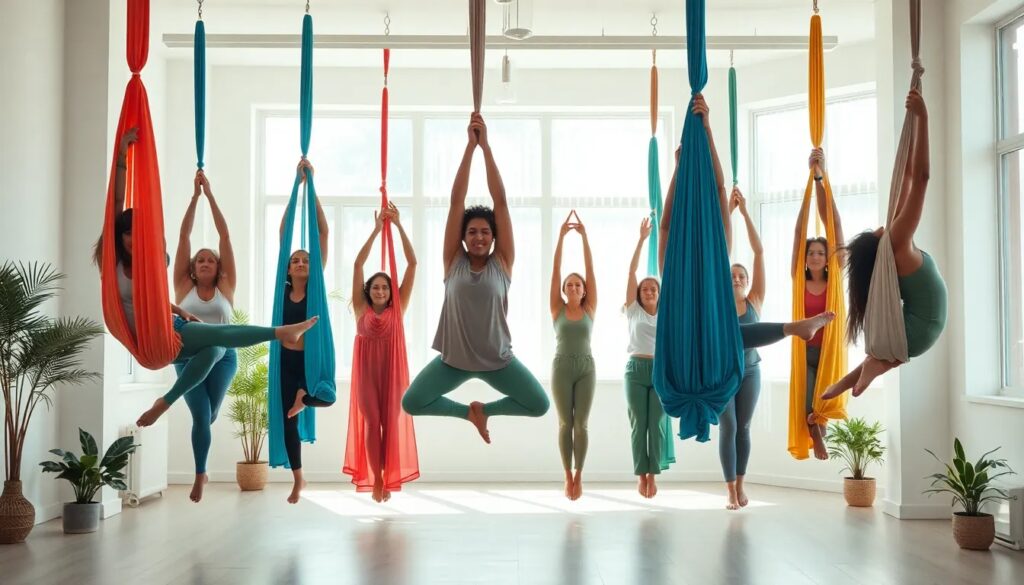
Aerial yoga — sometimes written arial yoga, and also marketed as anti-gravity yoga, yoga swing, yoga trapeze, or yoga hammock classes — is a style of practice that uses a fabric hammock suspended from the ceiling to support, deepen, or invert traditional yoga poses. The hammock carries part or all of your body weight, which lets you hang upside down without pressure on the head or neck, decompress the spine, and reach positions that would take years of strength work on the mat. Compared with regular mat yoga, aerial yoga is generally easier on the wrists and shoulders for inversions because the fabric takes the load; compared with aerial silks, it is much gentler and built around familiar yoga shapes rather than acrobatics.
What is aerial yoga?
An aerial yoga hammock is a long loop of strong, low-stretch fabric — typically nylon tricot, similar to what aerial silk performers use — rigged to the ceiling at one or two points with climbing-rated hardware. In class, the hammock acts as a prop: sometimes a sling supporting your hips in a backbend, sometimes a strap deepening a stretch, sometimes a full seat or cocoon for restorative work.
The modern suspended-fabric format is closely associated with AntiGravity Fitness, founded by former gymnast and Broadway choreographer Christopher Harrison, who popularized the hammock style that most studios now use in some variation (per Wikipedia, AntiGravity Fitness). Classes range from gentle restorative sessions, where you barely leave the fabric, to athletic flows with drops and wraps that border on aerial silks. Inversions — poses with the heart above the head — are a signature element; if that concept is new to you, our guide to what inversions in yoga are covers the ground-based versions and their benefits.
Aerial yoga vs mat yoga vs aerial silks
| Aerial yoga | Mat yoga | Aerial silks | |
|---|---|---|---|
| Equipment | Fabric hammock, usually rigged low (hip height) | Mat and optional props | Two long fabric tails rigged high |
| Focus | Supported yoga poses, gentle inversions, decompression | Strength, flexibility, breath, balance | Climbs, wraps, drops — performance acrobatics |
| Strength needed to start | Low; the fabric does much of the work | Low | Moderate to high (grip and pulling strength) |
| Inversions | Accessible early, supported by the hammock | Require significant practice | Constant and unsupported |
| Typical setting | Yoga and fitness studios | Anywhere | Circus and aerial arts schools |
What are the real benefits — and the limits?
Benefits practitioners and instructors consistently report, and which follow logically from how the hammock works:
- Spinal decompression. Hanging upside down with the hips supported takes compressive load off the spine — the same principle as inversion tables. Many people simply find it feels good.
- Accessible inversions. Going upside down without bearing weight on the head, neck, or wrists makes inversion work available to people who could not safely attempt a headstand.
- Deeper supported stretches. The fabric lets you relax into positions rather than muscle into them.
- Core and grip work. Stabilizing yourself in a moving hammock recruits the core constantly, even in apparently easy poses.
- Novelty and fun. Not a small thing — plenty of people who find mat classes tedious stick with aerial because it feels like play.
Be skeptical of bigger claims. Marketing for aerial yoga sometimes promises detoxification, lymphatic drainage, or dramatic mood cures; the honest position is that evidence specific to aerial yoga is thin, and most documented benefits are the general ones of exercise and stretching. It is a worthwhile practice without the overclaiming.
What to expect in your first class
- Book a beginner or fundamentals class, not an open level. Studios usually cap aerial classes at the number of rigged hammocks, so reserve ahead.
- Wear fitted clothing that covers armpits and the backs of the knees — leggings and a snug top with sleeves. The fabric pinches bare skin. Skip all jewelry, and avoid lotions, which make the fabric slippery. More on attire in what people wear to yoga, which includes aerial-specific notes.
- Tell the instructor it is your first time and mention any injuries, blood pressure issues, vertigo, or recent surgeries before class starts.
- Expect a height check. The instructor will adjust the hammock — usually to hip height — and show you how to test that it is seated correctly before loading it.
- The first inversion feels strange. Mild head pressure and disorientation are normal for a few breaths; sharp pain, throbbing, or panic are signals to come up, and instructors will show you the exit before you ever go down.
- Eat light. A full stomach and upside-down time do not mix.
Common beginner moves you will learn
- Supported chair and lunges — the hammock under the hips or front thigh teaches you to trust the fabric.
- Aerial plank — feet in the hammock, hands on the floor; a core staple.
- Supported Downward Dog — the fabric at the hip crease lets you lengthen the spine without loading the wrists fully.
- Inverted pigeon and hip stretches — deep hip openers with the leg cradled in fabric.
- First inversion (often called bat pose) — hips secured in the hammock, torso hanging upside down.
- Cocoon savasana — lying fully wrapped in the closed hammock at the end of class; for many people the best part.
For a fuller breakdown of the most common shapes you will encounter across aerial, restorative, and inversion-style classes, see aerial yoga poses.
Can you do aerial yoga at home?
Yes, but rigging is the serious part. A hammock kit is inexpensive; a safe anchor point is not negotiable. The setup must hold a multiple of your body weight under dynamic load, which means a ceiling joist or beam verified and fitted with proper hardware — ideally by someone qualified — or a freestanding aerial rig. Drywall anchors, light fixtures, and guesswork are how aerial injuries happen at home. The shopping list is short: a hammock of climbing-grade fabric, rated carabiners, daisy chains or webbing for height adjustment, and a crash-friendly area clear of furniture, with a mat below for floor work. Installation cost varies by provider and by whether you buy a freestanding rig or anchor to an existing beam.
If you would rather learn in person first — which is strongly advisable before any home inversion work — most mid-size cities now have classes; our piece on finding aerial yoga classes in Atlanta shows what vetting a studio for rigging safety looks like, and the same questions apply anywhere. For the gear itself — fabric, hardware, and safe install — see aerial yoga hammock: fabric, rigging, and how to install one safely.
Who should be cautious or skip it
Aerial yoga is low-impact but not for everyone. Standard studio guidance is to avoid or get medical clearance first if you have uncontrolled high or low blood pressure, glaucoma or other eye pressure conditions, heart disease, a recent surgery, severe vertigo, carpal tunnel issues, or are prone to fainting. Inversions are the main reason. Pregnancy deserves its own mention: most studios and prenatal guidelines advise against aerial practice for expectant students, especially newcomers — we cover the reasoning in detail in can you do aerial yoga while pregnant.
Frequently asked questions
No harder than a regular beginner yoga class, and in some ways easier, because the hammock supports much of your body weight. The challenges are trust and coordination rather than strength. Expect some forearm fatigue from gripping the fabric and a strange sensation the first time you invert, both of which fade within a few classes.
Quality hammocks and rigging are rated far beyond any individual body weight, so the equipment is rarely the issue in a properly rigged studio. Policies vary by studio, so ask when booking. For home setups, the anchor point is the real limit, which is why professional installation matters.
It is simply a common misspelling of aerial, likely influenced by the font name Arial and the name Ariel. Aerial yoga, anti-gravity yoga, yoga swing, yoga trapeze, and yoga hammock classes all refer to the same family of suspended-fabric practice, with small differences in equipment and branding.
Many people find the supported inversions and gentle traction relieve the feeling of spinal compression, and the decompression principle is the same one behind inversion tables. That said, evidence specific to aerial yoga is limited, and hanging upside down is not appropriate for every back condition. If you have an existing back problem, get clearance from a healthcare professional before trying it.
Fitted leggings and a snug top with sleeves that cover the armpits, since the fabric can pinch and rub bare skin. Avoid zippers, jewelry, and anything loose that could snag, and skip body lotion before class because it makes the hammock slippery. Classes are done barefoot or in grip socks.
For a deeper tour of the family of styles — anti-gravity, restorative aerial, suspension fitness, and where aerial sits among the broader yoga styles and lineages we cover on this site — start from the styles hub.
This article is general information, not medical advice. Inversions and suspended exercise are not appropriate for every condition — if you are pregnant, have blood pressure, eye, or heart conditions, or are recovering from injury or surgery, consult a qualified healthcare professional before trying aerial yoga.
Have a correction? Contact us.
Recommended: