Aerial Yoga in Atlanta: How to Find a Class and What to Expect

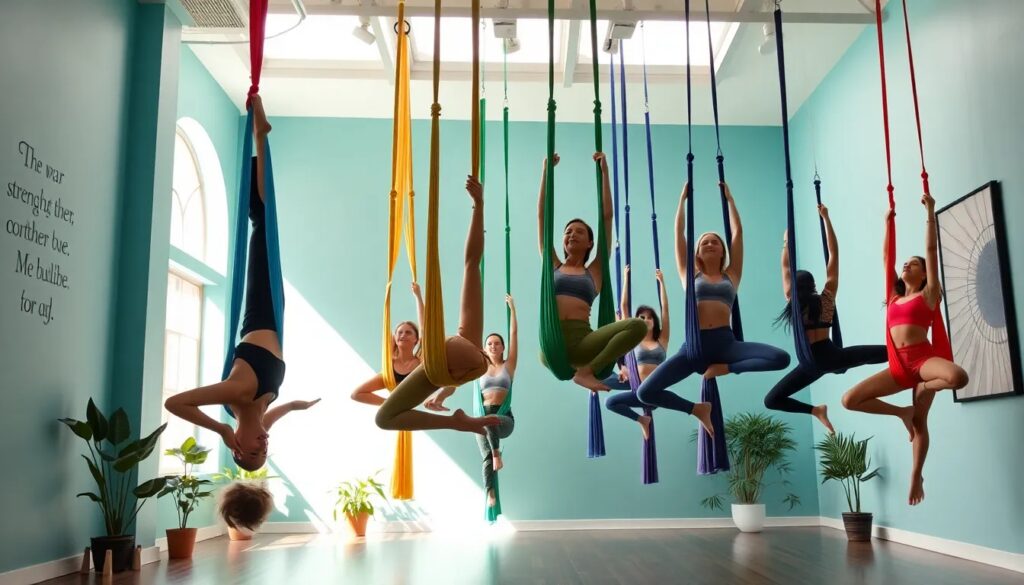
If you are looking for aerial yoga in Atlanta, the metro has one of the more active aerial scenes in the Southeast. Hammock-based yoga classes run in dedicated aerial studios, circus arts spaces, and some general yoga studios from Midtown and the BeltLine corridor out to suburbs like Sandy Springs, Alpharetta, and Decatur. Schedules, instructors, and prices change constantly, so this guide focuses on something more durable: how to find a current class, how to judge whether a studio is safe and beginner-friendly, what to expect when you show up, and which neighborhoods and suburbs the scene actually reaches.
- What aerial yoga actually is
- How to find a current aerial yoga class in Atlanta
- How to vet a studio for safety
- Aerial yoga in Atlanta: where the scene concentrates
- Class types you will see on Atlanta schedules
- What aerial yoga costs in Atlanta
- What to wear and bring
- Is aerial yoga in Atlanta beginner friendly?
- Aerial yoga vs aerial silks: pick the right class
- Health and safety: who should check with a doctor first
What aerial yoga actually is
Aerial yoga adapts yoga postures to a fabric hammock suspended from the ceiling. The hammock supports part of your body weight, which lets you decompress the spine in supported inversions, go deeper into stretches, and build core strength from constant gentle instability. If the concept is new to you, start with our full explainer on what aerial yoga is and our broader aerial yoga guide. For a closer look at the hammock itself, see our aerial yoga hammock page.
How to find a current aerial yoga class in Atlanta
Rather than working from a list that goes stale, use these steps; they take about ten minutes:
- Search Google Maps for aerial yoga plus your part of the metro (Midtown, BeltLine, Decatur, Sandy Springs, Alpharetta, Marietta, Fayetteville, McDonough, Douglasville). Map listings show current hours and recent reviews.
- Check class-aggregator apps (ClassPass and similar), which list aerial and aerial-adjacent classes across the city and often include discounted first visits across multiple studios.
- Look at circus and aerial arts schools, not just yoga studios; many run aerial yoga or aerial stretch classes alongside silks and trapeze.
- Read the most recent reviews specifically for mentions of class size, instructor attention, and equipment condition.
- Confirm the schedule on the studio's own booking page before you go; third-party listings lag behind reality.
How to vet a studio for safety
Aerial yoga is a suspended practice, so the studio's rigging and teaching standards matter more than its decor. Before booking, it is reasonable to ask:
- How is the rigging mounted and inspected? Hardware should be mounted to structural points and checked on a schedule, and a good studio will answer this question happily.
- What are instructors trained in? Look for aerial-specific teacher training on top of a yoga certification, not yoga training alone.
- Is there a class size cap? Hammocks need spacing, and beginners need eyes on them; small caps are a good sign.
- Is there a true beginner or fundamentals class? Studios that put first-timers straight into mixed-level flow classes are a yellow flag.
- What is the stated weight guidance? Professional rigging is rated far above body weight, but policies vary; a studio that publishes clear guidance is taking safety seriously.
If you are still deciding between two or three options, a discounted ClassPass drop-in is a low-commitment way to test the studio's actual teaching before buying a class pack.
Aerial yoga in Atlanta: where the scene concentrates
The local aerial community is spread across a wider radius than people coming from out of town often expect. The places that come up most often in metro-wide searches and aggregators:
- Midtown and the BeltLine corridor — the densest cluster of dedicated aerial studios and circus arts schools, walkable from several intown neighborhoods.
- Decatur — small independent studios and yoga schools that offer aerial on the schedule rather than as their main focus.
- Sandy Springs — a strong base for studio aerial fitness and aerial silks, with a few hammock-yoga options mixed in.
- Alpharetta — one of the more active north-suburban aerial communities, mostly in dedicated aerial or fitness studios.
- Marietta — a handful of aerial yoga and aerial stretch options, often inside larger fitness or dance studios.
- Fayetteville, McDonough, and Douglasville — south and west of the city, fewer options and worth calling ahead to confirm the current schedule before driving out.
Treat this as a starting map, not a ranking. Studios open, close, and move; the booking page is always the source of truth.
Class types you will see on Atlanta schedules
| Class type | Focus | Intensity | Beginner friendly? |
|---|---|---|---|
| Aerial yoga / hammock yoga | Yoga poses supported by the fabric, inversions, spinal decompression | Low to moderate | Yes, especially fundamentals classes |
| Restorative or aerial stretch | Long supported holds, relaxation in the cocoon of the hammock | Low | Yes |
| Aerial fitness | General strength and conditioning on a single hammock or hoop; less yoga vocabulary, more workout structure | Moderate | Usually beginner-friendly with a fundamentals track |
| Aerial silks / silks | Climbs, wraps, and drops on two fabric tails; more circus than yoga | High | Usually needs its own beginner track |
If your goal is the yoga side (breath, stretch, decompression), make sure the class says aerial yoga or hammock; silks and aerial fitness are different disciplines with much higher strength demands. For a deeper look at the asana side, our aerial yoga poses page walks through the shapes you are most likely to meet in a fundamentals class.
What aerial yoga costs in Atlanta
Exact prices vary by studio and change over time, but in a large U.S. metro like Atlanta you can generally expect drop-in aerial classes to run noticeably higher than mat classes, because rigging points cap the class size and the studio's per-head economics are different. Most studios soften that with intro offers for new students, class packs that lower the per-class price for regulars, and monthly memberships for committed practitioners. Private intro sessions cost more but are worth considering if you are nervous about inversions or working around an old injury. Always check the studio's current pricing page; treat any number you read elsewhere (including here) as a ballpark, not a quote.
What to wear and bring
Hammock fabric grips skin, so the dress code is more specific than for mat classes:
- Fitted leggings and a snug top with sleeves (covering armpits and the backs of knees prevents fabric burn).
- No zippers, rivets, rhinestones, or jewelry; they snag and tear the fabric.
- Hair tied back; bare feet or grip socks per studio policy.
- Water bottle, and skip heavy meals for a couple of hours before class since you will spend time upside down.
Our general what to wear to yoga guide covers fabrics and fit in more detail, and our what to wear to aerial yoga page focuses specifically on hammock-class dress code.
Is aerial yoga in Atlanta beginner friendly?
Genuinely yes, with the right class. The hammock does some of the work that flexibility and strength would otherwise have to do, which is why many people find supported inversions easier than mat inversions. Expect your first class to cover trusting the fabric, basic seated and standing poses with hammock support, one or two gentle inversions, and a floating Savasana. If you are entirely new to yoga, skimming our yoga for beginners primer first will make the vocabulary familiar.
Aerial yoga vs aerial silks: pick the right class
Both practices use fabric, and Atlanta studios often list both on the same booking site, so it is easy to book the wrong one. The difference comes down to intent:
- Aerial yoga uses a single wide hammock. The fabric supports body weight so you can hold poses longer, decompress the spine, and work on alignment. Intensity is low to moderate.
- Aerial silks uses two long fabric tails. You climb, wrap, and drop. It is a circus discipline with high upper-body and grip-strength demands, taught as its own progressive curriculum.
If your goal is decompression, flexibility, and a yoga-style class, book aerial yoga. If you want a strength and skills progression closer to a circus track, book silks — and plan on attending its own beginner series rather than dropping into a mixed-level flow.
Health and safety: who should check with a doctor first
Aerial yoga is safe for most healthy adults, but the inversion component is not for everyone. It is reasonable to talk to your healthcare provider before booking if you have uncontrolled blood pressure, recent eye surgery or glaucoma, inner-ear conditions, hiatal hernia, or are pregnant. Studios should ask about relevant conditions on intake; a clear answer on the form is a good sign they think about safety beyond the rigging.
No. Most Atlanta studios run fundamentals or intro classes that assume zero experience with yoga or aerials. The hammock supports your weight, so many beginners find supported poses easier than their mat equivalents.
Professionally rigged hammocks are rated far above any individual body weight, but studio policies vary. Ask the studio directly; a clear answer is also a good sign they take rigging seriously.
Drop-in rates run noticeably higher than mat classes, because rigging points cap class size. Intro offers, class packs, and memberships bring the per-class cost down. Always confirm current prices on the studio booking page.
Aerial yoga uses a wide hammock and adapts yoga poses with the fabric as support; intensity is low to moderate. Aerial silks uses two fabric tails for climbs, wraps, and drops, which is a circus discipline with much higher strength demands.
Inversions are generally discouraged for people with uncontrolled blood pressure, recent eye or inner-ear conditions, hiatal hernia, or during pregnancy. Check with your healthcare provider if any of these apply, and disclose them to the studio at intake.
This article is general information, not medical advice. Aerial inversions are not appropriate for every body or condition; check with your healthcare provider if you have blood pressure, eye, inner-ear, or other relevant conditions, or if you are pregnant.
Have a correction? Contact us.
Recommended: