Yoga Terms: A Plain-English Glossary for Beginners

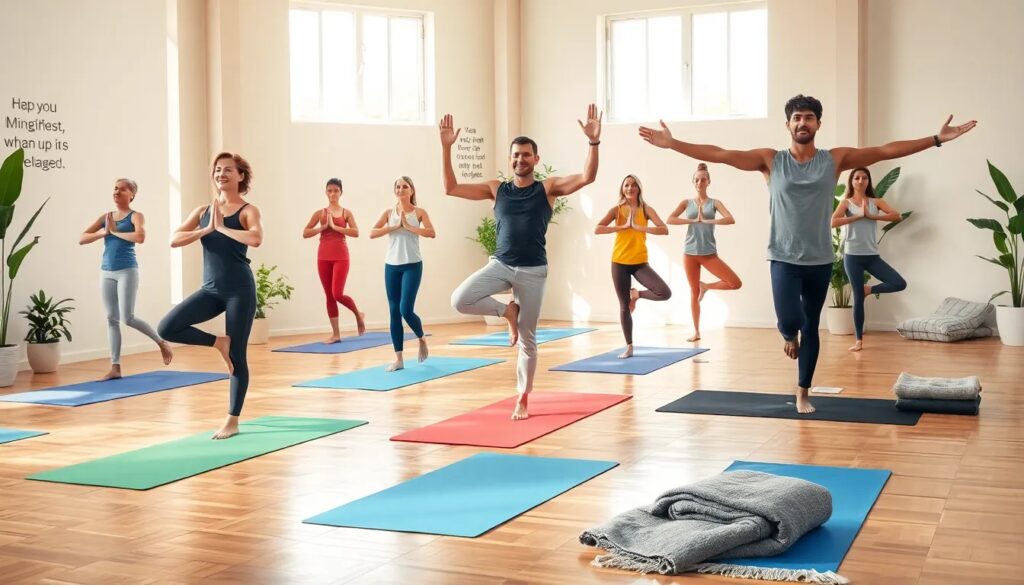
Yoga terms are mostly Sanskrit words that describe poses, breathing techniques, and ideas from yoga philosophy. The ones you will hear most often in a typical class are asana (a pose), pranayama (breath control), vinyasa (linking movement with breath), savasana (the final resting pose), and namaste (a respectful greeting, often said at the end of class). This glossary covers those and the rest of the vocabulary you are likely to encounter, organized by where you will hear it.
- The Core Yoga Terms Every Beginner Hears First
- Pose Names You Will Hear in Almost Every Class
- Words You Will Hear in Class Instructions
- Styles of Yoga and What Their Names Tell You
- Philosophy Terms: Beyond the Physical Practice
- Do You Need to Learn Sanskrit to Practice Yoga?
- Frequently Asked Questions
The Core Yoga Terms Every Beginner Hears First
| Term | Rough pronunciation | What it means in class |
|---|---|---|
| Asana | AH-suh-nuh | Any yoga pose. Pose names in Sanskrit end in -asana, as in Tadasana. |
| Pranayama | prah-nah-YAH-mah | Breathing exercises; controlling the breath to steady the mind and body. |
| Vinyasa | vin-YAH-sah | Moving between poses in rhythm with the breath; also the name of a flowing style. |
| Savasana | shah-VAH-suh-nuh | Corpse Pose: lying still on your back at the end of class to rest and absorb the practice. |
| Drishti | DRISH-tee | A fixed gazing point that helps you balance and concentrate. |
| Ujjayi | oo-JAH-yee | A slow breath through the nose with a soft ocean-like sound, used to pace the practice. |
| Namaste | NAH-mah-stay | A respectful greeting; many teachers close class with it. |
| Om (Aum) | OHM | A sacred syllable sometimes chanted at the start or end of class. |
| Prana | PRAH-nah | Life force or vital energy; the prana referenced in pranayama. |
| Surya Namaskar | SOOR-yah nah-mah-skar | Sun Salutation: a flowing sequence of poses used to warm up the body. |
For a deeper look at the most famous of these, see our article on what namaste means in yoga.
Pose Names You Will Hear in Almost Every Class
Teachers often call poses by both their English and Sanskrit names. These come up constantly:
- Tadasana (Mountain Pose): standing tall with feet grounded; the starting point for standing sequences.
- Adho Mukha Svanasana (Downward-Facing Dog): an inverted V shape; both a stretch and a resting position in flow classes.
- Uttanasana (Standing Forward Fold): hinging at the hips to fold over the legs.
- Phalakasana (Plank Pose): the top of a push-up position; builds core and shoulder strength.
- Chaturanga Dandasana (Four-Limbed Staff Pose): a low push-up hover; one of the most commonly miscued poses in vinyasa classes.
- Balasana (Child's Pose): a kneeling rest position you can take at any time, in any class, without asking.
- Virabhadrasana I, II, III (Warrior 1, 2, 3): a family of strong standing poses.
If the names feel overwhelming, do not worry: teachers demonstrate as they speak, and our guide to yoga poses for beginners walks through the foundational shapes one at a time.
Words You Will Hear in Class Instructions
- Flow: moving continuously from pose to pose, usually one breath per movement.
- Hold: staying in a pose for several breaths.
- Square your hips: point both hip bones in the same direction, usually toward the front of the mat.
- Heart center: the middle of the chest; hands to heart center means palms together at the sternum.
- Counterpose: a pose that balances the one before it, such as a gentle fold after a backbend.
- Modification: an easier or safer variation of a pose; taking one is normal, not a failure.
- Props: blocks, straps, blankets, and bolsters used to support or deepen poses.
- Bandha: an internal muscular lock, such as a gentle lift of the lower belly, used to support poses.
- Mudra: a hand gesture, like touching the index finger and thumb during meditation.
- Take your vinyasa: shorthand for a short linking sequence: plank, lower to Chaturanga, lift to Upward-Facing Dog, then press back to Downward-Facing Dog.
- Child's Pose is always an option: you can drop to Balasana at any moment to rest, regardless of what the rest of the class is doing.
Styles of Yoga and What Their Names Tell You
Class schedules are full of style names that are themselves yoga terms. Knowing them helps you pick the right class:
| Style | What to expect |
|---|---|
| Hatha | Slower-paced classes that hold individual poses; a common label for beginner-friendly sessions. |
| Vinyasa | Flowing sequences linked to breath; more cardiovascular and varied class to class. |
| Yin | Long passive holds, mostly on the floor, targeting deep connective tissue. |
| Restorative | Fully supported resting poses held for minutes; minimal effort, maximum relaxation. |
| Ashtanga | A set, athletic sequence practiced the same way each time. |
| Hot yoga | Any style practiced in a heated room. |
We cover the most popular flowing style in depth in what vinyasa yoga is, and if you suspect a slower start would suit you, see is hatha yoga for beginners.
Philosophy Terms: Beyond the Physical Practice
Some terms come from yoga's philosophical roots, particularly the Yoga Sutras of Patanjali, which describe eight limbs of practice. You may hear:
- Yamas and niyamas: ethical guidelines. The yamas include ahimsa (non-harming) and satya (truthfulness); the niyamas include santosha (contentment).
- Prana: life force or vital energy, the prana in pranayama.
- Chakra: in yogic tradition, one of seven energy centers described along the spine. This is a traditional framework rather than a claim verified by anatomy.
- Mantra: a repeated word or sound used to focus the mind during meditation.
- Dhyana: meditation itself, one of the eight limbs.
- Yogi / yogini: a person who practices yoga.
If the meditative side interests you, our introduction to yoga meditation explains how seated practice fits alongside the physical poses.
Do You Need to Learn Sanskrit to Practice Yoga?
No. Most Western classes use English pose names alongside Sanskrit, and no teacher expects beginners to know the vocabulary. The terms are worth learning gradually for two reasons: instructions get easier to follow, and the Sanskrit names are consistent worldwide, so they work in any studio in any country. Pick up the eight core terms in the first table, and let the rest come naturally with practice.
A practical way to build the vocabulary without memorizing a list: notice which words your own teacher uses most, repeat them back silently during class, and write down the ones that come up more than once. After a handful of classes the core terms stop feeling foreign and the rest of the Sanskrit you hear starts to make sense in context.
You will also see the same Sanskrit word spelled differently across books and websites: savasana is often written "shavasana," and chakra sometimes appears as "cakra." Those are just different systems for rendering the same word in English letters, not different words. English nicknames are a separate thing: ujjayi is often called "ocean breath" because of the sound it makes, and savasana is translated as "corpse pose," but neither of those is a spelling variant of the Sanskrit word — they are plain-English descriptions. If a teacher pronounces a term slightly differently from what you read online, both are usually acceptable.
Frequently Asked Questions
Asana originally meant seat, referring to the seated posture for meditation. Today it refers to any yoga pose, which is why Sanskrit pose names end in -asana, as in Tadasana or Savasana.
Most traditional yoga terms are Sanskrit, the classical language of ancient India in which foundational texts like the Yoga Sutras were written. Modern classes mix Sanskrit names with English translations.
If the teacher says namaste, it is customary but entirely optional to repeat it back. A simple thank you works just as well. Nothing is required of you, especially as a beginner.
Hatha classes hold poses one at a time at a slower pace, while vinyasa classes link poses into continuous sequences timed to the breath. Hatha is generally the gentler entry point; vinyasa is more dynamic.
It is shorthand for a short linking sequence: plank, lower to Chaturanga, lift to Upward-Facing Dog, then press back to Downward-Facing Dog. You can always skip it and rest in Child's Pose instead.
Have a correction? Contact us.
Recommended: