Is Yoga Haram? What Islamic Scholars Actually Say

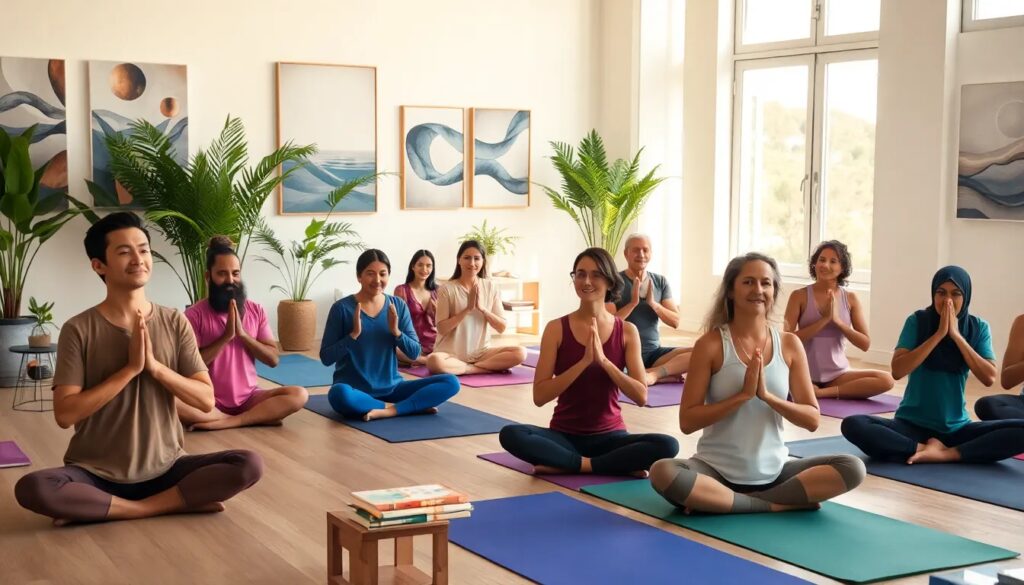
There is no single answer to whether yoga is haram (forbidden) in Islam — qualified scholars, working from the same sources, have reached different conclusions. The most widely held position distinguishes between the parts of yoga. Practicing the physical postures and stretching purely as exercise is considered permissible by many contemporary scholars, while elements with devotional content from other traditions, such as chanting mantras, sun salutations understood as veneration, or meditation directed at deities, are widely considered impermissible. A minority of scholars and some official fatwa bodies discourage or prohibit yoga entirely because of its religious origins.
This article summarizes the main scholarly positions respectfully and without taking sides. It is an informational overview, not a religious ruling: Muslims weighing whether yoga is acceptable in Islam should consult a knowledgeable scholar they trust within their own school and community.
Why the question arises
Yoga developed within the religious and philosophical traditions of the Indian subcontinent, with deep roots in Hindu practice and connections to Buddhist and Jain traditions. Classical yoga is far more than exercise: it is a spiritual discipline whose historical aims include union with the divine as understood in those traditions. Our guides to what yoga is and whether yoga is religious cover this background in detail.
For Muslims, the central theological concern is tawhid, the absolute oneness of God, and the avoidance of shirk, associating partners with God. The question scholars ask is therefore not whether stretching is sinful, but whether specific yoga practices constitute or resemble acts of worship directed at other than Allah.
The main scholarly positions
Position 1: Permissible as pure physical exercise
Many contemporary scholars hold that the physical postures, breathing for relaxation, and stretching are religiously neutral body movements. On this view, a Muslim may practice yoga for fitness and health provided the practice is stripped of devotional elements: no mantras invoking deities, no chanting of om, no intention of worship, and no philosophical framing that conflicts with Islamic belief. Intention (niyyah) is decisive: exercising to care for the body God gave you is, on this reading, not only permitted but commendable.
Position 2: Impermissible or strongly discouraged
Some scholars and several official bodies have ruled against yoga altogether. Notable examples include fatwas issued by the National Fatwa Council of Malaysia (2008) and religious authorities in some other Muslim-majority countries, which prohibited yoga for Muslims on the grounds that its postures and sequences are historically acts of worship, that the devotional roots cannot truly be separated from the movements, and that practicing it risks gradually eroding a Muslim's creed. Scholars holding this view often recommend choosing forms of exercise with no religious history.
Other religious bodies have addressed the question of Islamic yoga directly, without necessarily falling into either camp above. Singapore's Majlis Ugama Islam Singapura (MUIS) and the U.S.-based Assembly of Muslim Jurists of America (AMJA) have each published guidance specifically on yoga, alongside islamqa.info, one of the most-cited English-language fatwa sites on the topic. This article does not summarize their specific conclusions; readers who want a particular body's ruling are best served by reading that guidance directly at the source rather than a secondhand paraphrase.
Position 3: Case-by-case caution
A middle position, reflected in the guidance of many popular preachers and muftis, advises caution without a blanket ruling: physical movement is fine in principle, but each practitioner must scrutinize what their specific class involves and avoid anything devotional. Prominent voices such as Mufti Ismail Menk have generally urged vigilance, advising Muslims to ensure nothing in their fitness routine compromises Islamic monotheism, rather than issuing a categorical prohibition of all stretching that resembles yoga.
Do the four Sunni schools agree?
No. There is no unified position from the Hanafi school, nor from the Maliki, Shafi'i, or Hanbali schools: individual scholars within each school land on different sides of this debate, and no madhab has issued a single official fatwa that covers all yoga practice for its followers. The three positions described above cut across the schools rather than following them — which school a person follows says far less about where they will land than which specific scholar, country, or fatwa body they consult.
Summary of the positions
| Position | Core reasoning | Practical conclusion |
|---|---|---|
| Permissible as exercise | Postures are neutral movements; intention determines the act | Practice physically, omit mantras and devotional elements |
| Prohibited | Origins are devotional; spiritual content is inseparable | Avoid yoga; choose other exercise |
| Cautious middle ground | Movement is fine, but content of each class varies | Evaluate each practice; avoid anything resembling worship |
What practicing Muslims who do yoga typically avoid
Muslims who follow the permissive or cautious positions generally adapt their practice along these lines:
- Skipping mantras, om chanting, and invocations, and keeping silence or making personal dhikr instead.
- Treating sun salutation sequences purely as warm-up movement, or omitting them if the symbolism feels problematic.
- Avoiding classes framed around chakra work, deity visualization, or spiritual teachings from other religions.
- Choosing fitness-oriented classes or practicing at home, where content is fully under their control.
- Being mindful of modesty requirements in mixed classes and clothing choices.
Alternatives if you prefer to avoid yoga entirely
For those who follow the stricter opinion, secular options deliver most of the same physical benefits. Pilates, developed in the twentieth century as a physical conditioning method with no liturgical history, is the closest substitute for flexibility and core work; we compare the two systems in Pilates vs. yoga. General stretching routines, calisthenics, and swimming are other commonly suggested alternatives. Within the Islamic tradition itself, dhikr (remembrance of God) and salah already provide structured contemplative practice, which is one reason some scholars consider imported meditation unnecessary.
A note on parallel debates in other faiths
This discussion is not unique to Islam. Similar debates exist among Christians about whether yoga practice is compatible with their faith, with a comparable range of positions from full acceptance of postures-as-exercise to complete avoidance; see our article on whether Christians can do yoga. In both cases the dividing line tends to be the same: physical movement versus devotional content.
Within Christianity the debate also splits along denominational lines: our guide to whether Catholics can do yoga looks at that question specifically, and some Christian writers go further and ask outright whether yoga is a sin, applying much the same logic Muslim scholars use: exercise is fine, worship directed elsewhere is not.
Scholars disagree. Many permit the physical postures as neutral exercise when stripped of mantras and devotional elements, while some scholars and fatwa bodies, such as the Malaysian National Fatwa Council in 2008, have prohibited it because of its religious origins. Muslims are advised to consult a trusted scholar in their own school.
Stretching and posture work by themselves are not considered shirk by most scholars. The concern about shirk applies to devotional elements, such as chanting mantras that invoke deities or performing movements with an intention of veneration. That is why even permissive rulings require removing those elements.
Meditation as quiet reflection or breathing for calm is generally regarded as permissible, and Islam has its own rich contemplative practice in dhikr. Forms of meditation that involve invoking deities, mantras from other religions, or beliefs that conflict with tawhid are the kinds scholars rule against.
The concern is not the physical posture but the devotional mantra: om is traditionally understood as a sacred syllable invoking the divine in Hindu practice. Muslims who follow the permissive readings of yoga are generally advised to stay silent or substitute personal dhikr rather than chant it or any other invocation. Without om or a similar devotional utterance, most scholars who allow yoga as exercise treat the posture itself as religiously neutral.
No. Neither the Hanafi school nor the Maliki, Shafi'i, or Hanbali schools have issued a single, unified ruling on yoga. Individual scholars within each school hold different views, and national fatwa bodies have reached different conclusions from one another too, so the answer depends more on which scholar or authority is consulted than on madhab alone.
Have a correction? Contact us.
Recommended: