Is Yoga Good for a Bulging Disc? What Helps, What to Avoid

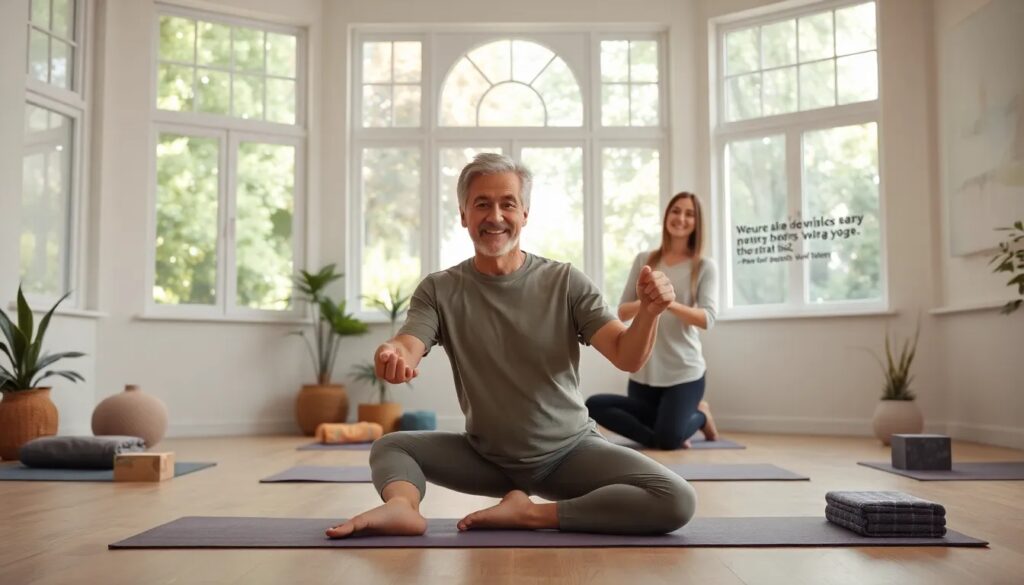
For many people, gentle yoga can help with a bulging disc — it builds the core strength that supports the spine, restores mobility, and is one of the non-drug approaches that clinical guidelines list for chronic low back pain. But the same honest answer comes with two conditions: it depends on your specific disc problem and symptoms, and it only holds for the right kind of yoga. Deep forward folds and loaded twists can make a disc problem worse, and nobody should self-prescribe a yoga routine for a diagnosed disc issue without medical clearance first.
Health disclaimer: this article is general information, not medical advice. A bulging disc is a medical condition — see a doctor or physical therapist before starting or changing any exercise program, and stop immediately if a movement causes sharp or radiating pain. If you experience numbness in the groin or inner thighs, loss of bladder or bowel control, or progressive leg weakness, seek emergency care — these can be signs of a serious condition.
What a bulging disc is — and why exercise still matters
Spinal discs are cushions between the vertebrae. A bulging disc means the disc protrudes beyond its normal boundary while its outer wall stays intact (a herniated disc, by contrast, involves a tear with inner material pushing out). Bulging discs are extremely common — imaging studies regularly find them in adults with no pain at all — and most symptomatic cases improve over weeks to months with conservative care.
That is where movement comes in. Modern guidelines for back pain favor staying active over bed rest, and gentle, controlled exercise — including appropriately chosen yoga — can contribute by:
- Strengthening the deep core and back muscles that share the spine's load
- Restoring mobility lost to protective stiffness and guarding
- Improving body awareness, so you stop drifting into the postures that aggravate symptoms
- Reducing stress and muscle tension, which research links to pain perception
Yoga is not a way to push the disc back in — no stretch does that — and it is not a substitute for diagnosis or physical therapy. It is a tool for building the conditions under which most bulging discs settle down on their own.
Poses that generally help vs. poses to avoid
Most symptomatic lumbar bulging discs are aggravated by loaded spinal flexion (rounding forward) and deep rotation, and tolerate neutral-spine and gentle extension work better. Your case may differ — which is exactly what a professional assessment establishes — but as a general orientation:
| Generally better tolerated | Generally risky with a bulging disc |
|---|---|
| Cat-Cow (gentle, pain-free range) | Seated or standing deep forward folds |
| Sphinx Pose and low Cobra | Deep seated twists (e.g. Revolved Triangle) |
| Bird Dog and gentle core work | Plow Pose and Shoulder Stand |
| Child's Pose (if flexion is pain-free) | Full Wheel and aggressive backbends |
| Bridge Pose with control | Seated Forward Bend held long and deep |
| Supported Mountain Pose and wall work | Fast vinyasa transitions under fatigue |
Note the nuance: Child's Pose appears on most safe lists, but it involves spinal flexion — if your disc is flexion-intolerant, even this gentle pose may not feel right. The rule that overrides every list is simple: centralizing symptoms (pain retreating toward the spine) are a good sign; peripheralizing symptoms (pain spreading down the leg) mean stop.
Does it matter which level or where the disc is?
Yes — both the level and the location change what your body will tolerate. Most of what's covered above applies to the two most common sites for a lumbar bulging disc: L4-L5 and L5-S1, the lowest two segments of the lower back, where the same core rule holds — avoid loaded flexion combined with rotation, and favor neutral-spine and gentle extension work.
Location matters even more than the exact level. This article is written for a lumbar (lower back) bulging disc, the far more common case. A cervical (neck) bulging disc is a different picture — headstands, shoulder stands, and deep neck flexion carry the risk instead of forward folds — so the safe-pose list above does not transfer directly. If your disc is in the neck, treat this article as background only and ask a physical therapist for a neck-specific plan. None of this replaces an actual diagnosis: the level and location on your imaging report is exactly what your provider uses to individualize advice beyond the general principles here.
Eight rules for practicing safely with a disc problem
- Get cleared first. A doctor or physical therapist can tell you whether your disc is flexion- or extension-intolerant, which changes which poses suit you.
- Choose gentle formats. Restorative, therapeutic, or slow hatha classes — not power yoga or hot vinyasa — while symptomatic.
- Tell the instructor before class. A good teacher will offer alternatives for risky poses.
- Work in a pain-free range only. Mild stretch sensation is fine; sharp, electric, or radiating pain is not.
- Use props liberally. Blocks under hands, bent knees in folds, and bolsters keep the spine closer to neutral.
- Hinge from the hips, not the waist, anytime you fold — and keep folds shallow.
- Avoid combining flexion with rotation — rounding and twisting at the same time is the most disc-stressing pattern.
- Progress slowly. Reintroduce deeper poses only after weeks of symptom-free practice, ideally with professional guidance.
As an Amazon Associate, we earn from qualifying purchases.

- Yoga Bolster Pillow - The Gaiam yoga bolster is a soft and supportive meditation cushion for added support for the body during yoga, meditation, or general relaxation. Our pillow comes in multiple colors to match your style.
- All-Natural Filling - This pillow is filled with natural cotton batting for superior comfort and cushioning. The soft and flexible filling lets you lay against the pillow with cushioned comfort while the pillow keeps its shape.
- Handle Strap - Our yoga pillow features a built-in sturdy handle on the pillow case for hassle-free transport to easily grab the meditation cushion and go or reposition for poses or support your neck.
- Care Instructions - No need to worry about how to maintain freshness for your pillow as the cover is removable and machine washable. Easily remove to toss in the washing machine.
- Not Just for Yoga - This pillow is an ideal yoga accessory but can also be used for general support to stretch out tense muscles in your neck or prop up your legs and feet after a long day.

A bolster under the knees or hips can help you keep folds shallow and hold restorative positions in a neutral spine — it does not treat a disc problem, but it is a low-cost way to apply rule 5 above.
What the evidence actually supports
It is worth being precise about what research shows. Multiple trials and reviews support yoga as moderately effective for chronic low back pain in general — comparable to other forms of structured exercise — and clinical guidelines include it among recommended non-drug options. Evidence specifically on bulging or herniated discs is thinner: most disc-specific rehabilitation research involves physical therapy programs rather than yoga classes. The reasonable conclusion is that yoga can serve as a useful, low-cost component of conservative care for many people, while a tailored physical therapy program remains the better-studied route for disc-specific rehab. Many people sensibly do both.
For gentler, evidence-oriented routines you can discuss with your provider, see our guides to yoga for back pain, yoga poses for lower back pain, and the 15-minute lower back routine. If getting up and down from the floor is the obstacle, seated yoga poses offer a lower-load starting point.
When yoga is the wrong tool
Skip yoga and see a professional first if any of these apply:
- Pain radiating below the knee, or worsening numbness or tingling in the leg or foot
- Measurable leg weakness (foot drop, buckling knee)
- Pain that is constant, worsening, or waking you at night
- A recent injury or fall preceding the pain
- Fever, unexplained weight loss, or a history of cancer alongside back pain
- Any bladder or bowel changes — this one is an emergency
None of these mean yoga is off the table forever; they mean the order of operations is diagnosis first, movement second.
Frequently asked questions
No exercise pushes a disc back into place, but most symptomatic bulging discs improve on their own over weeks to months with conservative care. Gentle yoga can support that process by strengthening the core, restoring mobility, and keeping you active — which guidelines favor over rest — but it is a supporting tool, not a cure.
As a general rule: deep seated and standing forward folds, deep twists like Revolved Triangle, Plow Pose, Shoulder Stand, and aggressive backbends like Full Wheel. The most stressful pattern for a disc is rounding the spine and twisting at the same time. Your own tolerance depends on your specific disc, so get assessed before assuming any list applies to you.
No. A bulging disc protrudes beyond its normal boundary while the outer wall stays intact; a herniated disc involves a tear that lets inner disc material push out. Herniations are more likely to irritate nerves and cause radiating leg pain. Both are common and both usually improve with conservative care, but they are managed somewhat differently — another reason to get a proper diagnosis.
Watch the direction of your symptoms. Pain moving toward the center of your back (centralizing) is generally a good sign; pain spreading further down the leg, or new numbness, tingling, or weakness (peripheralizing) means stop that movement and check with your provider. Sharp or electric pain during any pose is an immediate stop signal.
L4-L5 and L5-S1 are the most common levels for a lumbar bulging disc, and the same principles in this article generally apply: avoid combining spinal flexion with rotation, and favor neutral-spine positions and gentle extension. Exact tolerance still depends on whether there is any nerve compression at that level, so confirm with the professional who made your diagnosis before building a routine around it.
Have a correction? Contact us
Last update 2026-09-10. Price and product availability may change.
Recommended: