Is Yoga Exercise? An Honest Look at What It Counts As

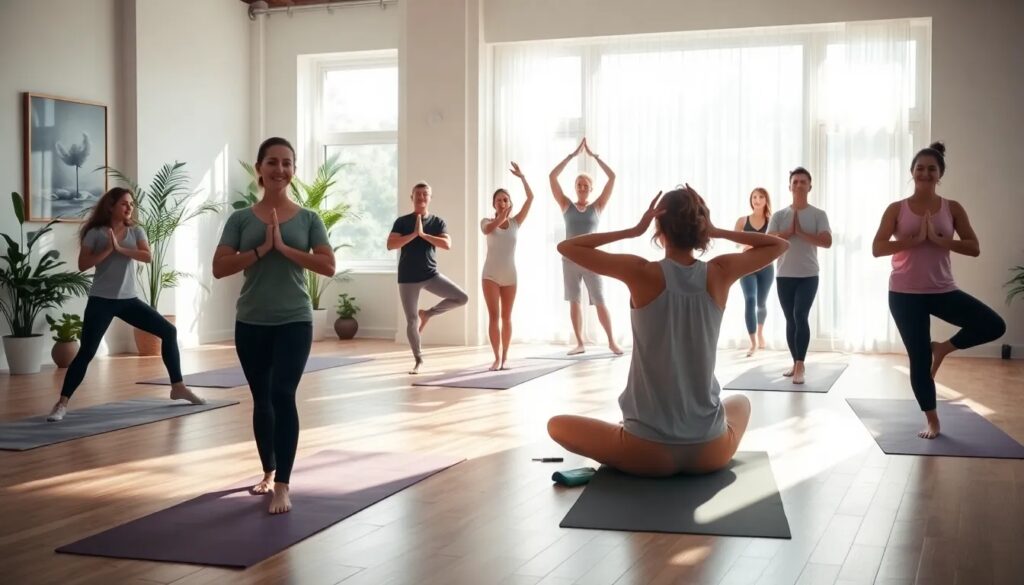
Yes — yoga is exercise. It moves the body through a full range of motion, builds strength and balance, and the more vigorous styles raise the heart rate high enough to count as moderate aerobic activity. The more useful question is not whether yoga is exercise but what kind it is, because that answer changes completely with the style. A restorative class is closer to guided relaxation; a 60-minute power vinyasa class is a legitimate full-body workout. Here is how yoga measures up against the standard categories — cardio, strength, flexibility — and where it falls short.
What Counts as "Exercise" Anyway?
Health authorities define moderate-intensity aerobic activity as anything that raises your heart rate and breathing enough that you can still talk, but not sing. The World Health Organization's physical activity fact sheet recommends 150 to 300 minutes per week of that kind of activity for adults, plus muscle-strengthening work on two or more days. The U.S. Department of Health and Human Services gives the same range in its own Physical Activity Guidelines for Americans. The practical test is the talk test: if you can carry a conversation with some effort, you are in the moderate zone; if you can only manage a few words, you are in vigorous.
So when people ask whether yoga is exercise or stretching, the honest answer is: it depends on the style. Anything that pushes your heart rate into the moderate band for a sustained stretch of class time qualifies as aerobic exercise. Anything that loads your muscles through bodyweight resistance counts as strength work. Anything that holds you in a deep stretch for a few minutes at a time, without raising your heart rate much, is closer to mobility or flexibility work — valuable, but a different category. Most yoga classes mix all three, with the balance shifting based on the lineage and the teacher.
Does Yoga Count as Cardio?
Sometimes. The styles break into three rough bands:
- Gentle styles (slow hatha, restorative, yin) generally stay below the moderate-intensity threshold. They are valuable for mobility, stress relief, and recovery, but they do not register as cardio minutes on a standard fitness plan.
- Flowing styles (vinyasa, power yoga, ashtanga) can reach and sustain moderate intensity, especially in sequences heavy on sun salutations with few long pauses between poses. A typical 60-minute vinyasa class with continuous flow keeps most people in or near the moderate heart-rate band for large portions of the hour.
- Hot yoga feels harder because of the heat, but sweat is not the same as effort. The cardiovascular load of a hot class is broadly similar to the same sequence in a normal room; what changes is how the session feels and how much fluid you lose. That fluid loss matters for hydration, but it does not double the aerobic benefit.
For most healthy adults, two to three flowing classes a week, each 45 to 60 minutes, cover the cardio side of the WHO recommendation on their own.
Does Yoga Count as Strength Training?
Partially, and the honest answer has two parts. The good news is that yoga is bodyweight resistance training. Planks, chaturangas, warrior holds, balances, and arm balances measurably build strength and muscular endurance, particularly in the core, shoulders, and legs. For most people who have never trained seriously, a few months of regular practice produces noticeable gains in functional strength.
The honest limitation is progressive overload. Your bodyweight is fixed, so once a pose becomes easy, the stimulus plateaus. Yoga will get most people meaningfully stronger; it will not keep building maximal strength the way progressively loaded weights do, especially past the beginner stage. For pure strength goals, yoga works best alongside some form of resistance training rather than instead of it.
How Many Calories Does Yoga Burn?
Estimates vary by body weight, body composition, room temperature, and how much the class actually moves. Reasonable ranges commonly cited for a 155-pound (70 kg) adult in a 60-minute class look like this:
| Style | Approx. calories per hour | Intensity |
|---|---|---|
| Restorative / yin | 100 to 180 | Light |
| Hatha at a gentle pace | 180 to 250 | Light to moderate |
| Vinyasa flow | 300 to 450 | Moderate |
| Power or ashtanga | 400 to 550 | Moderate to vigorous |
| Hot vinyasa | 350 to 500 | Moderate to vigorous |
These are estimates, not measurements. Wrist-worn trackers routinely overestimate yoga because they infer effort from arm movement, and the actual calorie cost of any single class depends on how hard the individual works. Harvard T.H. Chan's School of Public Health covers yoga as exercise in its Nutrition Source, and the framing there is consistent with these ranges — useful as rough guides, not as targets. If weight management is the goal, yoga helps most through consistency and its knock-on effects (better sleep, more mindful eating) rather than raw burn; our piece on vinyasa yoga for weight loss digs into that honestly.
What Yoga Does Better Than Conventional Exercise
- Flexibility and mobility. Yoga is arguably the most complete flexibility system in mainstream fitness. Few conventional gym routines build hamstring length, hip opening, and spinal mobility the way a steady yoga practice does.
- Balance. Single-leg poses and transitions train balance in ways treadmills and weight machines never touch, and that matters more with every decade of age. Falls are one of the leading causes of injury in adults over 65, and balance is the cheapest insurance against them.
- Stress regulation. The breath-movement link, the closing relaxation, and the relatively slow pace most classes keep are yoga's best-documented mental health effects. For perceived stress and sleep quality, regular yoga is one of the better-supported options in the movement world.
- Accessibility. From seated yoga poses for desk workers and seniors to athletic power classes, the intensity dial goes all the way down and reasonably far up. Few other activities scale that gracefully across a lifetime.
Which Yoga Style Gives You the Most Exercise?
If the goal is yoga-as-workout, the flowing styles deliver the most. Power vinyasa tops the list for sustained intensity — near-continuous movement, demanding strength holds, and a heart rate that stays elevated. Standard vinyasa yoga balances effort and accessibility and is the most common entry point to the workout side of yoga. Hatha yoga at a traditional pace is the classic foundation style — slower, more alignment-focused, and the right place to start if mobility, fundamentals, and stress relief matter more than intensity.
Many long-term practitioners get the best results by mixing: two or three flow classes per week for the workout, one slow class for recovery and mobility.
Is Yoga Enough on Its Own?
For general health, a vigorous yoga practice three or more times a week covers a surprising amount: moderate aerobic activity, bodyweight strength, flexibility, and balance. For a lot of adults — especially those who hate gyms and would otherwise not exercise at all — yoga alone is a meaningful upgrade over doing nothing.
Two gaps remain for most practitioners. First, high-intensity cardio: relatively few yoga classes push the heart rate into vigorous zones for sustained periods, so runner-level cardiovascular fitness still needs running, cycling, rowing, or similar work. Second, heavy loading: bones and maximal strength respond best to progressive resistance, especially past middle age, when bone density starts to matter more. A practical complete week looks like 2 to 3 yoga sessions, 2 strength sessions, plus walking or one cardio session — with yoga doubling as the mobility and recovery layer that most gym-goers skip.
If the question is whether 30 minutes of yoga a day is enough to lose weight, the honest answer is that it helps, but on its own yoga is not a strong weight-loss tool. Weight change comes mostly from food. A daily practice sharpens the habits that make good food choices easier to stick with.
When to Add Something Else
For most healthy adults, the simplest complete week is some version of:
- 2 to 3 yoga sessions (mix of one flow and one slower class is ideal)
- 2 short strength sessions (bodyweight or weights, 20 to 40 minutes)
- 2 to 3 cardio sessions (walking counts; running, cycling, or swimming are fine)
Yoga does the mobility, balance, and stress-regulation work that pure strength and cardio programs tend to skip. A good mat and a couple of hatha-style props are enough to practice at home on off days from the studio, which is usually what makes the difference between a routine that lasts and one that doesn't.
As an Amazon Associate, we earn from qualifying purchases.

- NEW ECO FRIENDLY MATERIAL: The upgraded Gruper Yoga mat is made with premium friendly material. It costs more to make, but it is safer and more soft than traditional non-green PVC and EVA yoga mats.The exercise mats are suitable for many forms of Yoga, Pilates and fitness.
- UPGRADED ANTI-SKID DESIGN AND DOUBLE LAYER ANTI TEAR: Special sticky non slip texture on both sides , more Hard-wearing than regular yoga mats and resistant to tearing and deformation. Double layer structure coupled with a non-slip textured surface provides optimal grip without sacrificing comfort.
- TWO DIFFERENT SIZE OTPTIONAL : ①☛ Standard Size:72"(183cm) x 24" (61cm); Thickness: 0.24"(6mm); Weight: 2.6lb. ②☛ Thickened Size:72"(183cm) x 24" (61cm); Thickness: 0.32"(8mm); Weight: 3.1lb.
- CARE INSTRUCTIONS: 1.Clean with damp cloth (cold water) or mild detergent, dry flat. 2.Do not use a washing machine or dryer or exposed to the sun for extended periods of time. 3.Designed for barefoot exercise. Your shoes or your pets' paws may tear the mat.
- FREE CARRY STRAP & STORAGE BAG - No need to go buy a yoga carrying strap and bag. Easy to carry your yoga mat around with.you can carry to the gym or anywhere you want


- Natural Cork: Elevate your yoga practice with our eco-friendly, non-slip Gaiam Cork Yoga Brick, perfect for yoga, Pilates, and more.
- Modify Your Poses: Ideal for all skill levels; shorten or deepen your stretches effortlessly. Dimensions: 9"W x 5.5"H x 3"D, lightweight at 1.5 lbs.
- Rounded Edges & Superior Grip: Designed for your comfort, the rounded edges and textured surface provide excellent grip and control during challenging poses.
- Perfect Dimensions: Measuring at 9"W x 5.5"H x 3"D, this yoga brick provides ample support for optimal alignment and posture.
- Versatile & Portable: Compact and lightweight, this cork yoga brick is your go-to fitness accessory for home or gym workouts.
Yes. Vigorous styles like vinyasa, power yoga, and ashtanga count toward the recommended 150 to 300 weekly minutes of moderate aerobic activity. Gentle hatha, yin, and restorative classes are better classified as light activity and flexibility work — valuable, but not cardio minutes.
For most adults, yes — three or more vigorous sessions a week cover cardio, bodyweight strength, flexibility, and balance. For maximal strength or top-end cardiovascular fitness, yoga works best as part of a mix rather than the only form of exercise.
It depends on the goal. Yoga can stand alone for general fitness, mobility, balance, and moderate strength. For specific goals like maximal strength, bone density, or high-intensity cardio, you will want to add some form of resistance training and harder aerobic work.
Both, depending on the style. Flowing styles like vinyasa and power yoga are exercise — they raise heart rate, build strength, and burn meaningful calories. Slower styles like yin and restorative are closer to guided stretching and mobility work, with a much lower cardiovascular load.
Have a correction? Contact us.
Last update 2026-09-10. Price and product availability may change.
Recommended: