Is Yoga Considered Resistance Training?

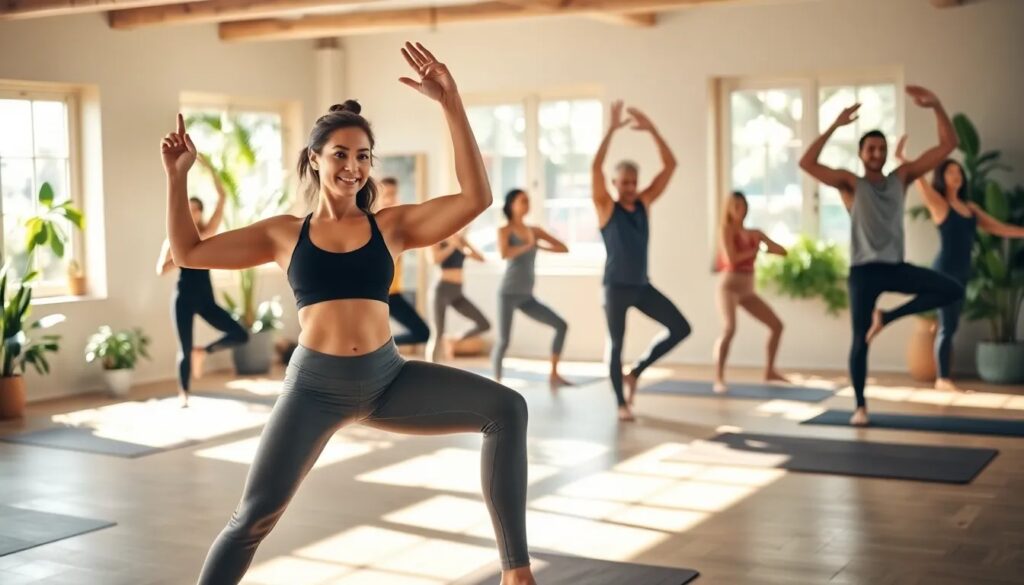
Yes — yoga is considered resistance training, because it forces your muscles to contract against a load: your own body weight. The formal definition used in exercise science includes bodyweight as a valid form of resistance. The honest answer, though, is that yoga sits at the bodyweight end of the resistance-training spectrum, and understanding both why it counts and where its limits show up is the key to using it deliberately for strength.
This article unpacks the formal definition of resistance training, breaks down the three kinds of muscle contraction yoga produces, lays out exactly where bodyweight yoga runs out of stimulus, and gives practical ways to add resistance to your practice when you have outgrown it. For the broader question of whether yoga meets general exercise guidelines, see our is yoga considered exercise overview; for the strength-training angle specifically, see is yoga considered strength training.
- What resistance training actually means
- Types of resistance yoga provides
- Where yoga's resistance training has limits
- How to add resistance to your yoga practice
- Which yoga styles are highest in resistance training value?
- Yoga vs. traditional resistance training: an honest comparison
- Frequently asked questions
What resistance training actually means
The terms "resistance training," "strength training," and "weight training" are often used interchangeably, but they have distinct meanings. The National Strength and Conditioning Association (NSCA) defines resistance training as exercise in which muscles exert force against a resistance to improve muscular fitness. That resistance can take several forms:
- Free weights (barbells, dumbbells, kettlebells)
- Machines (cable stacks, leg press, Smith machines)
- Resistance bands and tubes
- Bodyweight
- Any medium that creates load against the muscle (water, sand, weighted implements)
Yoga falls squarely into the bodyweight category. When you hold Plank, your shoulders, chest, triceps, and core are resisting gravity pulling your torso toward the floor. When you hold Chair Pose for 45 seconds, your quadriceps are under continuous isometric resistance. When you lower slowly through Chaturanga, your triceps and chest are performing an eccentric resistance exercise — the same type of contraction used in the negative phase of a bench press.
Types of resistance yoga provides
Yoga generates three forms of muscular contraction that are well-recognized in exercise physiology. Each contributes to resistance-training adaptation in a different way:
| Contraction type | Example yoga pose | Muscle effect |
|---|---|---|
| Isometric (muscle fires, no joint movement) | Plank, Warrior II hold, Boat Pose | Builds endurance strength and stability |
| Eccentric (muscle lengthens under load) | Lowering from Plank to Chaturanga | Strong stimulus for strength and muscle development |
| Concentric (muscle shortens under load) | Pressing up from Chaturanga, jumping through | Power and strength development |
The eccentric component deserves attention. Eccentric loading — controlled lowering movements — is widely understood to be one of the most effective stimuli for both strength and muscle development. A slow, controlled Chaturanga lowering is essentially a tempo push-up eccentric, and the same principle that drives eccentric training in a weight room applies directly to yoga transitions performed with deliberate slowness.
Where yoga's resistance training has limits
The most significant limitation of yoga as resistance training is the progressive overload problem. Progressive overload — gradually increasing the demands on the muscle over time — is the foundational principle that drives long-term strength and muscle development.
With external weights, progressive overload is mechanical: add a small amount of load to the bar. With yoga, the options are:
- Hold poses longer (builds endurance but eventually plateaus)
- Move to a harder pose variation (limited by skill progression, not just strength)
- Slow down transitions (increases time under tension)
- Increase session frequency (more weekly volume)
For a beginner, bodyweight alone provides enough resistance for meaningful strength gains. For an intermediate or advanced practitioner who can already hold Plank for two minutes and flow through dozens of Chaturangas, the bodyweight ceiling becomes a real constraint. The simple fact is that your body weight stays the same — making it harder to keep increasing the muscular challenge past a certain point. At that stage, adding external resistance becomes necessary to continue progressing.
How to add resistance to your yoga practice
You do not have to abandon yoga to get more resistance-training benefit. The most common strategies fall into three buckets: external load on the body, external load in the hands, and internal load through tempo.
Weighted vests and ankle weights
Adding a weighted vest to a Plank or Chaturanga sequence increases upper-body and core resistance with no technique change required. Ankle weights on poses like Three-Legged Dog, Warrior III, and standing balance poses add load to the hips, glutes, and hamstrings. Both options preserve the yoga mechanics you already know while raising the resistance-training stimulus to the next level.
Resistance bands for targeted glute work
Loop a band around your thighs during hip-focused flows to add targeted glute resistance. Bands are particularly useful in lateral movements and in poses where bodyweight alone does not load the hip abductors meaningfully. A compact set of fabric or latex bands integrates cleanly into a home yoga practice.
As an Amazon Associate, we earn from qualifying purchases.


Tempo and time under tension
A 4-second lowering phase in Chaturanga keeps the working muscles under load far longer than a fast drop, and the same applies to slow descents from Warrior III, slow lowerings into Bridge Pose, and deliberate eccentric phases in any transition. Time under tension is one of the few "free" ways to keep progressing in bodyweight work — it costs no equipment and only minutes per session.
For a structured plan that combines these elements, see our yoga for strength guide. For the muscle-development side specifically, see does yoga build muscle.
Which yoga styles are highest in resistance training value?
Not all yoga provides the same resistance stimulus. The practices with the highest resistance-training value share common features: frequent weight-bearing transitions, held poses at high muscular demand, and consistent practice schedules.
Ashtanga is one of the most resistance-training-rich styles. The Primary Series requires continuous upper-body bearing through Chaturanga transitions, demanding core work in seated sequences, and full-body integration throughout. Practiced six days a week under the traditional method, it accumulates enormous training volume.
Power yoga and vigorous power yoga variants match or exceed Ashtanga for intensity in many sessions, with arm balances, core holds, and aggressive transitions. Rocket yoga — a derivative of Ashtanga — introduces inversions and arm balances earlier in training, making it excellent for upper-body resistance work.
Gentler styles like Yin, restorative, or slow Hatha provide minimal resistance-training stimulus and are better classified as flexibility and recovery practices. They still earn their place in a balanced program, but they do not contribute to progressive overload on their own.
Yoga vs. traditional resistance training: an honest comparison
For anyone deciding how to allocate training time, a clear-eyed comparison helps. Yoga delivers bodyweight resistance that is real and effective, particularly for core strength, stabilizer development, muscular endurance, and upper-body pressing patterns. It does not deliver the same progressive overload capacity as free weights, so maximal strength and significant hypertrophy typically require more than yoga alone can provide.
| Variable | Yoga | Weightlifting |
|---|---|---|
| Resistance type | Bodyweight (internal) | External (barbell, dumbbells, machines) |
| Progressive overload | Limited — harder variations, longer holds, slower tempo | Straightforward — add load incrementally |
| Hypertrophy potential | Moderate, especially for beginners | High across experience levels |
| Muscular endurance | High — isometric holds and sustained flows | Moderate unless specifically programmed |
| Joint stability | High — alignment and stabilizer focus | Moderate — varies by exercise selection |
| Flexibility integration | Inherent | Requires separate work |
The best approach for most people is to combine regular yoga with some form of weighted resistance training. Each fills gaps the other leaves. For the cardiovascular complement, see our is yoga cardio breakdown.
This article provides general fitness information and is not a substitute for advice from a qualified health or fitness professional. If you have an injury or medical condition, consult your doctor or physical therapist before starting a new exercise program.
Frequently asked questions
Yes, in the exercise science definition. Resistance training includes any activity where muscles work against a load, and bodyweight is a recognized form of load. Yoga therefore qualifies as bodyweight resistance training, though it provides less progressive overload capacity than external weights.
Yoga uses all three primary contraction types: isometric (holding Plank or Warrior II), eccentric (lowering slowly through Chaturanga), and concentric (pressing back up from Chaturanga). The eccentric component is particularly valuable for building both strength and muscle.
Yes. Beginners respond well to bodyweight resistance, and a vigorous yoga practice provides sufficient load to drive meaningful strength and muscle adaptation in the early months. Once you adapt to your own bodyweight, adding external resistance or moving to harder pose variations is necessary to keep progressing.
Practical options include using a weighted vest during Plank and Chaturanga sequences, wearing ankle weights during standing balance and hip-focused poses, adding resistance bands around the thighs for glute work, and slowing transitions to increase time under tension. Combining yoga with 2 days of lifting per week is the most comprehensive approach.
Have a correction or a question about this article? Reach us via our contact page.
Last update 2026-09-10. Price and product availability may change.
Recommended: