20 Minute Yoga: A Complete Minute-by-Minute Routine

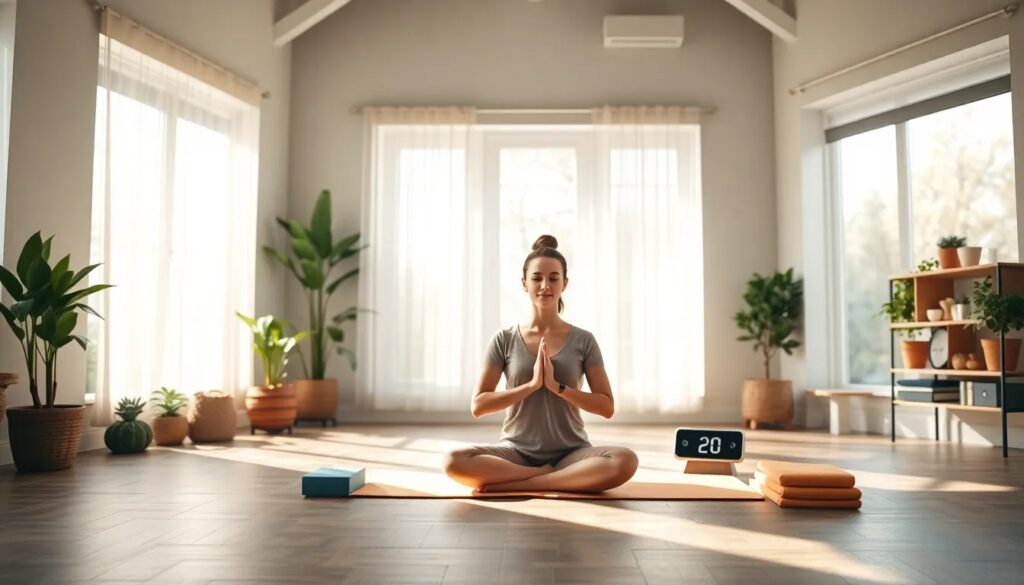
Twenty minutes is enough for a complete yoga practice — warm-up, standing work, floor stretches, and a short rest at the end. The catch is that a short session punishes wasted time, so it needs a plan: when you know exactly what comes next, 20 minutes delivers most of the benefit of a longer class without the scheduling battle. Below is a minute-by-minute sequence you can use today, three ways to adapt the slot to different times of day, and the habit tactics that keep it going past the first week.
Is 20 Minutes of Yoga Actually Enough?
For most goals, yes — with one honest caveat. Twenty minutes daily is plenty to maintain and gradually improve flexibility, ease stiffness from sitting, lower stress, and build a durable habit. For habit-building and most mobility goals, short frequent sessions tend to be more sustainable than one long weekly class: when the goal is consistency rather than peak output, frequency usually wins over session length.
Does it count as exercise? Yes, with the same caveat — twenty minutes of continuous, breath-led movement that raises your heart rate mildly and loads the major muscle groups qualifies as light-to-moderate activity, and it complements walking, cycling, or strength training well. The caveat: if your goal is significant strength gains or a vigorous cardio workout, 20 minutes of yoga alone will progress slowly. Treat it as a foundation — and on days when you have more time, extend the standing section rather than adding new parts.
A Complete 20-Minute Sequence, Minute by Minute
- Minutes 0–2 — Arrive. Sit or kneel, close your eyes, and take ten slow breaths. This sounds skippable; it is what separates practice from stretching while distracted.
- Minutes 2–5 — Warm up the spine. Tabletop position: 6–8 rounds of cat-cow, then thread-the-needle on each side.
- Minutes 5–10 — Build heat. Three to four slow rounds of sun salutation A (or step-back versions if jumping back is too much). Move one breath per movement.
- Minutes 10–14 — Standing poses. Warrior II, side angle, and triangle on the right side, then repeat on the left. Hold each for about five breaths.
- Minutes 14–18 — Floor work. Low lunge with the back knee down for the hip flexors, then a seated forward fold and a gentle supine twist on each side. These are the stretches that pay off most on days you feel tight from sitting.
- Minutes 18–20 — Savasana. Lie flat, let the breath go natural. Two minutes is short but non-negotiable — it consolidates the downshift the practice created.
If you are brand new to these poses, learn them individually first with our yoga for beginners guide, which covers the ten foundational poses this sequence draws on.
Three Ways to Use a 20-Minute Slot
The same time budget serves different goals depending on when you practice and what you emphasize:
| Session | Best time | Emphasis | Pace |
|---|---|---|---|
| Morning energizer | Before breakfast | Sun salutations, standing poses, backbends | Brisk, breath-led |
| Midday reset | Lunch break | Neck, shoulders, hips — the sitting damage zones | Moderate, no sweat |
| Evening wind-down | 1–2 hours before bed | Forward folds, twists, long-held floor poses | Slow, longer exhales |
There is no universally best slot — the right one is the one your schedule protects. For evenings specifically, the long-held forward folds and supine twists in our nighttime yoga guide translate well into a 20-minute slot. Our guide to the best time of day to do yoga matches times to goals in more detail, and if mornings win, the routines in our morning yoga guide include a 20-minute version built specifically for pre-work practice.
How to Make 20 Minutes a Day Actually Happen
- Anchor it to an existing habit. After the coffee starts brewing, after the school run, right after closing the laptop — attaching practice to a fixed event beats relying on willpower or alarms.
- Leave the mat visible. Setup friction kills short sessions; a rolled-out mat in a corner removes the main excuse. Our guide to practicing yoga at home covers the minimal setup that makes this sustainable.
- Have a default sequence. Deciding what to do costs more motivation than doing it. Use the sequence above as your default and vary it only when you feel like it.
- Shrink, do not skip. On chaotic days, do ten minutes — or even the routine in our 10-minute morning yoga guide — rather than zero. The habit survives on continuity, not perfection.
- Track streaks loosely. A calendar tick is motivating; a broken-streak guilt spiral is not. Aim for most days, not all days.
Adapting the Routine to Your Level
Beginners should slow the sun salutation section down or replace it with two extra rounds of cat-cow and a couple of low lunges — building heat matters less than learning positions safely. More experienced practitioners can compress the warm-up to three minutes and use the freed time for a peak pose: a balance, a deeper backbend, or hip work. Either way, keep the two-minute opening and closing; they are what make a short session feel like a complete practice rather than a rushed workout.
Yes, for flexibility, reduced stiffness, stress relief, and habit building — daily 20-minute sessions outperform one long weekly class for these goals. For significant strength or cardio gains, 20 minutes of yoga alone progresses slowly and works better combined with other training.
Absolutely — 20 minutes is arguably the ideal beginner length: long enough for a complete practice, short enough that fatigue does not compromise form. Beginners should slow down the sun salutation section or swap it for extra cat-cow rounds and low lunges while learning the positions.
Whichever slot your schedule reliably protects. Mornings suit energizing, movement-heavy practice and tend to survive scheduling chaos better; evenings suit slow forward folds and twists that help you wind down. Consistency at an imperfect time beats inconsistency at the ideal one.
Yes — even two minutes. The final rest is when the nervous system consolidates the downshift the practice created, and skipping it is the most common way short sessions turn into rushed stretching. Set a gentle timer if you worry about losing track of time.
Have a correction? Contact us.
Recommended: