Yoga Teacher Training in Maui: Formats, Costs, and How to Choose

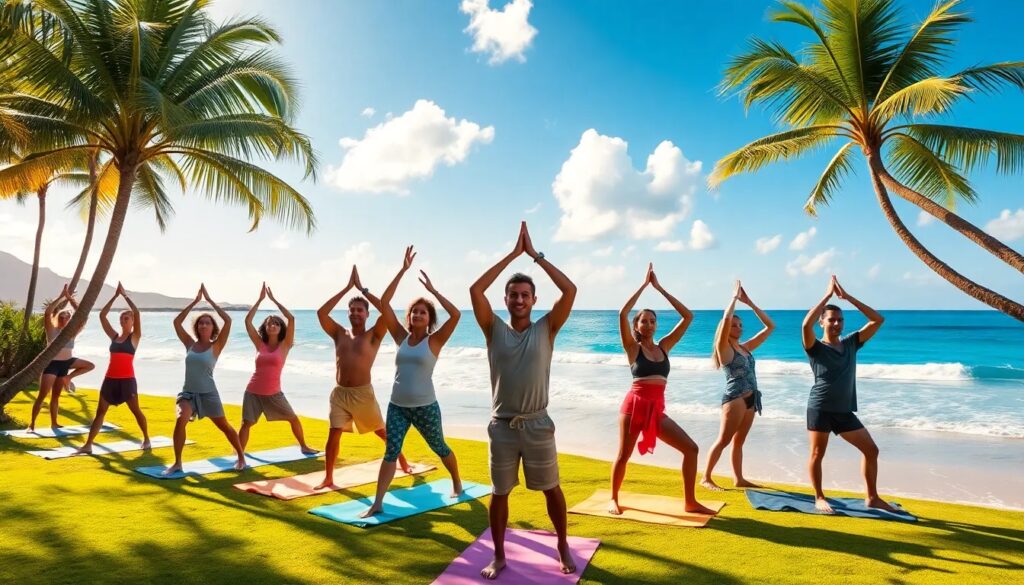
Yoga teacher training in Maui is most often a 200-hour program designed around the international standard set by Yoga Alliance, offered either as a short immersion or as a part-time format spread over several months. Hawaii adds a premium on every line item — tuition, lodging, food, transport, and flights — so the all-in cost of a Maui program usually runs well above what the same hours would cost in Bali, Costa Rica, Rishikesh, or Koh Phangan. In return you get to train in the US without a visa, in small cohorts, in English, and on one of the more memorable training environments in the world.
This guide covers the formats you will find on Maui, what the curriculum covers, what to budget for, and a seven-point checklist so you do not pay premium prices for a thin program.
What formats are available on Maui?
- 200-hour immersion (around 16–22 days): the classic destination format. Full days of practice, anatomy, philosophy, and teaching practicum. Best for visitors who can take the time off and want a single block away from home.
- 200-hour extended / part-time (around 3–6 months): weekend and evening modules aimed at people who live on the island. Easier to absorb alongside a job, and no lodging costs if you are local.
- 300-hour advanced training: for teachers who already hold an RYT-200 and want the RYT-500 credential. Less common on Maui; check current offerings before planning a trip around one.
- Hybrid programs: some schools split theory online and practice in person, which can shorten the required island stay. Mangala Yoga Studios, for example, runs a hybrid structure with 100 hours online and a 10-day, 100-hour in-person immersion.
What does yoga teacher training in Maui cost?
Tuition varies widely by school, format, and whether lodging is bundled. Three drivers explain most of the spread:
- Tuition only versus tuition plus housing. Some schools publish a tuition-only number and leave you to find your own room; others bundle shared or private lodging for the duration of the training. A program with higher tuition but included shared housing can end up cheaper than a lower-tuition program where you book your own.
- Deposit and refund terms. Non-refundable deposits are common in this category, often several hundred dollars. Refund windows vary by school — some allow cancellation up to a certain date, others are non-refundable from day one.
- The rest of the trip. On top of tuition, budget for Maui lodging on the days the program does not cover, a rental car (public transport on the island is limited), food at island prices, and flights. These usually add up to more than the tuition itself.
Published tuition for 200-hour immersions on the island spans a wide range. The main guide to yoga teacher training costs breaks down the same drivers in every format, and the dedicated piece on 200-hour program pricing goes deeper on the 200-hour side.
What the curriculum covers
Any 200-hour program built on the Yoga Alliance standard, on Maui or anywhere else, covers a core set of competencies: techniques, training and practice (asana, pranayama, meditation); anatomy and physiology; yoga humanities (history, philosophy, ethics); and professional essentials (teaching methodology, sequencing, cueing, supervised practice teaching). Most Maui schools teach a vinyasa or hatha base.
Maui programs often add outdoor sessions — beach practice, hikes, ocean time — which is part of the appeal but should complement, not replace, contact hours. A useful sanity check is the share of the schedule that is supervised practice teaching, since that is the part of training that actually makes you employable.
Maui-specific considerations
- Lodging is the budget-breaker. A program that includes shared housing can end up cheaper than a lower-tuition program where you book your own.
- Transport: trainings cluster in different parts of the island (north shore, upcountry, south side). Without a car, make sure you can stay walking distance from the venue.
- Season: winter is high season with peak lodging prices; late spring and fall are usually cheaper.
- Distraction factor: an immersion is intense — 6-day weeks are common. If your real goal is a vacation with some yoga, a yoga retreat may fit better than a certification course.
Where to look for a Maui teacher training
There are several registered schools on the island. Treat the list below as a starting point for research, not a ranked recommendation. Always verify each school directly before paying a deposit.
- Maui Yoga Shala (Paia) — 200- and 300-hour programs; the 300-hour program is a longer track for already-certified teachers.
- Mangala Yoga Studios (Makawao) — 200-hour hybrid with online theory plus a 10-day in-person immersion.
- Blue Mango Yoga (Haiku area) — 200-hour immersions of about 18 days.
- Wisdom Flow Yoga (upcountry Maui) — 200-hour 16-day immersion.
- Maui Yoga Loft — multi-week 200-hour training.
How to vet a Maui program: 7 checks
- Confirm the school is a Yoga Alliance Registered Yoga School (RYS) in the public directory on the official Yoga Alliance website — do not take the school's word for it.
- Ask who the lead trainer is and how many trainings they have actually led.
- Request the full syllabus and daily schedule; vague answers are a red flag at this price point.
- Read recent graduate reviews on third-party platforms, not just testimonials on the school's site.
- Get the all-in cost in writing: tuition, housing, food, materials, certification fees.
- Check the refund and deferral policy — important when flights and deposits are involved.
- Ask how much supervised practice teaching you get; it is the part of training that actually makes you employable.
Is Maui worth it compared to other destinations?
It depends on what you are optimizing for. Purely on price, Maui loses: a comparable 200-hour yoga teacher training in Bali is usually priced lower with accommodation included, Costa Rica programs sit somewhere in between, and trainings in Thailand or Rishikesh are typically the cheapest way to get the 200 hours. Maui wins on convenience for US students (no visa, domestic flights, US consumer protections), English-language instruction throughout, and — subjectively — one of the most memorable training environments anywhere.
If you are after a specialty rather than a general certification, compare niche options too. A restorative yoga teacher training, for example, can be completed for less. For a sense of the time commitment, the piece on how long a 200-hour training takes covers immersion versus extended formats.
Frequently asked questions
Tuition varies widely by school, format, and whether housing is included. The all-in cost — tuition plus Hawaii lodging, food, a rental car, and flights — usually runs well above what the same 200 hours would cost in Bali, Costa Rica, or India.
Immersion formats compress the 200 hours into roughly 16 to 22 days of full-time study. Part-time formats for island residents spread the same hours over 3 to 6 months of weekend and evening modules. Advanced 300-hour programs vary more widely.
A 200-hour certificate from a Yoga Alliance–registered school makes you eligible to register as an RYT-200, a credential widely recognized by studios in the US and most other countries. The school being in Hawaii does not change the credential's reach.
Maui is more expensive but more convenient for US-based students: no visa, domestic flights, and US consumer protections. Bali and Costa Rica usually offer lower all-in prices with accommodation often bundled. Teaching quality depends on the individual school far more than on the destination.
Have a correction? Contact us.
Recommended: