Yoga for Posture: 8 Poses to Stand Taller

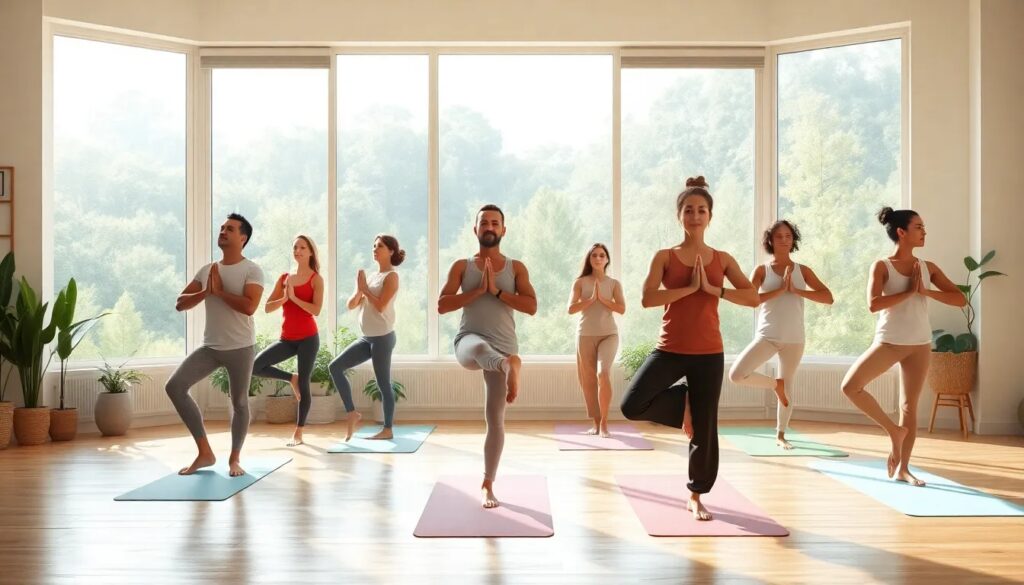
Yoga improves posture in two ways at once: it strengthens the muscles that hold you upright — the deep core, upper back, and glutes — and it releases the muscles that pull you into a slouch, mainly the chest, hip flexors, and front of the neck. Because most posture problems come from this exact imbalance rather than from laziness, a consistent yoga practice addresses the cause instead of just reminding you to sit up straight. This is also why yoga works well for posture correction rather than just temporary alignment: it changes the resting tone of the muscles that hold you up, not only your awareness in the moment.
This guide explains what actually drives poor posture, the eight most effective poses to counter it, and a realistic 10-minute daily routine you can do at a desk job's pace of life.
Why does posture get worse — and how does yoga fix it?
The typical modern posture pattern — sometimes called upper crossed syndrome — develops from hours of sitting and screen use. The chest and hip flexor muscles shorten, while the upper back and glute muscles weaken from disuse. The head drifts forward, the shoulders round, and the lower back either flattens or over-arches to compensate.
Yoga counters each part of that pattern:
- Backbends (Cobra, Bridge) re-open the shortened chest and hip flexors.
- Strength poses (Plank, Locust, Warrior holds) rebuild the postural muscles of the back and core.
- Body awareness — yoga's underrated ingredient — teaches you to notice slumping during the day, which is when correction actually happens.
- Breathwork relaxes the neck and shoulder muscles that grip when we are stressed.
The 8 best yoga poses for posture
Hold each pose for five to ten slow breaths. Together they take about ten minutes. The sequence mixes backbends, which open the chest, with strength work that rebuilds the back chain, and a few mobility poses to keep the upper back from getting stuck — which is the most common posture problem in people who sit at a desk.
- Mountain Pose (Tadasana). The blueprint for standing alignment: weight even across both feet, ribs stacked over pelvis, crown of the head reaching up. Practicing it teaches you what neutral actually feels like.
- Cat-Cow (Marjaryasana-Bitilasana). Mobilizes the whole spine through flexion and extension — the gentlest possible warm-up for a stiff back.
- Cobra Pose (Bhujangasana). Strengthens the spinal extensors while stretching the chest. Keep the elbows bent and the effort in the back, not the hands.
- Locust Pose (Salabhasana). The most direct postural strengthener on this list: lifting chest and legs off the floor works the entire back chain that slumping switches off.
- Low Lunge (Anjaneyasana). Opens the hip flexors, which tilt the pelvis forward and strain the lower back when they are short.
- Downward-Facing Dog (Adho Mukha Svanasana). Lengthens the spine and the whole back line while strengthening the shoulders in an overhead position.
- Bridge Pose (Setu Bandhasana). Strengthens the glutes — key pelvic stabilizers — while opening the chest and the front of the shoulders.
- Thread the Needle (Parsva Balasana). Adds rotation to the upper back, the area that gets stiffest from desk work and is hardest to reach with ordinary stretching.
Which yoga style is best for posture?
| Style | Posture benefit | Best if you… |
|---|---|---|
| Hatha yoga | Held poses with alignment focus | Want to learn correct form from scratch |
| Iyengar yoga | Precision alignment with props | Have stubborn habits or asymmetries to correct |
| Vinyasa yoga | Strength plus mobility in motion | Want fitness and posture work combined |
| Yin yoga | Long passive holds release tight chest and hips | Are very stiff or stressed |
How long until yoga actually improves your posture?
Most people feel a difference in stiffness and awareness within two to three weeks of short daily practice — that part is real and predictable. Visible, lasting change in how you habitually stand takes longer, typically two to three months, because it requires both strength gains and new movement habits. The honest summary: the mat work wakes you up to your posture within weeks, and the daily repainting of how you sit and stand is what does the heavy lifting over months. If you want a before-and-after style shift in how you look in photos, plan on the longer timeline and keep the routine short and consistent.
As an Amazon Associate, we earn from qualifying purchases.


Yoga for posture: common mistakes to avoid
Even a good routine can stall if the basics go wrong. Four patterns come up over and over:
- Arching from the lower back in Cobra. Lengthen the tailbone, lift the chest from the upper back, and keep the elbows soft. If you feel it mainly in the lumbar spine, drop the lift and try Sphinx Pose instead.
- Holding your breath. Breath is the cue that tells tight muscles to release. If you brace through a pose, the chest and hip flexors stay short and you undo half the benefit.
- Hyperextending the knees in standing poses. A micro-bend protects the joint and forces the postural muscles — quads, glutes — to do the work that locks actually switch off.
- Only doing forward folds. Stretching the back of the body feels good, but posture is built by what you do on the front side too. Keep the backbends and the chest openers in the mix.
A realistic 10-minute daily posture routine
- Minute 1–2: Cat-Cow, moving with the breath.
- Minute 3–4: Cobra or Locust, three rounds of five breaths.
- Minute 5–6: Low Lunge, one minute per side.
- Minute 7–8: Thread the Needle, one minute per side.
- Minute 9–10: Bridge Pose, then a minute in Mountain Pose noticing your new baseline.
Consistency beats intensity here. Daily short practice rewires postural habits far better than one long weekly class — more on frequency in our guide to how often you should do yoga. If you are brand new to the poses, start with our yoga for beginners guide first.
Posture beyond the mat
No amount of yoga overrides ten daily hours of unbroken sitting. The practice works best paired with simple habits: stand or walk for a couple of minutes every half hour, raise your screen to eye level, and keep your feet flat when seated. Think of yoga as training the capacity for good posture and these micro-habits as using it.
If your poor posture comes with persistent back pain, numbness, or pain radiating into the arms or legs, that pattern deserves professional assessment — see our guide to yoga for back pain for what the practice can and cannot help with.
This article is general information, not medical advice. If you have ongoing pain, a spinal condition such as scoliosis or a disc injury, or numbness or tingling, consult a doctor or physical therapist before starting these exercises.

- STABILITY plus BALANCE: Yoga blocks provide the stability and balance needed in your practice to help with optimal alignment, deeper poses and increased strength
- DURABLE SUPPORTIVE FOAM: These lightweight and supportive foam blocks are constructed of a durable foam with a nonslip surface and beveled edges for easy gripping. Premium blocks are 50 percent denser than standard EVA blocks
- MODIFY plus ALIGN: Use under your hands, feet or seat (meditation) to ensure the proper alignment needed in order to safely support and modify poses to suit your level of flexibility If you feel tight, don't risk injury and grab a block or two
- EXTEND plus DEEPEN STRETCHES: Blocks make for the ideal yoga prop and companion, as they are an important tool in your practice to help extend, support and deepen your stretches while also working to increase your range of motion
- CARE INFO: Spot clean with mild detergent towel or air dry (Dimensions: 9 Inches W x 6 Inches H x 4 Inches D / Weight: 4.6 Ounce) Sold as 2 Pack

Yoga can substantially improve posture caused by muscle imbalance, which is the most common kind. It strengthens weak back and core muscles, releases tight chest and hip muscles, and builds the body awareness needed to catch slumping during the day. Structural issues like scoliosis need professional guidance, though yoga can often still help manage them.
Most people feel a difference in stiffness and awareness within two to three weeks of short daily practice. Visible, lasting change in how you habitually stand typically takes two to three months, because it requires both strength gains and new movement habits.
If you only do one, make it Locust Pose. It directly strengthens the entire back chain that switches off when you slump, which addresses the root cause rather than the symptom. Pair it with a chest opener like Cobra or Bridge for the biggest effect.
Yes, if it is consistent. Ten focused minutes daily outperforms a single long weekly session for posture because habit change depends on frequency. The routine works even better combined with regular movement breaks during long sitting periods.
Have a correction? Contact us.
Last update 2026-09-10. Price and product availability may change.
Recommended: