Is Yoga Static Stretching? How Yoga Compares to Dedicated Stretching

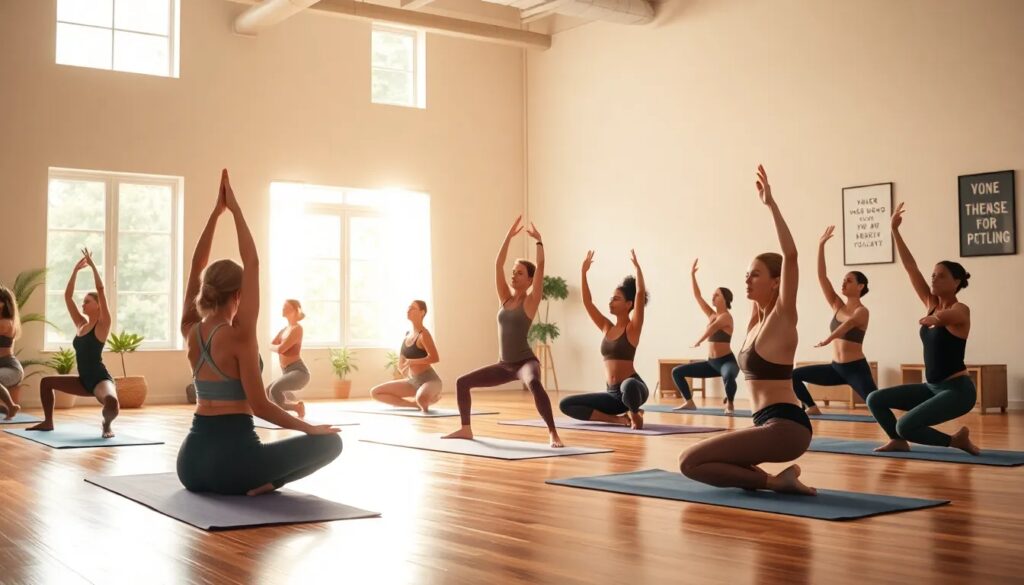
Yoga includes static stretching, but it is not the same thing. A static stretch means holding a muscle at its lengthened position for a set time, usually 15 to 60 seconds. Some yoga poses do exactly that, yet a typical class also involves dynamic movement between poses, isometric muscle work (holding positions under load), balance challenges, and structured breathing. So the accurate answer is: parts of yoga function as static stretching, but yoga as a whole is a broader practice.
Understanding the overlap matters if you are deciding whether yoga can replace your stretching routine, or whether you need both. This guide breaks down the mechanics, the differences, and how to combine them sensibly.
- What static stretching actually is
- Where yoga is static stretching, and where it is not
- Static vs dynamic elements in yoga
- Yoga vs static stretching vs dynamic stretching
- Can yoga replace your stretching routine?
- How to combine yoga and stretching in one week
- Yoga vs stretching vs Pilates
- Morning routine: yoga or stretching?
- Frequently asked questions
What static stretching actually is
Static stretching is the classic hold-and-breathe approach: you lengthen a muscle to the point of mild tension and stay there, without bouncing or moving. Sports science distinguishes it from dynamic stretching (controlled movement through a range of motion, like leg swings) and ballistic stretching (bouncing at the end range, generally discouraged for most people).
Most of the time, the muscle in a static stretch is meant to relax and lengthen passively. In a yoga pose, the working muscle is often engaged instead, which is why yoga is usually described as active static work rather than the passive kind you would do on a mat after a run. Both forms load the tissues, but the felt experience and the strength demand are different.
Static stretching is the most studied form of stretching and is associated with steady increases in range of motion over weeks of regular practice. The main caveat: long static holds performed immediately before explosive activity can temporarily reduce power output, which is why coaches usually recommend dynamic work before training and static work after.
Where yoga is static stretching, and where it is not
Whether a yoga pose counts as a static stretch depends on the style and how the pose is performed:
- Yin yoga is the closest match. Poses are held passively for two to five minutes, targeting connective tissue. Functionally, this is long-duration static stretching. Our guide to what yin yoga is covers the method in detail.
- Hatha sits in the middle. Poses are held for several breaths, often with active muscle engagement rather than passive release. See what Hatha yoga is for how a typical class is structured.
- Vinyasa is largely dynamic. Continuous breath-linked movement means muscles move through range rather than holding at end range. It resembles dynamic mobility work more than static stretching; read our vinyasa guide for the format.
- Strength poses are not stretches at all. Plank, chair pose, and warrior holds are isometric strength work, even though they happen on a yoga mat.
Static vs dynamic elements in yoga
A useful way to read any yoga class is to ask what kind of loading each moment actually is. Most classes contain a mix.
| Moment in a class | What you are doing | Is it static? |
|---|---|---|
| Yin hold (2–5 min) | Passive lengthening of one area | Yes, long duration |
| Hatha hold (5–10 breaths) | Active muscle engagement in a shape | Yes, with tension |
| Vinyasa flow between poses | Breath-linked movement through range | No, it is dynamic |
| Plank, chair, warrior holds | Isometric strength under load | No, it is strength work |
| Pigeon or seated forward fold (held) | Sustained end-range lengthening | Yes |
| Sun salutation, repeated | Coordinated whole-body sequence | No, it is dynamic |
So a single 60-minute class can carry several static stretches, several minutes of dynamic mobility, and a meaningful block of strength work. Calling yoga "just stretching" loses most of that picture.
Yoga vs static stretching vs dynamic stretching
| Aspect | Static stretching | Dynamic stretching | Yoga |
|---|---|---|---|
| Method | Hold at end range, 15 to 60 seconds | Controlled movement through range | Mix of holds, flows, and strength work |
| Primary goal | Flexibility, muscle length | Warm-up, movement prep | Flexibility, strength, balance, stress regulation |
| Strength component | None | Minimal | Significant (isometric holds, bodyweight loading) |
| Breath focus | Optional | Optional | Central to the practice |
| Best timing | After exercise or standalone | Before exercise | Anytime; style determines intensity |
| Time required | 5 to 15 minutes | 5 to 10 minutes | 20 to 90 minutes |
Can yoga replace your stretching routine?
For general flexibility, yes, for most people. Regular yoga practice stretches all major muscle groups, and yoga and dedicated stretching both improve range of motion when done consistently over weeks. Yoga also adds benefits stretching alone does not: strength, balance, body awareness, and measurable stress reduction.
There are two situations where targeted stretching still earns its place. First, if you need to address one specific tight muscle (say, hamstrings limiting your deadlift), direct static stretching of that muscle is more time-efficient than a full class. Second, athletes following a structured warm-up protocol should keep sport-specific dynamic stretching before training; a yoga class is not a substitute for movement prep immediately before competition.
Worth noting: if your interest in yoga is mainly physical conditioning, intensity varies enormously by style. Some classes double as a workout; see our analysis of whether yoga counts as cardio.
How to combine yoga and stretching in one week
- Before workouts: 5 to 10 minutes of dynamic stretching (leg swings, arm circles, lunges with rotation). Save long holds for later.
- After workouts: 5 to 10 minutes of static stretching for the muscles you trained, holding each stretch 30 seconds or so.
- Two or three times per week: a yoga class matched to your goal: Vinyasa for conditioning, Hatha for balanced practice, Yin for deep flexibility and recovery.
- On rest days: gentle yoga or Yin doubles as active recovery. A short routine like morning yoga for beginners works well here.
- Daily, if desk-bound: brief stretch breaks for hips, chest, and neck; consistency beats duration.
Yoga vs stretching vs Pilates
People shopping for a flexibility routine often land on three options:
- Static stretching targets muscle length, mostly passively, with minimal strength demand.
- Yoga mixes static holds, dynamic flow, isometric strength, and breathwork; the range and the conditioning vary a lot by style.
- Pilates is built around controlled core stability and precise movement patterns. Its flexibility gains come mostly from repeated full-range motion under muscular control rather than from long end-range holds, so it is closer to active mobility than to static stretching.
Pilates pairs well with yoga if your goal is balanced core strength and mobility. For pure passive lengthening, dedicated stretching is still the most direct tool.
Morning routine: yoga or stretching?
Both work in the morning, and the choice is mostly about what your body and schedule need.
- Choose stretching if you want a fast, targeted wake-up for tight areas (hips, shoulders, hamstrings). Five to ten minutes of gentle static holds is enough.
- Choose yoga if you want a more complete session that also wakes up breath, balance, and coordination. A short flow or a short Hatha routine covers more ground in one block.
- Avoid deep static holds first thing if your muscles are genuinely cold; ease in with a minute of gentle movement, then hold.
Frequently asked questions
Both, depending on the style. Yin and restorative yoga rely on long passive holds that function as static stretching, while Vinyasa and other flow styles move continuously and work more like dynamic stretching. Most classes mix the two.
Both improve flexibility with regular practice. Yoga adds strength, balance, and body awareness, while targeted static stretching is faster if you only need to lengthen one muscle group.
Gentle flowing yoga can serve as a warm-up, but avoid long static holds right before strength or explosive training, as they can temporarily reduce power. Slower styles like Yin fit best after training or on rest days.
For a basic static stretch, aim for at least 20 to 30 seconds of relaxed holding. Yin yoga extends holds to two to five minutes per pose to load deeper connective tissue rather than just muscle.
No. Yoga combines static holds, dynamic movement, isometric strength, balance work, and structured breathing. Plain stretching is just one of those pieces.
If you want a quick comparison of how stretching lines up against yoga as a whole, see our broader overview of yoga and stretching.
This article is general information, not medical advice. If you are recovering from an injury or have a condition affecting your joints or muscles, consult a physical therapist or doctor before starting a new stretching or yoga routine.
Have a correction? Contact us.
Recommended: