Is Yoga Good for Spinal Stenosis? Safe Poses, What to Avoid, and When to Skip It

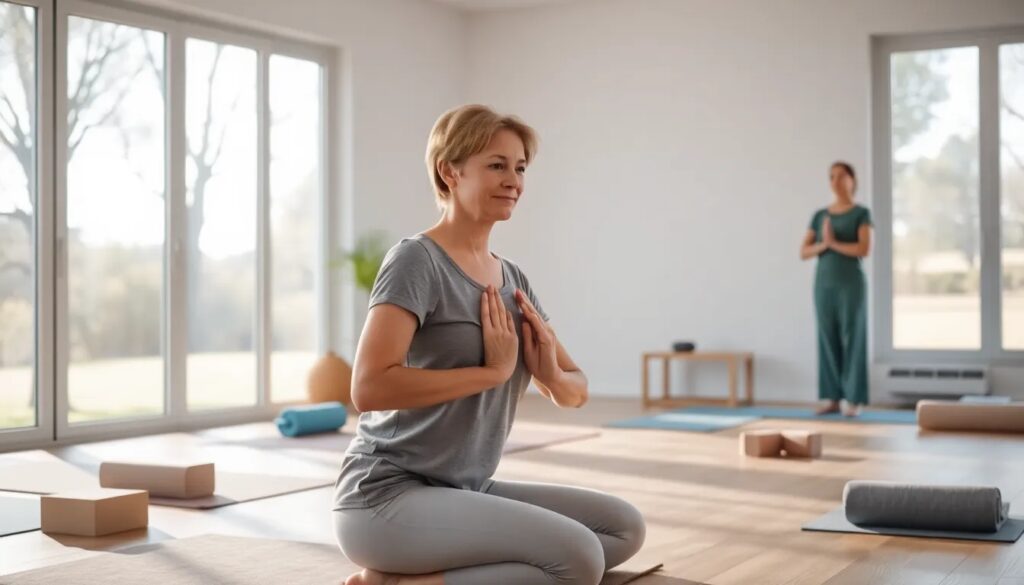
Yes, yoga can be good for spinal stenosis — with important conditions. For most people with lumbar spinal stenosis, gentle, flexion-based yoga (poses that round or lengthen the spine forward) can ease symptoms, maintain mobility, and strengthen the muscles that support the spine. The same practice becomes risky, however, if it includes deep backbends or unsupported extension, which narrow the spinal canal further and can flare symptoms. The difference between helpful and harmful yoga here is not effort — it is pose selection.
This article is general information, not medical advice. Spinal stenosis varies widely from person to person. Get clearance from your doctor or physical therapist before starting, and stop any movement that produces numbness, tingling, or radiating pain.
- What spinal stenosis is, in plain terms
- What yoga can realistically do for spinal stenosis
- Safe poses vs. poses to avoid
- A gentle starter routine (10–15 minutes)
- Chair yoga: the most accessible option
- Yoga for cervical spinal stenosis: what changes
- How to practice safely: a checklist
- Red flags: when to stop and call your doctor
- Frequently asked questions
What spinal stenosis is, in plain terms
Spinal stenosis is a narrowing of the spaces in the spine — most often in the lower back (lumbar stenosis) or neck (cervical stenosis) — that puts pressure on the spinal cord or nerve roots. It is usually age-related, caused by arthritis, thickened ligaments, or bulging discs. Typical symptoms include lower back pain, and aching, cramping, or weakness in the legs that worsens with standing and walking and eases when you sit or lean forward.
That last detail is the key to understanding why some yoga helps and some hurts: leaning forward opens the spinal canal slightly; arching backward narrows it. Most people with lumbar stenosis feel better bending forward over a shopping cart and worse standing upright for long periods. Yoga that respects this pattern tends to feel good; yoga that ignores it tends to flare symptoms.
What yoga can realistically do for spinal stenosis
Yoga is not a cure — nothing reverses the structural narrowing short of surgery. What a well-chosen practice can do is:
- Reduce pain and stiffness by gently mobilizing the spine and hips within a comfortable range.
- Strengthen the core and glutes, which support the spine and reduce the load on irritated segments.
- Stretch the hip flexors and hamstrings, since tightness in both tends to pull the lower back into positions that aggravate stenosis.
- Improve balance and confidence, which matters because stenosis often affects older adults at higher risk of falls.
- Lower stress, which tends to reduce pain perception in chronic conditions.
Specific high-quality studies of yoga for spinal stenosis are scarce; most existing evidence covers chronic low back pain more broadly, where yoga shows modest but consistent benefits comparable to physical therapy. Treat yoga as one tool in a broader management plan, alongside whatever your medical team recommends.
Safe poses vs. poses to avoid
The general rule: favor flexion and neutral-spine positions, avoid extension and loaded twisting.
| Generally helpful | Approach with caution or skip |
|---|---|
| Child's Pose (Balasana) | Cobra and Upward-Facing Dog |
| Knees-to-Chest (Apanasana) | Camel Pose (Ustrasana) |
| Cat-Cow — emphasizing the rounding (Cat) phase | Full Wheel and deep backbends |
| Supported Bridge with a low block (gentle, not deep) | Standing backbends and arched Sun Salutation variations |
| Gentle supine twist with bent knees | Deep seated twists with a flexed, loaded spine |
| Pelvic tilts | Unsupported standing forward folds if balance is an issue |
| Legs-Up-the-Wall (Viparita Karani) | Headstand, Shoulderstand, and other inversions |
These are starting points, not rules carved in stone.
Is downward dog OK for spinal stenosis?
Downward-Facing Dog is a mild inversion that lengthens the spine, but it also loads the shoulders and, depending on how deep you sink into the heels, can pull on the hamstrings and lumbar region. A modified version — knees bent, heels lifted, spine long rather than rounded — asks less of the hamstrings and lower back than a deep, straight-leg version, but tolerance still varies from person to person. The honest answer: try a soft, knee-bent version first, with a professional's input, and skip it if you feel any pulling, pinching, or nerve symptoms in the legs.
A gentle starter routine (10–15 minutes)
If your doctor has cleared you for gentle exercise, this short sequence emphasizes flexion and neutral alignment. Move slowly and breathe normally throughout.
- Pelvic tilts — lying on your back, knees bent, gently flatten and release your lower back. 8–10 slow repetitions.
- Knees-to-Chest — hug one knee at a time, then both if comfortable. Hold 20–30 seconds each.
- Cat-Cow — on hands and knees, emphasize the rounding phase; keep the arching phase small or skip it. 6–8 slow rounds.
- Child's Pose — knees wide, arms forward, rest 30–60 seconds. Place a cushion under your hips if needed.
- Gentle supine twist — knees bent and together, let them fall a few inches to each side. 20 seconds per side.
- Legs-Up-the-Wall — rest 2–5 minutes with your legs supported on a wall or chair seat.
Several of these overlap with the poses covered in our guide to yoga poses for lower back pain, which includes detailed setup cues for each, and with our focused yoga stretches for the lower back.
Chair yoga: the most accessible option
If getting up and down from the floor is difficult, chair yoga delivers most of the same benefits with far less strain. Seated cat-cow, seated forward folds, and supported side stretches all keep the spine mobile without loading it. Our chair yoga for seniors guide includes an eight-pose routine, and seated yoga poses covers options you can do at a desk. A broader gentle yoga practice — slow pace, props, no forced range — is also a natural fit for stenosis.
Yoga for cervical spinal stenosis: what changes
Cervical stenosis narrows the spinal canal in the neck rather than the lower back, and the same flexion-friendly logic applies in reverse: extension of the neck (looking up, dropping the head back) narrows the cervical canal further. That means poses like Shoulderstand, Plow, Fish, and any strong upward gaze should be cleared with your doctor or physical therapist before you attempt them. Seated neck stretches, gentle shoulder openers, and supported chest openers that keep the cervical spine neutral are typically safer starting points. If you have both lumbar and cervical involvement, the rule gets stricter: avoid loading the neck in ways that load the lower back, and keep the chin roughly level with the sternum in most poses.
How to practice safely: a checklist
- Get medical clearance first, especially if you have leg weakness, numbness, or balance problems.
- Tell the teacher about your condition before class so they can offer substitutions for backbends.
- Use props freely — blocks, cushions, straps, and a chair make almost every pose adaptable.
- Stay in a pain-free range. A gentle stretch is fine; radiating pain, numbness, or tingling means stop.
- Skip rather than push. Resting in Child's Pose during a class is always acceptable.
- Favor slow styles — gentle, restorative, or chair-based classes over heated or power formats. Restorative yoga in particular uses fully supported positions that suit stenosis well.
People with a related condition, such as a herniated disc, often share much of this checklist — our guide to yoga for a herniated disc covers the overlapping ground.
Red flags: when to stop and call your doctor
Stop practicing and seek medical advice if you experience new or worsening leg weakness, numbness in the groin or inner thighs, loss of bladder or bowel control (this is an emergency), or pain that radiates further down the leg after sessions. These signs suggest nerve compression that exercise will not fix and may worsen.
Frequently asked questions
No. Spinal stenosis is a structural narrowing of the spinal canal, and no exercise reverses it. Yoga can help manage symptoms, maintain mobility, and strengthen supporting muscles, but it works alongside medical care rather than replacing it.
Deep backbends are the main concern — Cobra, Upward-Facing Dog, Camel, and Full Wheel all extend the spine and can further narrow the spinal canal. Inversions and deep loaded twists also deserve caution. Most people with lumbar stenosis do better with flexion-based poses like Child's Pose and Knees-to-Chest.
They serve different purposes and combine well. Walking maintains cardiovascular health and leg strength, though many people with stenosis can only walk short distances before symptoms start. Gentle yoga maintains spinal mobility, hip flexibility, and core strength. A common approach is short, frequent walks plus a few gentle yoga sessions per week, adjusted with professional guidance.
Often yes, but only on your surgeon's timeline. Recovery protocols vary by procedure — a decompression heals differently than a fusion. Most patients progress from walking to physical therapy before returning to modified yoga, typically several months after surgery and with specific movement restrictions.
It depends on the version. A modified Downward-Facing Dog with bent knees, lifted heels, and a long rather than rounded spine asks less of the hamstrings and lower back than a deep, straight-leg version, because it gently inverts and lengthens the back rather than extending it. Even the modified version can still flare symptoms for some people. Try a soft version first with a teacher's guidance, and skip it if you feel any nerve symptoms in the legs.
Have a correction? Contact us.
Recommended: